Strong South Korean Apple Crop Boosts Chuseok Supply and Weighs on Prices
South Korea’s apple production is forecast to rise 7.4% to 481,000 tonnes, while pear output is expected to remain near 197,000 tonnes. Increased orchard shipments and expanded government supply ahead of the September 25 Chuseok holiday are likely to pressure prices, although limited availability of larger fruit may widen grade premiums.
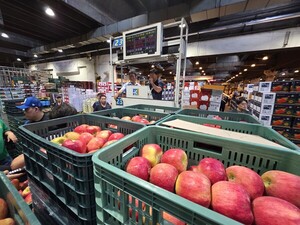
Larger apple crop brings forward shipments
South Korea is heading into the September 25 Chuseok holiday with ample supplies of apples and pears, as favorable apple growing conditions and increasing orchard shipments reshape the seasonal fruit market. The larger volumes are expected to put downward pressure on prices, although shortages of bigger fruit could produce wider price gaps between grades and sizes.
According to fruit-market observations from the Korea Rural Economic Institute cited by Nongupin, South Korea’s apple-growing area reached 34,850 hectares this year, an increase of 4.9% from the previous year. Production is forecast at 481,000 tonnes, up 7.4% year on year.
Overall apple development has been favorable, but prolonged drought slowed fruit growth. Sunburn damage and weaker growing conditions were also reported in some production areas. As a result, the share of large apples is expected to remain relatively low, potentially supporting premiums for the medium and large fruit commonly purchased as gifts or used in ancestral rites during Chuseok.
Hongro apples, a major variety for the holiday period, are reaching maturity earlier while production is increasing. This has brought forward shipments from growing regions. Arrivals of early-season varieties including Shinano Gold and Arisu are also rising, and volumes entering Seoul’s Garak wholesale market are expected to increase further as the holiday approaches.
Lee Jae-hee, a director at Joongang Cheonggwa in the Garak market, told Nongupin that the strong apple crop should provide sufficient holiday supply. He expects the influx of fruit before Chuseok to keep prices on a downward trend through late September.
Pear output stable as market arrivals increase
Pear shipments are also accelerating ahead of the holiday. Persistent heat and drought delayed fruit enlargement, but physiological disorders were less widespread than last year, according to Nongupin. Total pear production is forecast at approximately 197,000 tonnes, broadly unchanged from the previous season.
At the Garak market on September 3, premium-grade Singo pears averaged 45,000 won per 15-kilogram box at auction. Demand immediately before the peak holiday period could produce brief price increases, but continuing growth in shipments is expected to restore a weaker price trend.
Kim Hee-seok, an auctioneer at Korea Cheonggwa, told Nongupin that fruit quality appears lower than in typical years despite the increase in supply from producing regions. He forecast prices of 50,000-60,000 won for a 10-kilogram box of premium-grade pears. Kim said the market could rise temporarily closer to Chuseok, but that weakness was likely to persist unless consumer demand increased substantially.
Government expands holiday fruit availability
The South Korean government is adding to the seasonal supply. In measures announced on September 1, the Ministry of Agriculture, Food and Rural Affairs said it would release 183,000 tonnes of 13 major Chuseok products, equivalent to 1.6 times normal supply.
Fruit, including apples and pears, will account for 32,000 tonnes of the program, more than three times the usual volume. The combination of higher apple production, accelerating commercial shipments and government releases reduces the likelihood of the broad shortages seen in some previous holiday periods.
Pricing is instead likely to depend on differences in fruit size and quality. Limited supplies of larger apples and weather-related blemishes could preserve stronger values for fruit meeting gift-market standards even as average prices weaken. Weather before the holiday, particularly typhoons or heavy rainfall following the period of extreme heat, remains a risk, alongside growers’ shipment decisions and the strength of household demand.