South African sugar mills battle for survival as state decisions stay outstanding
South Africa's sugar milling industry is fighting to keep plants running while decisions that rest with the government remain unresolved, Moneyweb reports. The reference case is Darnall, where Tongaat closed a mill in 2020 at a cost of almost 400 permanent jobs and dozens of seasonal work opportunities. Each closure removes the only realistic buyer of cane in its supply area and raises the pressure on the mills that remain.
State indecision at the centre of the crisis
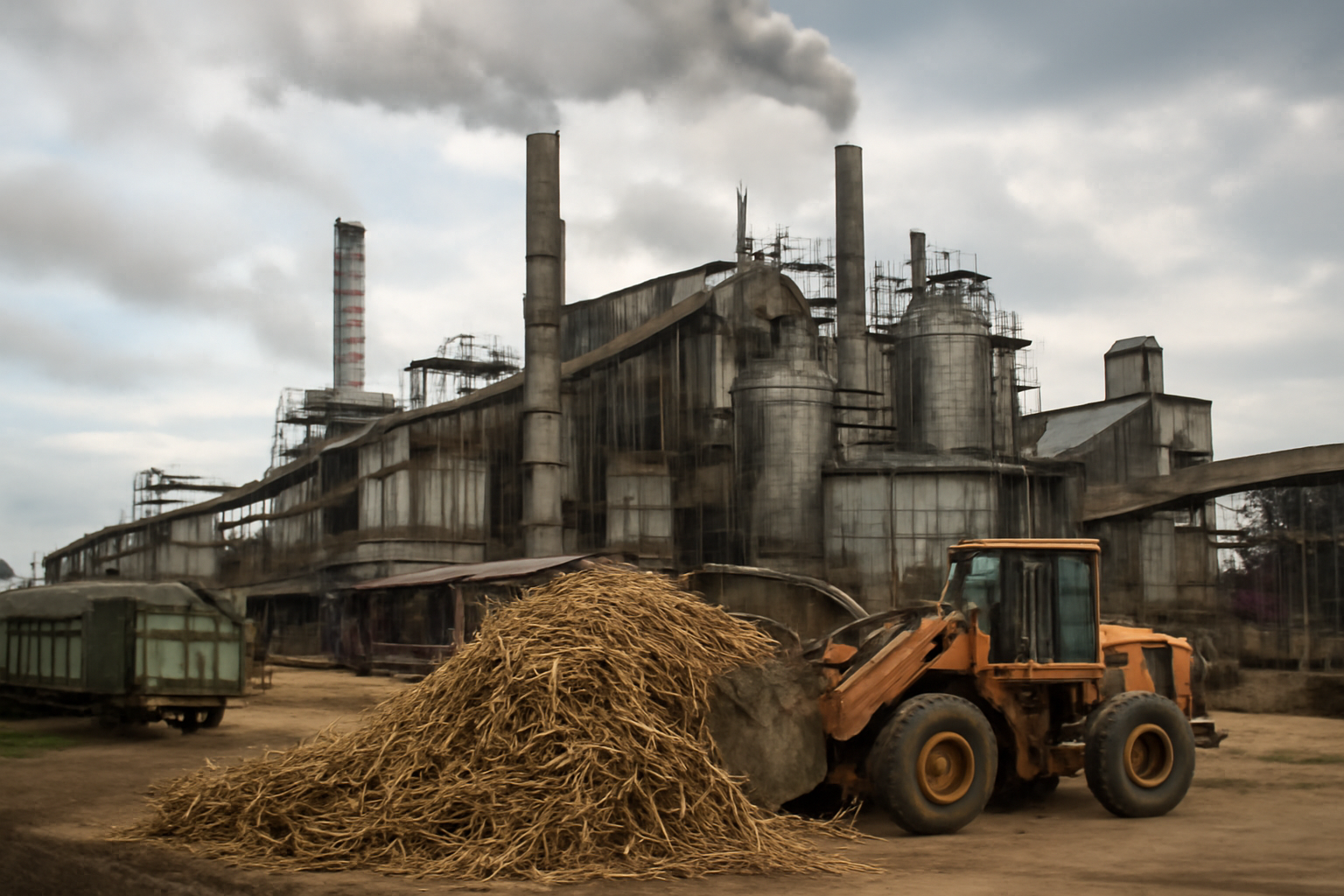
South Africa's sugar milling industry is fighting to keep its plants running while decisions that rest with the government remain outstanding, Moneyweb reports. The publication describes mills battling for survival and identifies state indecision as a central pressure on the sector rather than a background irritant. Milling is capital-intensive and geographically fixed: a crushing plant is built to serve the cane grown around it, and it cannot be relocated when the economics of the surrounding area deteriorate.
That structure makes policy delay costly in a way it is not for lighter industries. Owners deciding whether to fund another season of maintenance, replace ageing equipment or keep a marginal mill open need to know what the operating framework will look like. While those decisions remain pending, the rational response is to spend as little as possible and defer commitments, which over time degrades the asset and narrows the options available when the policy position is finally settled.
Darnall shows what a closure costs
Moneyweb points to the small town of Darnall, where Tongaat closed a mill in 2020. That single closure cost almost 400 permanent jobs and dozens of seasonal work opportunities, according to the publication. In towns of that size a mill is typically the largest formal employer, the anchor for local haulage contractors and a significant customer for local services, so the loss of the permanent payroll understates the full effect on the local economy.
Seasonal work matters as much in rural labour markets. Harvest and crushing seasons create employment for households that have no other formal income during those months, and that work disappears with the mill rather than shifting to another employer nearby.
Closures reshape cane demand
A mill is not only an employer but the only realistic buyer for the cane grown around it. Cane is bulky, low in value per tonne and loses sugar content after cutting, which limits how far it can economically be hauled. When a mill stops crushing, growers inside its supply area face a narrow set of options:
- deliver to a more distant mill and absorb the higher transport cost per tonne
- switch land to another crop where soil, water and rainfall allow it
- reduce planting or take cane land out of production altogether
Each of those responses reduces the volume of cane available to the mills that remain. Lower throughput raises the fixed cost carried by every tonne crushed at the surviving plants, which weakens their own economics and makes the next closure more likely. That feedback loop is the core risk in a milling network already under stress.
What the sector is watching
The immediate question for the industry is timing. Mills operate on an annual cycle in which maintenance, contracting and cane supply arrangements must be settled ahead of the season, and decisions that arrive after those commitments are made have limited effect on the current year. Moneyweb's account places the sector in exactly that position: operators seeking clarity that the state has not yet delivered.
For processors, growers and the rural communities tied to them, the outcome is measured in plants that keep crushing rather than in policy documents. The Darnall precedent — almost 400 permanent jobs and dozens of seasonal opportunities lost with one mill — is the scale at which each further closure would register.