South African sugar growers press government as cheap imports displace local sales
South African cane growers are seeking stronger tariff protection after sugar imports rose sharply and displaced domestic sales. Producers in KwaZulu-Natal and Mpumalanga warn that delayed action threatens farm income, milling capacity and rural employment.
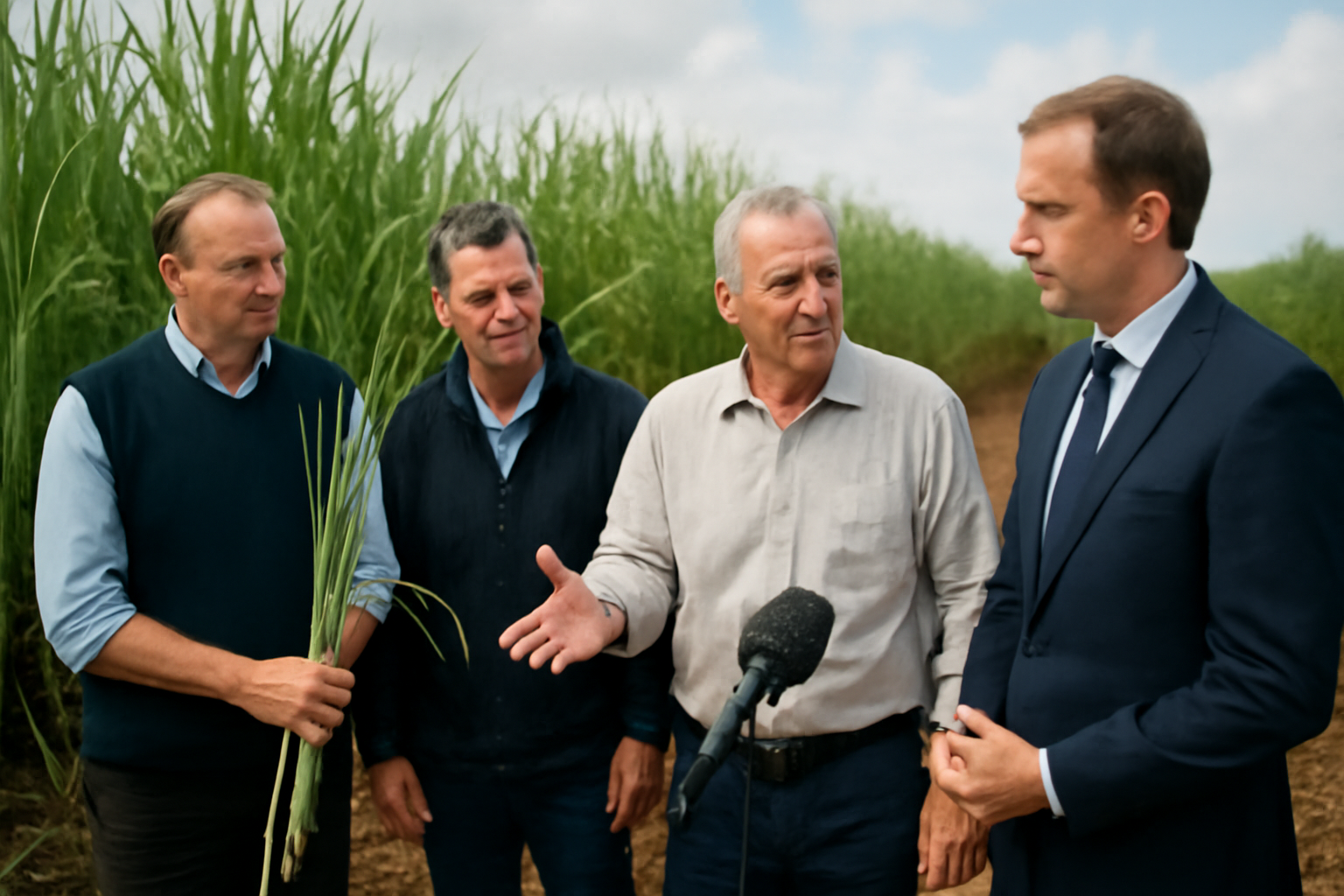
Growers take import concerns to government
Sugar-cane farmers from South Africa’s two principal producing provinces, KwaZulu-Natal and Mpumalanga, have taken their concerns to the National Treasury in Pretoria, warning that cheap sugar imports are threatening the viability of domestic farms and mills. Their action brings the import dispute directly to the government as growers seek faster changes to the country’s sugar protection framework.
The pressure has built over successive seasons. Farmer’s Weekly reported that South Africa imported 149,099 tonnes of sugar between January and August 2025, mainly from Brazil, compared with 35,730 tonnes in the same period of 2024. The increase of more than 400% cost local producers more than 100,000 tonnes in domestic sales and an estimated R760 million, according to the publication.
Tariff mechanism under scrutiny
The dispute centres on the dollar-based reference price used to determine South Africa’s variable sugar import tariff. The South African Sugar Association applied to raise the reference price from $680 to $905 per tonne. The Beverage Association of South Africa sought a reduction to a range of $552 to $650, arguing that the existing duty raises costs for beverage producers, bottlers and consumers.
The International Trade Administration Commission opened a formal review after receiving the competing applications. Business Day reported that imports reached 94,984 tonnes in the first five months of 2026, up from 55,213 tonnes in the same period of 2025 and just 1,491 tonnes in the corresponding period of 2022. SA Canegrowers says each tonne of imported sugar that displaces local output reduces revenue for growers and weakens mill utilisation.
Industry data cited by Business Day showed local sugar sales of 255,015 tonnes between 1 April and 30 June, more than 45,000 tonnes below the comparable 2025 figure. Sales for that period had previously reached 428,422 tonnes. Under the industry’s arrangements, sugar not sold domestically must be exported, exposing producers to a global market where prices may not cover the value available in South Africa.
Brazil, India and Thailand supply the surge
The domestic industry identifies Brazil, India and Thailand as the main origins of the imported sugar. Grower representatives argue that subsidies and integrated ethanol industries allow producers in those countries to sell surplus sugar into the world market at prices South African farms struggle to match. Business Day reported that almost 200,000 tonnes of refined sugar entered South Africa during 2025, while January 2026 alone brought 24,600 tonnes of deep-sea imports.
The import pressure coincides with weaker export conditions. Reuters reported that the United States imposed a 30% tariff on South African goods. South Africa had previously supplied 24,000 tonnes of sugar duty-free to the US under the African Growth and Opportunity Act. Although that market represented about 5% of sugar exports, the growers’ association described it as a premium outlet that supported domestic employment.
Farms, mills and rural economies exposed
Reuters valued South Africa’s sugar industry at about R25 billion and reported that it supports more than 300,000 direct and indirect jobs. The production base includes nearly 26,000 small farmers and 1,100 large-scale growers. These operations are concentrated in rural communities where cane deliveries underpin mills, contractors and seasonal employment.
The growers’ request therefore extends beyond the farm-gate price. If imports continue to displace local sugar, mills receive less value from processed cane and farmers face pressure to reduce planting, employment and investment. A higher reference price could improve protection for producers, but beverage manufacturers warn that stronger duties would increase their input costs. The government’s review must balance those competing claims while determining how quickly the tariff can respond to changes in world prices and exchange rates.