South African citrus exporters target growth in India
South African citrus exporters are seeking to expand sales in India through higher production, greater processing capacity and improved market access. The push comes as African growers face intensifying competition for buyers.
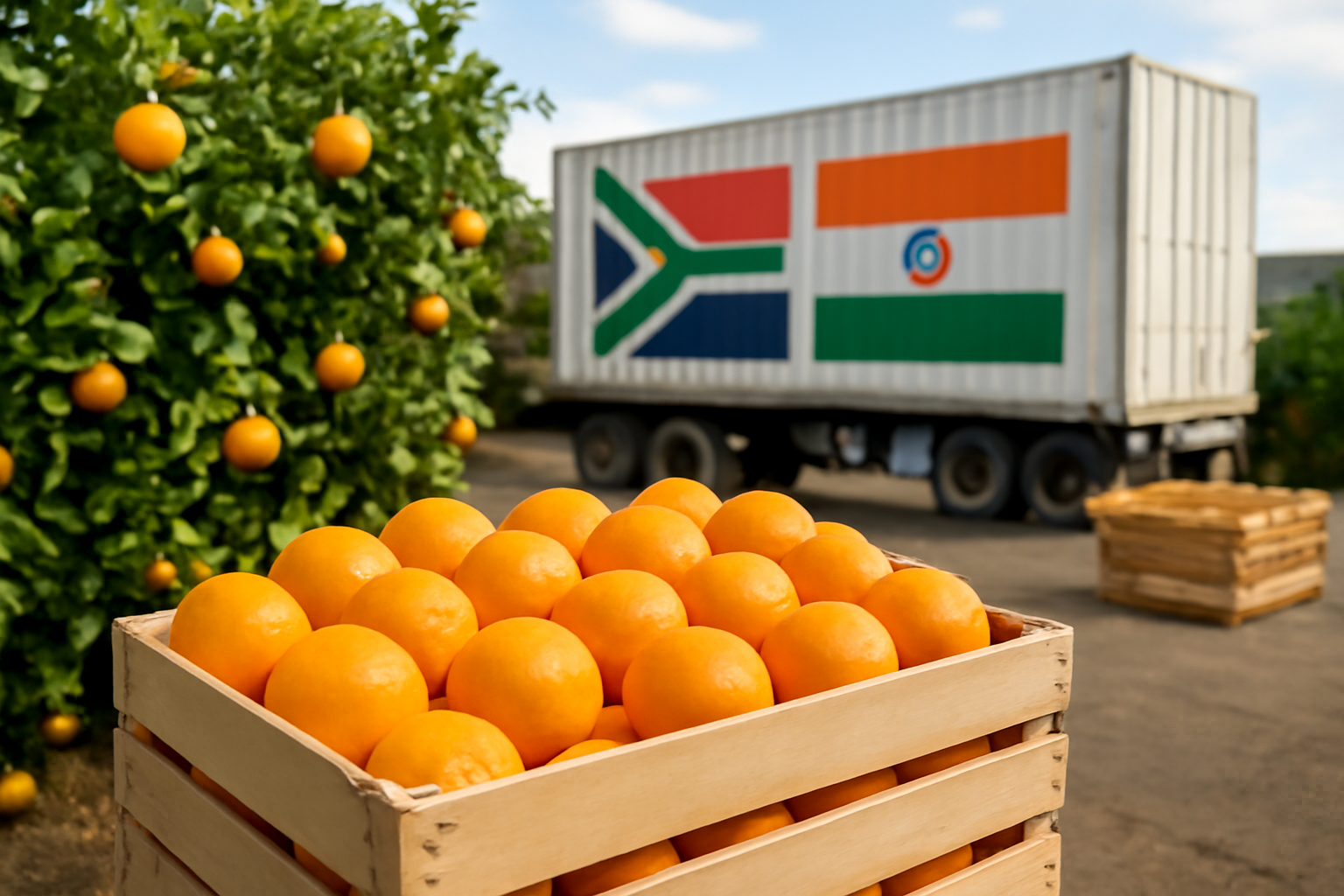
South Africa turns toward Indian demand
South African citrus exporters are increasing their focus on India as they seek additional buyers for the country’s fruit. The effort combines ambitions to raise production, expand processing and improve access to the Indian market.
India offers South African suppliers an opportunity to diversify their commercial reach. For growers and exporters, however, market potential alone does not guarantee sales. Fruit must reach buyers with the required quality, timing and commercial terms, while exporters must navigate the conditions governing entry into the market.
The initiative also reflects a broader change across Africa’s citrus industry. Growers are expanding output and processing while competing more actively for customers. As additional fruit becomes available, access to large consumer markets becomes increasingly important for maintaining sales channels and supporting returns throughout the supply chain.
Production and processing shape the strategy
Greater production can provide South African exporters with more fruit for overseas markets, but it also raises the need for reliable outlets. India is therefore relevant not only as a destination for fresh citrus but also as part of a wider strategy to place growing volumes without relying on a narrow group of buyers.
Processing adds another route to market. Fruit that does not enter premium fresh channels can potentially support processed citrus products, allowing producers and processors to serve different customer requirements. Expanding this capacity may also help the industry manage a larger crop and reduce its dependence on fresh-fruit sales alone.
The balance between fresh exports and processing will matter for growers, packers and traders. More capacity can widen the range of products available, but it also intensifies the need to secure dependable demand. Investment in production or processing must ultimately be matched by buyers willing to absorb the resulting supply.
Market access remains central
Improved market access is a core part of South Africa’s India ambitions. Export growth depends on the practical ability to enter the market and compete once shipments arrive. Commercial relationships, product positioning and consistent supply will influence whether exporters can turn interest in India into durable business.
Competition is likely to increase as citrus industries elsewhere in Africa pursue similar goals. Producers seeking the same buyers may overlap in products or marketing periods, placing greater emphasis on quality, reliability and relationships with importers. Indian buyers could gain a broader choice of suppliers, while exporters may have to work harder to protect margins.
Implications for the regional fruit trade
South Africa’s push could reshape regional citrus trade by encouraging growers and processors to orient more capacity toward markets where demand is expanding. Success in India would give suppliers another outlet and could reduce exposure to any single destination.
The outcome will depend on whether production, processing and market access advance together. Higher output without sufficient demand could increase competition among sellers. Better access without reliable supply would limit exporters’ ability to build lasting positions. For industry participants, the central issue is whether South Africa can connect expanding citrus capacity with repeat demand from Indian buyers.