South Africa Removes VAT Obstacle for Coal Exports Through Richards Bay
South Africa now permits zero-rated VAT for export goods delivered to licensed terminal operators, correcting a mismatch that affected Richards Bay shipments. The change coincides with a recovery in coal rail deliveries and rising throughput at the country’s principal coal-export corridor.
Licensed terminals gain recognition under VAT rules
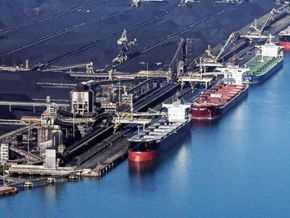
South Africa has amended its VAT export regulations so that coal and other movable goods destined for foreign markets can qualify for zero-rating when delivered to licensed terminal operators. National Treasury and the South African Revenue Service, or SARS, published the amendment on August 25, 2026. The measure resolves a procedural problem for exporters using the privately operated Richards Bay Coal Terminal, known as RBCT.
Previously, zero-rated treatment required exporters to deliver goods to the port authority. That requirement did not reflect operations at Richards Bay: the Transnet National Ports Authority controls the wider port infrastructure, but RBCT operates the coal terminals where cargo is received and loaded onto vessels. Coal delivered to RBCT had physically reached its export terminal, yet the operator was not the port authority recognized by the former rules. The amendment adds licensed terminal operators to the qualifying recipients, allowing exporters to preserve zero-rated treatment when using eligible facilities.
Coal throughput recovers from the 2023 low
The regulatory correction comes as the Richards Bay coal corridor recovers from several years of logistics disruption. Ecofin Agency reported that RBCT handled 57.66 million tons in 2025, compared with 52.08 million tons in 2024 and 47.21 million tons in 2023. The 2025 result was the terminal’s highest throughput in four years, although it equaled only about 63% of RBCT’s annual design capacity of 91 million tons.
SARS trade data cited by Ecofin Agency show that South Africa exported about 71.9 million tons of coal worth R95.4 billion ($6 billion) in 2025. Approximately 94% moved through RBCT and the Transnet-operated Port of Richards Bay, underlining the corridor’s importance to national export earnings. India received about 46% of South African coal exports that year, making the reliability of the Richards Bay system especially relevant to suppliers serving Asian buyers.
Rail performance remains the key capacity constraint
Improvement on Transnet Freight Rail’s network has enabled more coal to reach the terminal. Argus data cited in the report put average deliveries to RBCT at 1.17 million tons per week between January 1 and April 20, 2026. By July, Transnet’s bulk-rail performance had reportedly returned to pre-Covid levels, including one week in which 165 trains reached RBCT. Transnet Freight Rail later said it expected to move about 62 million tons of coal to the terminal during 2026.
RBCT had handled about 30 million tons by the end of June and expected annual exports to exceed 60 million tons in 2026, provided the rail improvement continued. Its goal was to establish a sustainable annualized rate of about 65 million tons by year-end. The figures would represent further recovery, but would still leave substantial unused terminal capacity.
Improved access begins to influence mining plans
The earlier decline was linked to equipment shortages, cable theft and infrastructure damage across Transnet’s rail network. Restricted logistics forced miners to operate below available production and terminal capacity. On August 5, 2026, Glencore Coal South Africa CEO Murray Houston told Miningmx that the company was considering returning coal growth projects to development as rail export capacity improved. Glencore had restructured its South African coal business after corridor volumes dropped below 50 million tons annually.
The VAT amendment removes a tax-treatment mismatch, but it does not add physical capacity to the supply chain. Export growth will continue to depend on consistent train availability and resilient rail infrastructure. For miners and traders, however, recognition of licensed terminals eliminates uncertainty over zero-rating at the point where cargo enters the export facility. That gives the recovering corridor a clearer administrative framework as South Africa seeks to convert better rail performance into higher coal shipments.