South African Red Meat and Wool Producers Told to Prove Origin as Buyers Tighten Sourcing Rules
A panel at the joint Western Cape annual general meetings of the Red Meat Producers' Organisation and the National Wool Growers' Association warned that South African livestock and wool farmers must be able to verify where and how their products were produced. Speakers said traceability gaps and biosecurity lapses could cost access to export markets such as Egypt and Saudi Arabia.
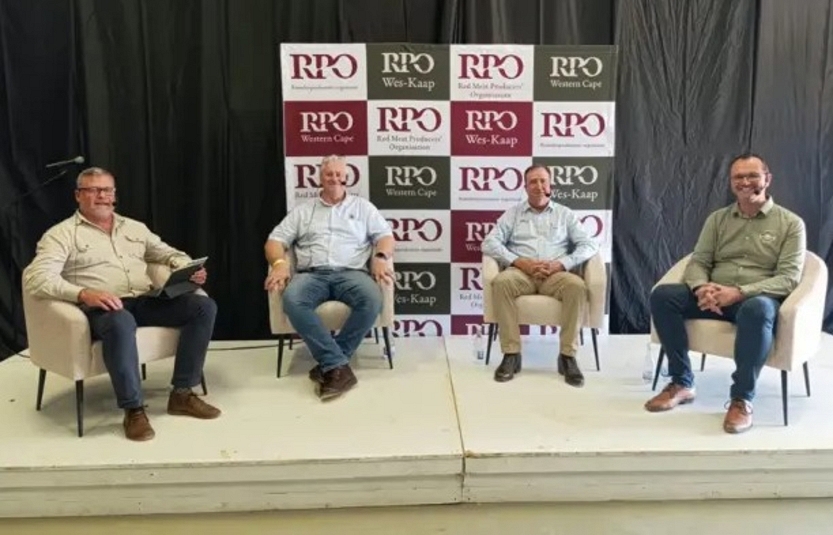
Wool and red meat producers in South Africa will increasingly have to prove where and how their products were made if they want to protect and expand market access, a panel discussion at the joint Western Cape annual general meetings of the Red Meat Producers’ Organisation (RPO) and the National Wool Growers’ Association (NWGA) concluded. The meetings were held at Nampo Cape in Bredasdorp in the Western Cape, and were reported by Algoa FM.
Production skill alone no longer sells the product
Hendri Truter, chief executive of Deli-Co Meat Wholesalers, told the panel that strong production skills on their own did not guarantee a market. “South African farmers can farm, but we have to realise we have to produce something that the client is looking for,” he said.
Drawing on his family business’s experience in producing and marketing meat, Truter said moving closer to consumers had highlighted how their expectations are changing. Customers increasingly want to know where their food comes from, whether it is safe, and whether its origin can be verified through the value chain. Standards set further along the chain, he said, filter back to farm level. “If you want to market your product in the future, you’re going to have to comply with the standards.”
Truter urged producers to move closer to their processors and markets, arguing that better communication and a clearer understanding of requirements would let the value chain move forward more quickly. He also warned that the value chain is only as strong as its weakest link, underlining the need for broad participation in good production and biosecurity practice.
Traceability: importing countries set the conditions
RPO national vice-chairperson Angus Williamson said South Africa has growing red meat export opportunities in markets such as Egypt and Saudi Arabia, but that importing countries determine the conditions suppliers must meet. “If those are the rules of the game, that’s what we’ve got to change to,” he said.
Williamson said South Africa lags behind some other African countries in livestock traceability, while the wool industry has already demonstrated that such systems can work. He cautioned producers against viewing traceability mainly as a way of earning a price premium. “You don’t have to go the Rolls-Royce option,” he said, adding that a basic tagging system could be sufficient. The greater risk, in his view, is that certain buyers could increasingly exclude animals that are not part of a traceability system.
NWGA general manager Dan Kriek broadened the discussion beyond traceability, pointing to growing expectations that agricultural industries should be able to demonstrate how their products were produced. Consumers want assurances not only about origin and quality, but also about animal welfare, environmental stewardship and the treatment of people involved in production. Those expectations are unlikely to disappear and could become more demanding, increasing the importance of credible certification and the ability to substantiate sustainability claims. Kriek said the wool industry is well positioned in this respect, but that sustainable practice ultimately needs to extend across the wider livestock sector.
Biosecurity and disease preparedness
Williamson said lessons from the foot-and-mouth disease outbreak had reinforced the need for biosecurity to form part of everyday farm management rather than receiving attention only during a crisis. Measures raised during the discussion included:
- isolating newly introduced livestock;
- ensuring employees understand the necessary protocols;
- remaining alert to animal-health threats beyond those dominating the headlines.
The implications extend beyond the affected farm. Importing countries require assurances about the health status and origin of livestock products, and animal-disease problems could affect the ability of an entire industry to supply particular markets.
Kriek pointed to preparations for Rift Valley fever, warning against complacency simply because the last major outbreak occurred many years ago. He referred to the serious consequences of the 2009 to 2011 outbreak and said the industry had already started preparing for another possible outbreak following warning signs last year. A key concern is whether sufficient vaccines could be produced and made available before they are needed. For Kriek, another outbreak is not a question of “if”, but “when”.
Organised agriculture as the delivery mechanism
Kriek said the NWGA and RPO are already working together, along with other industry role players, on challenges affecting both wool and red meat producers. Rather than duplicating work, the organisations draw on their respective areas of expertise, with one taking the lead on a particular issue while the other provides support. Cooperation extends to issues such as predation, where industry bodies are working together on research and information gathering.
Kriek was critical of the tendency for complex agricultural debates to migrate to WhatsApp groups and social media, where context and nuance are easily lost. Organised agriculture, from commodity organisations and provincial structures to national bodies, can instead channel challenges identified at grassroots level through structures with the expertise and influence to engage government on legislation, regulation, animal health and matters affecting entire value chains. The panel’s broader message was that producing a good product remains fundamental, but is no longer enough on its own.