Two Soria hydrogen projects totaling more than 760 MW enter environmental review
Castilla y León has opened public consultation on the environmental authorization of two renewable hydrogen projects in Soria with more than 760 MW of combined electrolysis capacity. The developments, led by Alkeymia Energy and DH2 Energy, also include renewable methanol production.
Environmental review begins for two projects
Two large renewable hydrogen developments in Spain’s province of Soria have moved forward in the permitting process after Castilla y León’s regional government opened a public information period covering their environmental authorization and impact studies. The notice was published in the Official Gazette of Castilla y León on July 31, according to pv magazine España.
The projects, located in Almazán and Los Rábanos, exceed 760 MW of combined electrolysis capacity. The start of public consultation allows authorities, affected parties and other stakeholders to examine the environmental documentation, but it does not constitute final construction approval.
Together, the developments would add substantial hydrogen production capacity to Castilla y León and create a new source of renewable methanol. The projects target industrial and transport applications where direct electrification is difficult, while using different approaches to electricity supply, process heat and carbon sourcing.
Alkeymia plans hydrogen and methanol complex
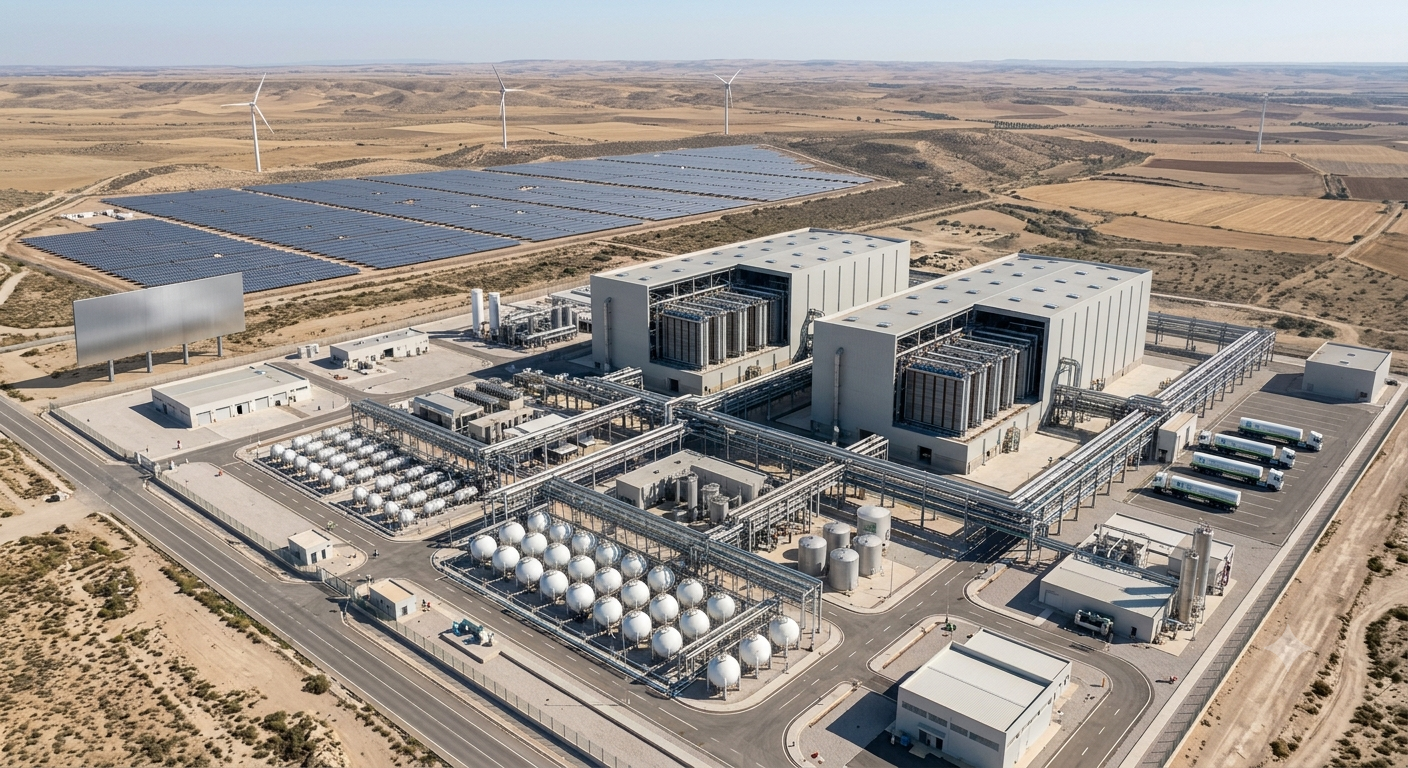
Alkeymia Energy’s project in Almazán includes a 300 MW plant designed to produce renewable hydrogen and green methanol. The electrolyzers would be powered mainly through a connection to a renewable electricity network capable of supplying the planned load.
The complex also includes a biomass installation that would provide renewable heat for thermal processes. Biogenic carbon dioxide captured during combustion would be combined with hydrogen to synthesize methanol, linking hydrogen production with a source of non-fossil carbon.
Annual output is projected at 37,500 tonnes of hydrogen and 139,000 tonnes of methanol. Planned storage infrastructure comprises 45 hydrogen tanks operating at 85 bar and two methanol tanks with a capacity of 8,000 cubic metres each. A modular design would allow individual processing units to be isolated, helping the plant continue operating during unplanned interruptions.
DH2 Energy pairs electrolysis with 628 MWp of solar
DH2 Energy’s development in Los Rábanos features a 460 MW electrolyzer connected to an adjacent 628 MWp self-consumption photovoltaic plant configured without surplus electricity exports. The project has a budget exceeding €417 million. All hydrogen output is expected to leave the facility by pipeline, while the oxygen produced through electrolysis would be released into the atmosphere.
Technical documents estimate peak hydrogen production of 9,288 kilograms per hour at the beginning of the equipment’s operating life and 8,269 kilograms per hour at the end. Expected annual production ranges from 21,425 to 24,066 tonnes. The development also incorporates renewable methanol production. According to pv magazine España, renewable methanol is intended for transport segments that are difficult to electrify, particularly aviation, maritime transport and rail, where e-fuels can replace fossil fuels without substantial changes to existing infrastructure.