SOMDIA plans €153 million investment in Côte d’Ivoire’s sugar and maize sectors
French agribusiness group SOMDIA plans to invest nearly €153 million in Côte d’Ivoire over five years through SUCAF-CI. The program will expand sugar production, build on a new 12-million-liter alcohol distillery and revive plans for industrial maize processing.
Five-year program targets sugar expansion
French agribusiness group SOMDIA is preparing a new investment cycle in Côte d’Ivoire through its subsidiary, Sucrerie Africaine de Côte d’Ivoire, or SUCAF-CI. According to La Tribune, the company plans to deploy nearly €153 million, equivalent to 100 billion CFA francs, over five years under a new agreement with the Ivorian government announced on July 10.
The program is intended to reinforce SUCAF-CI’s leading position in Côte d’Ivoire’s sugar market. The company produces more than 120,000 tonnes of sugar annually and operates two sugar complexes in Ferkessédougou in the north of the country. Its output is sold under the Princesse Tatie brand.
La Tribune reports that the new expenditure will support higher sugar production and strengthen the company’s position in derivative products, including alcohol. The investment therefore combines additional capacity in SUCAF-CI’s established business with diversification into products that use residues from sugar processing.
New distillery creates a market for molasses
SUCAF-CI commissioned a sugar-cane distillery at its Ferké 2 complex in the Hambol region in May. The facility required an investment of more than €27 million, or 18 billion CFA francs, and is described by La Tribune as the first unit of its kind in Côte d’Ivoire.
The distillery has annual capacity to produce 12 million liters of extra-neutral alcohol. It processes molasses, a by-product of sugar-cane transformation, into alcohol for local industrial customers. The plant is expected to cover 50% of Côte d’Ivoire’s current national requirement, potentially reducing dependence on externally sourced industrial alcohol while improving the value recovered from each tonne of cane processed.
For SUCAF-CI, the distillery adds a second revenue stream to its core sugar operation. For local manufacturers, domestic output could provide a closer source of extra-neutral alcohol, although La Tribune did not disclose a production ramp-up schedule, customer contracts or expected pricing.
Maize returns to the diversification agenda
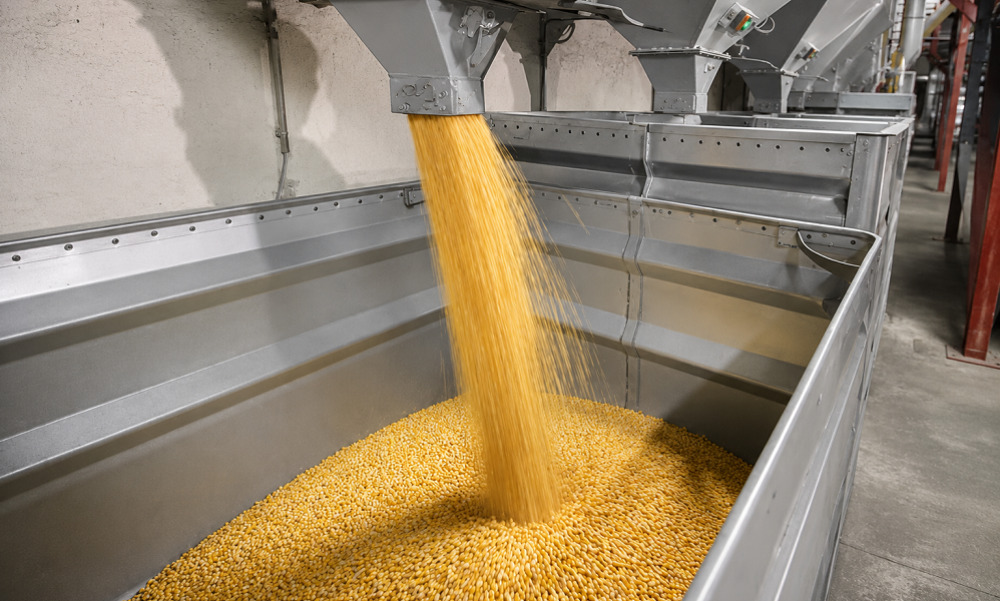
The five-year roadmap also calls for a significant project in the maize sector, but its technical details have not yet been specified. SUCAF-CI first discussed creating the Compagnie fermière ivoirienne in 2019 to develop industrial maize production. Under its Cap 2027 program, SOMDIA announced another plan in 2024 for a maize-processing unit in Côte d’Ivoire with projected capacity of 15,000 tonnes per year. Information reported at the time indicated that the project had been delayed, notably by the Covid-19 pandemic.
The new agreement puts maize back among the group’s main diversification priorities. Côte d’Ivoire imports an average of 200,000 tonnes of the cereal annually, a relatively limited volume, but demand is increasing for both human food and animal feed. That growth is placing pressure on production, collection, processing and industrial supply channels.
SOMDIA already has relevant operating experience in Cameroon. Through Compagnie Fermière Camerounaise, the group runs a plant inaugurated in 2021 that processes maize into grits for breweries, food flour and animal-feed products. Applying that model in Côte d’Ivoire could connect growers with several industrial markets, but the scale, timetable and financing of the proposed Ivorian maize project remain to be detailed.
The investment comes as Côte d’Ivoire’s agro-industrial sector ranks among the most dynamic in West Africa, alongside those of Nigeria, Ghana and Senegal. For producers and processors, the practical effect will depend on how much of the €153 million is allocated to farm output, factory capacity and procurement networks, and on whether the maize project advances from planning to construction.