Solvay to More Than Double Electronic-Grade Peroxide Capacity in Taiwan by End-2026
Solvay plans to more than double annual electronic-grade hydrogen peroxide capacity in Taiwan through its Shinsol Advanced Chemicals joint venture by the end of 2026. The expansion will increase local supplies of a critical wafer-cleaning chemical for Taiwan’s semiconductor manufacturers.
Capacity to exceed twice the current level
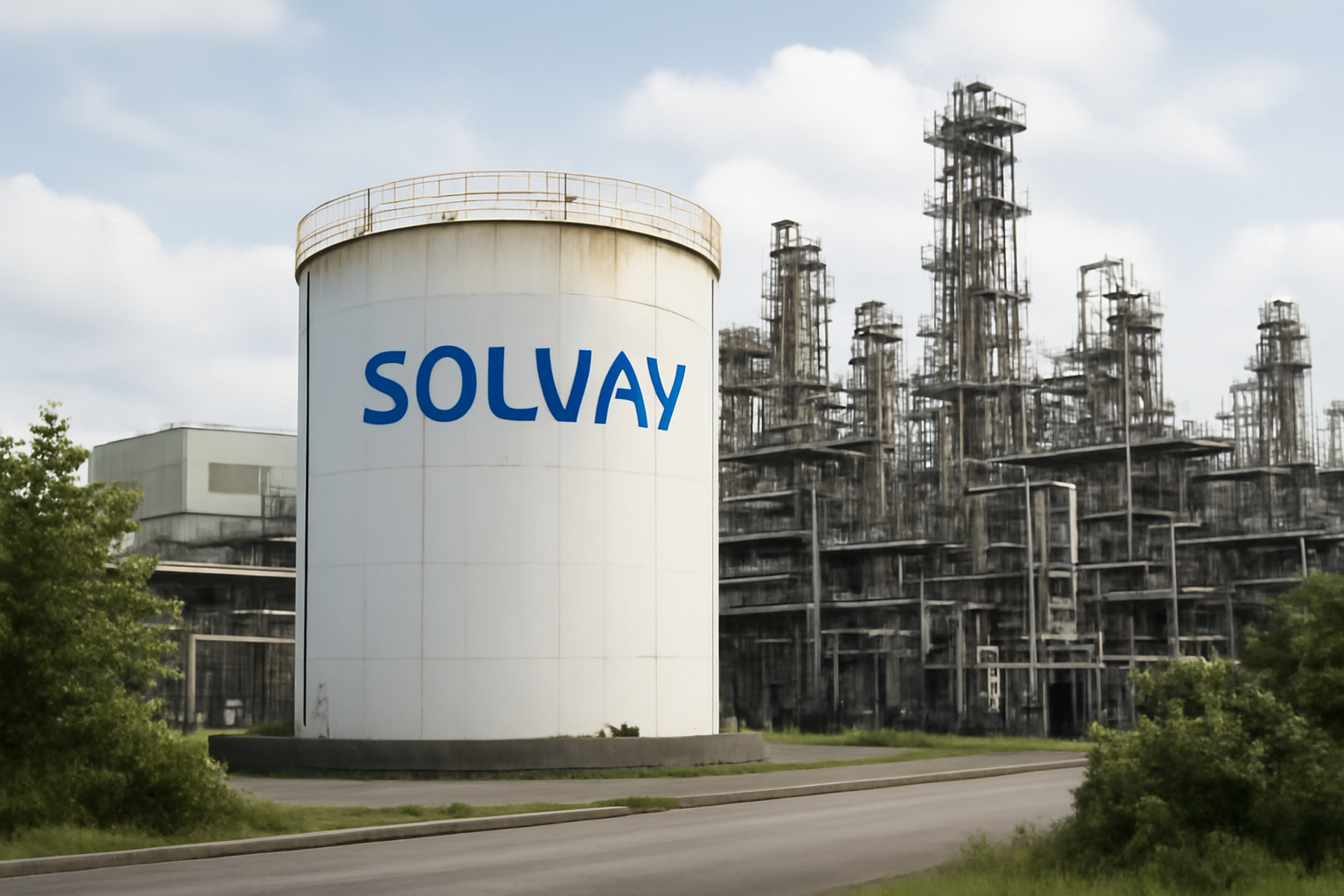
Belgian chemicals producer Solvay will more than double its annual production capacity for electronic-grade hydrogen peroxide in Taiwan by the end of 2026. The project will be carried out through Shinsol Advanced Chemicals, its joint venture with Taiwanese polymer producer Shinkong Synthetic Fibers Corporation.
The expansion builds on the high-purity hydrogen peroxide plant that Shinsol launched in Taiwan in 2023. Solvay said at that plant’s inauguration that the facility covered 2.4 hectares and had annual capacity of 35,000 tonnes. More than doubling that base would take capacity above 70,000 tonnes per year, although the company’s latest announcement did not disclose a precise final figure or the value of the investment.
L’Usine Nouvelle reported that the additional production is intended to support the rapid expansion of Taiwan’s semiconductor industry. Solvay said the investment would strengthen local supply for chipmakers and confirmed that the high-purity grades produced in Taiwan have already been qualified by local customers. According to the company, their performance, quality and consistency match material supplied from its global manufacturing network.
A critical chemical for wafer processing
Electronic-grade hydrogen peroxide is used to clean semiconductor wafers during integrated-circuit manufacturing. The specification differs from standard industrial peroxide because microscopic contamination can damage chip performance or lower manufacturing yields. Purity requirements become more demanding as semiconductor designs become smaller and more complex, making consistent chemical quality an important operating consideration for advanced fabrication plants.
Producing more of the material close to Taiwanese fabs can shorten supply routes and reduce dependence on deliveries from overseas plants. For chipmakers, however, capacity alone is not sufficient: chemicals used in wafer processing must complete customer qualification before they can enter regular production. Solvay’s statement that its Taiwanese grades have already been approved by local customers therefore indicates that the additional output can use an established product specification rather than starting a new qualification process from the beginning.
Shinsol anchors Solvay’s local supply strategy
Shinsol Advanced Chemicals was established to develop, produce and market electronic-grade hydrogen peroxide in Taiwan. Its plant is located in Tainan, close to one of the island’s main semiconductor manufacturing clusters. Shinkong Synthetic Fibers contributes local industrial experience as a producer of PET polymer materials, while Solvay provides hydrogen peroxide technology and experience from manufacturing operations in Asia, Europe and the United States.
Carlos Silveira, president of Solvay’s Peroxides business, said the investment reflected the group’s confidence in the long-term growth of Taiwan’s semiconductor market. Shinsol chairman Gregory Wu said the partners were increasing local production while maintaining their standards for quality, safety and operations.
The end-2026 timetable makes the project a near-term addition to Taiwan’s electronic-chemicals supply base rather than a new plant with a long construction horizon. Solvay also said it is working with its partner and customers to approve a subsequent expansion phase. No capacity, budget or completion schedule for that possible phase was disclosed.