Sicily Looks to Japan’s Food Market, Valued at More Than €930 Million
Sicily is looking to expand sales of wine, olive oil and other food products in Japan, a market valued at more than €930 million in the available report. The opportunity is substantial, but the source material does not disclose current Sicilian export volumes, targeted sales or specific market-access measures.
Sicily focuses on Japanese demand
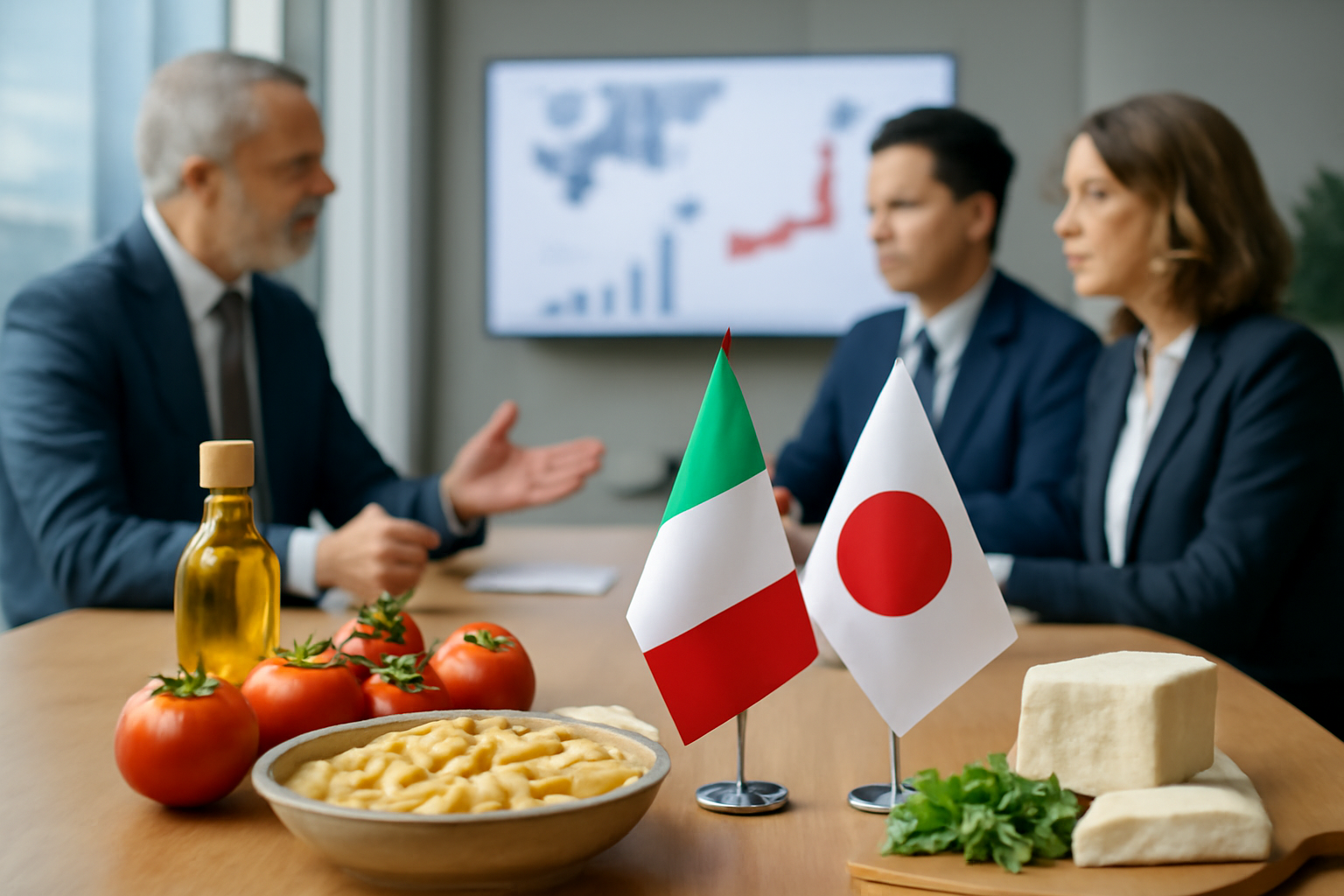
Sicily is turning its attention to Japan as a destination for wine, olive oil and other food products, targeting a market valued at more than €930 million. The initiative places two of the island’s best-known product categories at the center of its commercial ambitions in Japan, while also creating an opening for a broader range of Sicilian foods.
The reported market value indicates the scale of the opportunity available to suppliers, but it should not be interpreted as expected revenue for Sicilian companies. The available source material does not specify what products are included in the €930 million calculation, the period covered by that figure or Sicily’s existing share of the market. It also provides no forecast for additional sales.
For producers and exporters, that distinction matters. A large addressable market may support new business, but actual gains depend on how much demand is accessible to individual categories and how Sicilian products compete with established suppliers. Without data on current shipments, prices or market shares, the immediate commercial impact cannot yet be quantified.
Wine and olive oil lead the proposition
Wine and olive oil are explicitly identified as the main products in Sicily’s approach to Japan. They give exporters recognizable categories around which to present the island’s wider food offering. They also bring different commercial requirements, from positioning individual wine labels to maintaining consistent specifications and presentation for packaged olive oil.
Greater access will require more than general interest in Italian food. Sicilian suppliers must connect with importers and distributors able to place products in the relevant Japanese sales channels. Product information, packaging and a reliable commercial offer will be central to converting promotion into repeat orders. These are operational priorities rather than guarantees of sales.
The opportunity may extend beyond the two headline categories because the effort concerns other food products as well. However, the source does not identify those goods, participating companies, planned promotional events or distribution partners. It also does not disclose whether the initiative includes public funding, commercial agreements or regulatory support.
Market access will determine the outcome
Japan offers Sicilian companies a market of meaningful reported value, but exporters will need category-level evidence before committing resources. Producers must assess potential order sizes, route-to-market costs and the ability of partners to maintain product visibility. Importers, meanwhile, will need a clear reason to add Sicilian products to portfolios that may already include competing food and beverage suppliers.
The absence of figures for present trade flows makes the starting position unclear. There is no disclosed baseline against which future growth can be measured, and no timetable has been provided for the expansion effort. That limits any assessment of how quickly the initiative could affect production, processing or export volumes in Sicily.
The €930 million figure nevertheless gives the campaign a concrete commercial reference point. The next test will be whether Sicily can translate the visibility of wine and olive oil into importer relationships and sustained orders across a wider food range. Measurable shipment data, named partnerships and category-specific targets would provide the clearest evidence that interest in Japan is becoming durable market access.