Shrinking Cattle Herds Push Global Beef Prices Higher
Cattle availability is declining in Brazil, the United States and China as global meat prices rise, particularly for beef. India faces a different problem: poultry prices are being pressured by feed costs rather than cattle supply.
Beef supply tightens across major markets
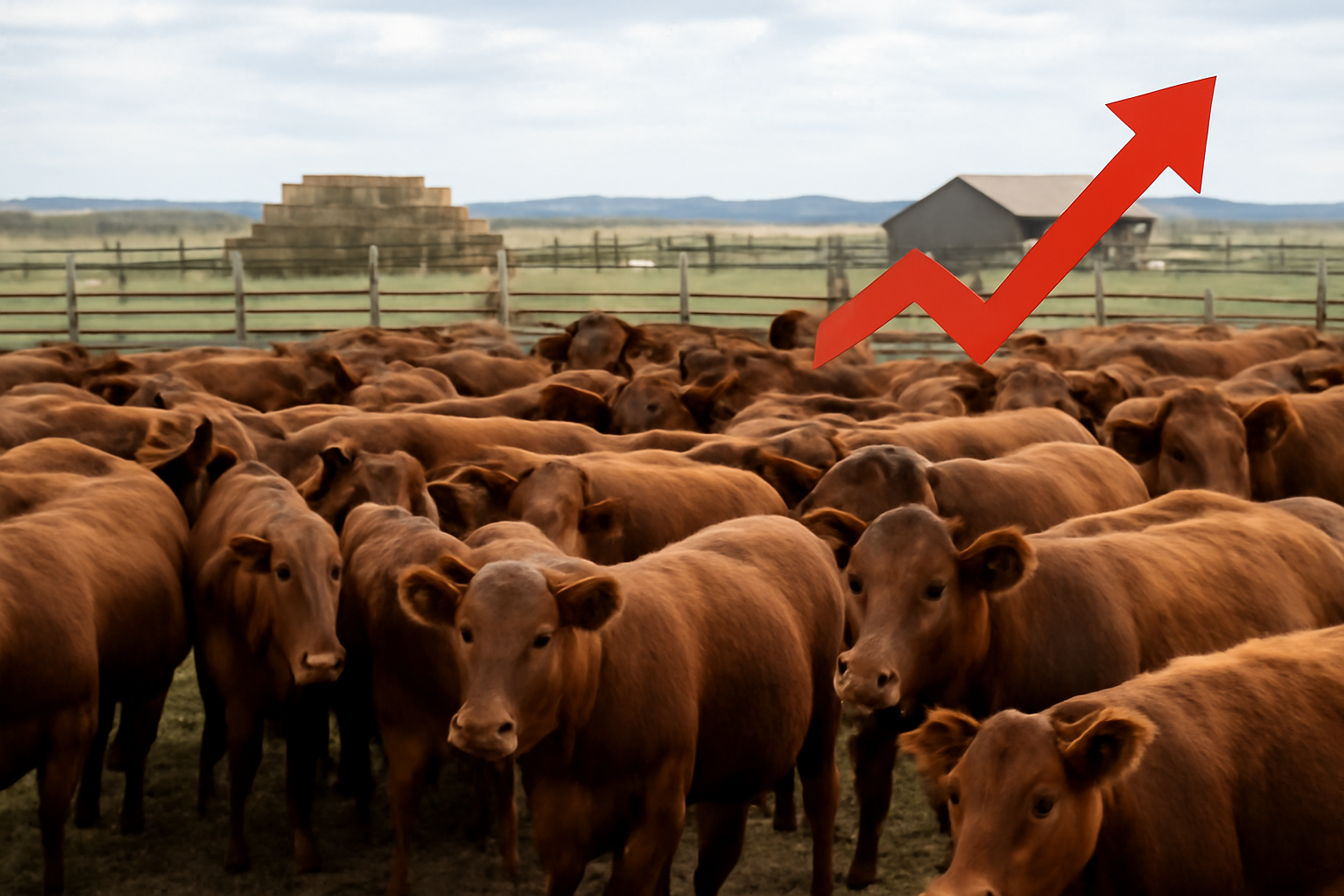
Global meat prices are rising, with beef facing particularly strong pressure as cattle availability declines in Brazil, the United States and China. News18 Hindi identified shrinking cattle numbers in these three major producing and consuming markets as a central factor behind the increase. The simultaneous contraction matters because each country occupies a different position in the beef economy: Brazil is a major producer, the United States combines large-scale production with substantial domestic demand, and China is a major consumer.
Lower cattle availability does not translate immediately or uniformly into retail inflation. The effect moves through livestock auctions, slaughter volumes, carcass prices, processing margins and wholesale contracts before reaching consumers. Nevertheless, fewer market-ready animals usually intensify competition among processors and buyers. Producers holding cattle may benefit from firmer prices, while slaughterhouses can face lower capacity utilization and pressure on margins if they cannot pass higher livestock costs to customers.
Brazil, the United States and China shape the outlook
Supply developments in Brazil carry significance beyond its domestic market because the country is a leading source of beef. Reduced availability can limit the volume offered to buyers and strengthen competition for exportable meat. Importers then have to decide whether to accept higher prices, switch suppliers or substitute other animal proteins.
In the United States, a smaller cattle pool can affect feedlots, meatpackers, wholesalers and food-service companies. Processors need sufficient throughput to spread fixed costs across their plants. When cattle supplies tighten, procurement becomes more expensive and operating economics become more difficult, even before consumers see the full increase at retail.
China adds demand-side weight to the global picture. A decline in its domestic cattle population can raise the importance of imported supply if consumption remains firm. The eventual trade effect will depend on local demand, inventories, prices and purchasing decisions, none of which were quantified in the available source material. Even so, simultaneous herd pressure in China and major producing countries reduces the market's ability to absorb disruptions.
India's poultry inflation has a different cause
India should be separated from the cattle-driven beef story. According to News18 Hindi, pressure in the country's poultry industry is linked to feed. Feed is a major input for chicken production, so higher costs can quickly squeeze farm margins. Producers may respond by limiting placements or seeking higher selling prices, transmitting the pressure to wholesalers, retailers and consumers.
This distinction is important for commodity buyers. Beef inflation linked to cattle availability reflects a biological supply cycle that cannot be reversed quickly because rebuilding herds takes time. Poultry has a shorter production cycle, but its economics remain highly sensitive to feed prices. The two markets may therefore rise at the same time while requiring different responses from producers and policymakers.
Limited data call for cautious market conclusions
The available report does not provide herd totals, price changes, slaughter data or a timetable for recovery. It therefore supports a directional conclusion rather than a precise forecast: beef markets are facing tighter cattle availability in Brazil, the United States and China, while Indian chicken prices are under separate cost pressure from feed.
For traders, processors and importers, the key indicators will be cattle inventories, slaughter rates, wholesale beef prices and purchasing activity in China. In India, feed costs and poultry production decisions will be more relevant than global cattle numbers. Treating all meat inflation as one phenomenon would obscure the different risks facing each supply chain.