Seville Rice Growers Face a 350,000-Tonne Harvest With 40% of Last Crop Unsold
Rice producers in Seville province are heading into a harvest of roughly 350,000 tonnes while about 40% of the previous crop is still unsold. Growers blame the arrival of low-cost rice from Cambodia and Myanmar for the accumulated stock. The commercial challenge is placing new grain and carryover inventory on the same market.
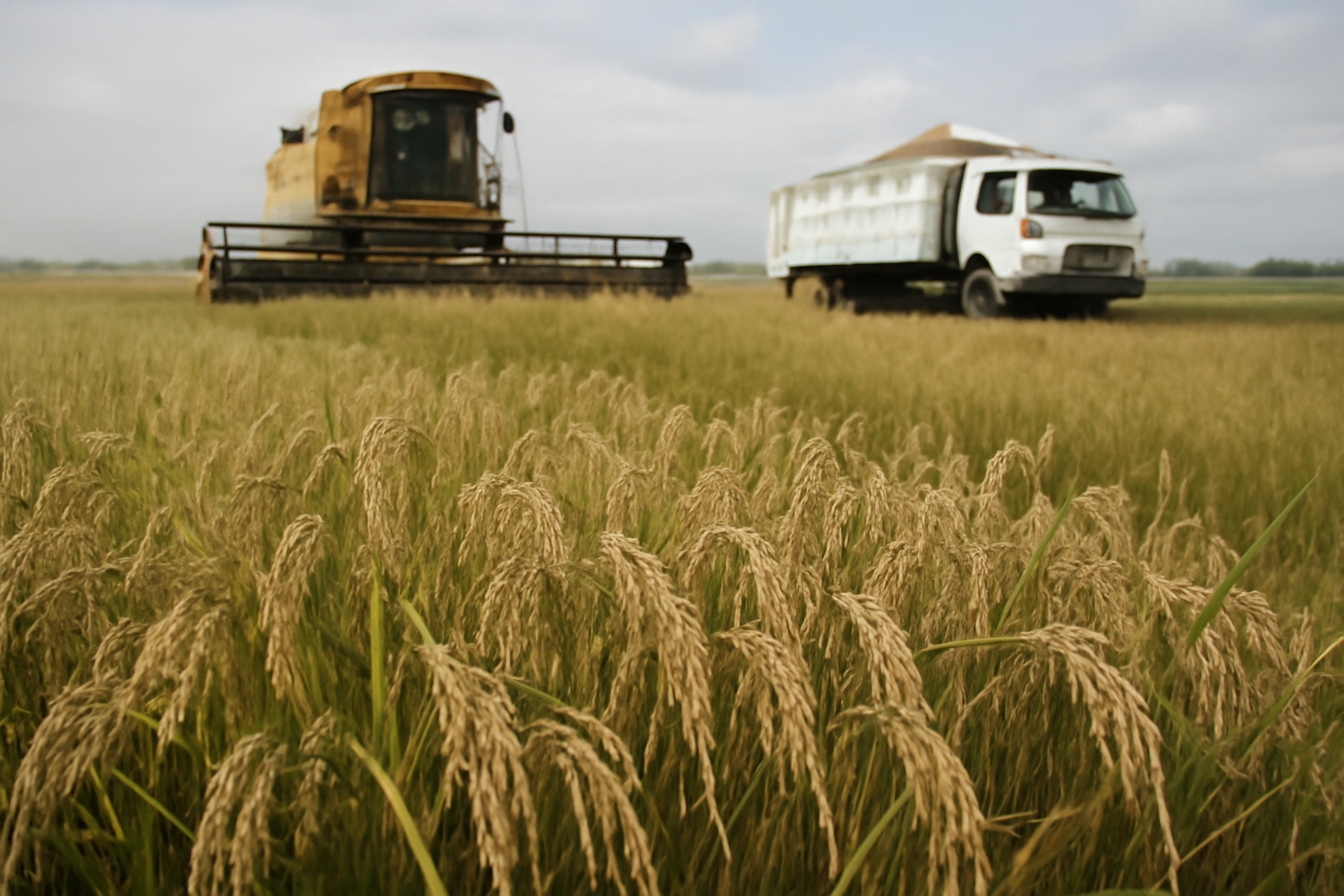
Rice growers in the province of Seville are preparing for a strong harvest of roughly 350,000 tonnes while about 40% of the previous crop remains unsold and in storage. A good agronomic year is therefore arriving as a commercial problem: the new grain has to be placed on a market that has not yet absorbed the volume already sitting in silos.
A full harvest meets a full warehouse
The marshlands of the Guadalquivir around Seville are the core of Spanish rice production, and output there depends heavily on water availability in the irrigation season. When allocations are adequate, the crop is large. This year the harvest is expected to be good, but producers and cooperatives are entering it without having cleared what they already hold.
Carryover of this size changes the negotiating position of every seller in the chain. Rice held from one campaign into the next accumulates storage, financing and quality costs, and long-stored paddy loses milling performance and attracts lower bids. Sellers who need physical space for the incoming crop are the ones forced to move first, and they move at whatever price is on offer. In practice, the price of the new crop is being set by the urgency to liquidate the old one.
Cheap Asian grain sets the reference price
The cause identified by growers is the inflow of low-cost rice from Cambodia and Myanmar. Spanish producers describe it as an invasion of cheap grain, and the mechanism is straightforward: imported origins establish a reference price that Spanish paddy, produced with European labour, water, energy and regulatory costs, cannot match on the shelf or in industrial contracts.
The consequences differ sharply along the chain:
- Growers must choose between selling into a depressed market and carrying inventory into a further campaign.
- Cooperatives and mills absorb the storage risk and finance the unsold volume.
- Packers, industrial buyers and retail chains gain leverage, because visible surplus lets them wait.
- Importers and traders handling Asian origins take share for as long as the price gap stays open.
What the campaign turns on
The first variable is the speed at which the carryover clears. If the old stock is still moving when the new crop arrives at the drying and milling plants, both volumes compete against each other and the discount deepens. The second is trade policy. The pressure described by Spanish growers is a question of import conditions rather than of yields, and any change would have to come at European Union level, not from the sector itself.
The third is acreage. Rice in Spain is a high-cost crop tied to specific irrigated land, and if the price gap with Cambodian and Myanmar grain persists, some hectares will shift to alternative uses or leave production altogether. That decision is slow to reverse: the drying, storage and milling infrastructure built around the Guadalquivir only pays off at volume, and a smaller domestic crop raises Spain's reliance on imported rice for its own consumption and for its processing industry.
For buyers outside Spain the immediate reading is simpler. A large Spanish crop landing on top of unsold stock means exportable surplus in a European origin that normally sells at a premium, and importers of Mediterranean japonica-type rice have room to negotiate through the marketing season. For producers, the same fact means the harvest that looks good in the field is the one that is hardest to sell.