Serbia's Apple Sector Looks Beyond Russia as 82,083 Holdings Grow the Crop
Official data from the Statistical Office of the Republic of Serbia show 82,083 agricultural holdings cultivate apples, making the fruit the country's second fruit business after plum. Russia remains the largest single export destination, though Serbian media report shipments are gradually spreading to other markets. Apple has stayed among Serbia's ten biggest export products for the past decade.
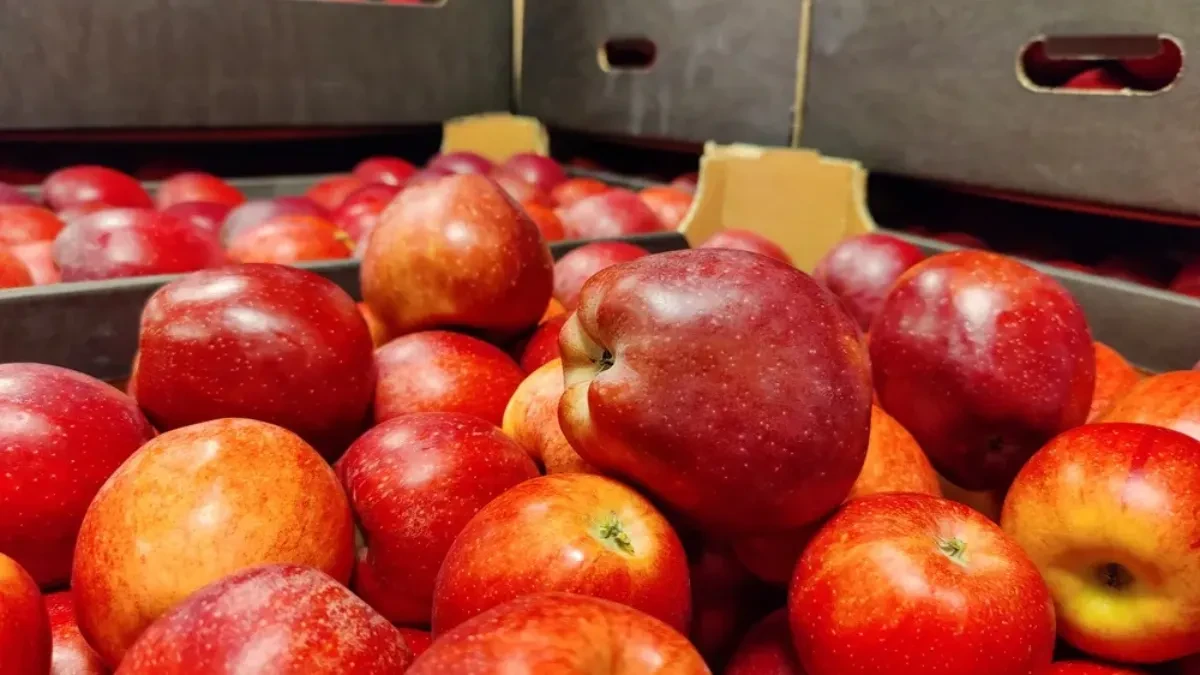
Serbia's apple crop has become the country's second fruit business after plum, and the production base behind it is unusually broad: 82,083 agricultural holdings cultivate apples, according to official data from the Statistical Office of the Republic of Serbia (RZS) cited by Novosti. Russia remains the largest single destination for Serbian apples, although both Novosti and bizportal.rs report that exports have been spreading to other markets in recent years.
Behind plum, inside the export top 10
Plum is Serbia's calling card in fruit, Novosti writes, but apple comes immediately behind it. Over the past ten years apple has held a place among Serbia's ten largest export products, both publications report — a durable position for a single fresh-produce line in a diversified export basket.
The figure of 82,083 holdings describes a fragmented grower base rather than a concentrated industry. Neither report publishes planted area, average orchard size, harvest volumes or export values, so the tonnage behind that top-10 ranking cannot be established from the available material. What the structure does imply is a heavy dependence on aggregation: fruit from tens of thousands of small units has to be collected, sorted, graded and stored before it can move in export lots.
Production concentrated in a handful of districts
The best and highest-quality apples are grown in several key fruit-producing districts with favourable climate and soil conditions, according to both outlets. Fruška Gora is described as the most favourable area, followed by Bačka, Banat, Čačak, Valjevo and Zaječar.
That list spans two different agronomic settings. Bačka and Banat sit in the Vojvodina plain in the north, while Čačak, Valjevo and Zaječar lie in central and eastern Serbia. For buyers, the geographic spread matters mainly as weather-risk diversification: hail, spring frost and heat rarely hit all of these districts in the same season with equal force.
Russia leads, alternative destinations unquantified
Both reports state plainly that Russia absorbs the largest share of Serbian apple exports and that the destination mix has widened in recent years. Neither names the new markets, gives their share, or quantifies how much volume has shifted.
That leaves the sector's core commercial exposure unchanged in its outline. Concentration on one dominant buyer country ties a large part of the crop to a single set of phytosanitary requirements, one logistics corridor, one payment and currency environment, and one policy regime. Diversification lowers that exposure, but on the evidence published by the two outlets it is better read as a direction of travel than as a completed reorientation.
Anti-hail nets and the cost of staying competitive
To remain and become competitive, growers have to apply modern technology, bizportal.rs writes, citing anti-hail netting as the leading example — equipment that protects fruit not only from hail but also from sunburn. Both publications note that private producers accept these changes less readily, but that anyone intending to progress has to adopt them.
The economics of that investment run through fruit quality rather than yield alone. Netting raises the predictable share of premium-grade fruit, which is what allows a grower or packing house to commit to fixed-volume retail contracts season after season. Orchards without protection remain more exposed to weather events that can push a crop from the fresh market into processing channels, where prices are set by whatever surplus is available that week.
The same logic separates the districts named by the two outlets. Areas able to fund netting, modern plantings and cold storage can defend a fresh-export position; those that cannot will tend to supply the processing segment. Neither report provides investment figures or state support amounts for the sector, so the pace of that upgrade cannot be assessed from the published material.