Senegal reinstates rice import suspension to clear local stocks
Senegal has again suspended rice imports to help local production find buyers as unsold stocks accumulate, according to Agence Ecofin. Domestically grown rice has struggled to compete with imported supplies for demand.
Senegal reinstates rice import suspension to clear local stocks
Senegal has once again suspended rice imports in an effort to help domestic production find buyers, according to Agence Ecofin. The publication reports that locally grown rice has struggled to secure outlets as unsold stocks accumulate across the country. The decision reopens a familiar tension in the Senegalese grain market between protecting local farmers and keeping a staple food widely available.
A market crowded by imports
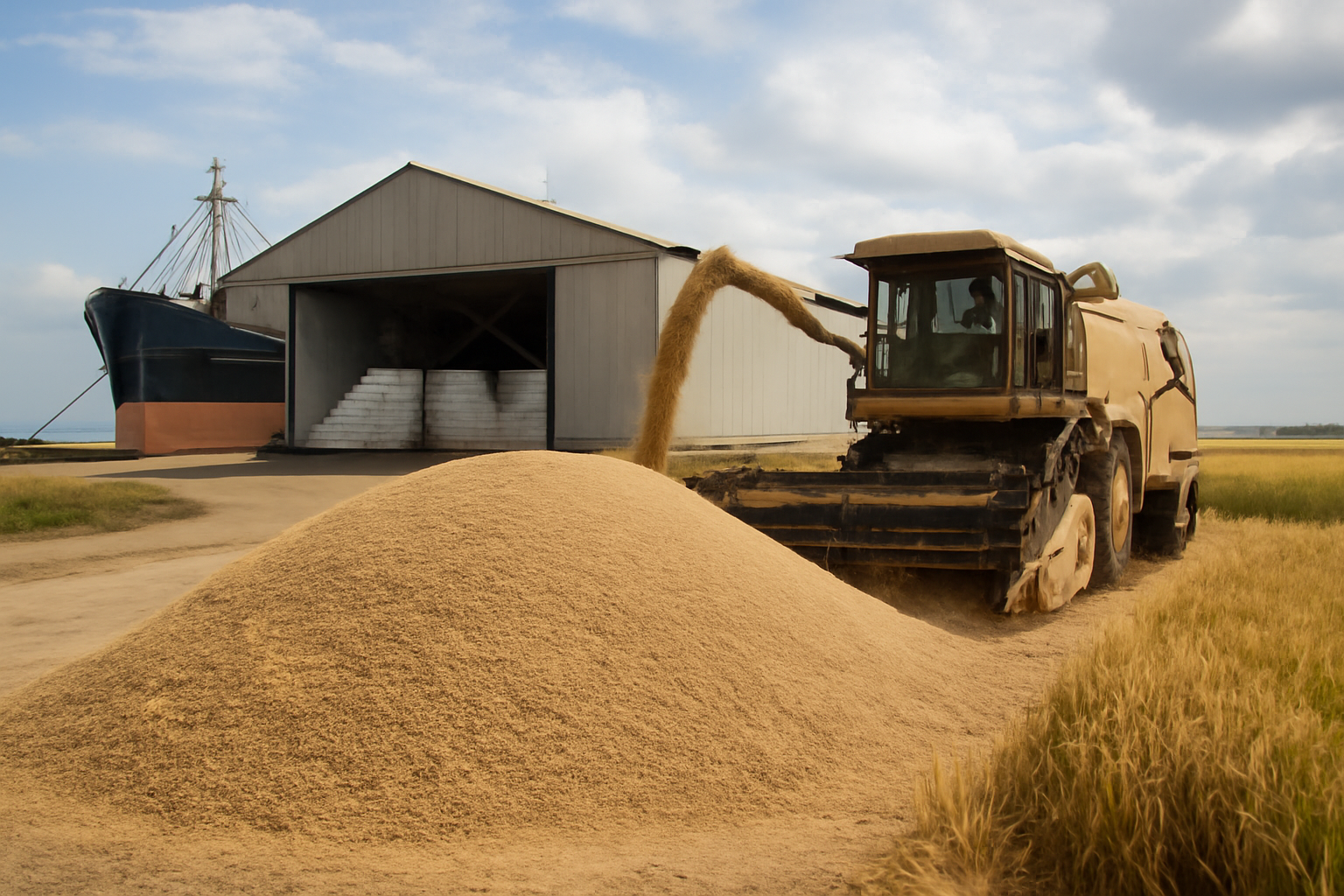
Agence Ecofin reports that local rice is building up in storage because it cannot compete with imports for buyers. Imported rice has long dominated supply on the Senegalese market, and its steady availability has made it the default choice for many traders and consumers. That leaves domestic paddy and milled rice without enough demand to move through the supply chain.
By halting inbound shipments, the authorities aim to redirect purchases toward the local harvest. The measure is a renewed one rather than a first attempt, and that repetition is itself the key signal: earlier steps to protect local production did not durably close the gap between what growers produce and what the market absorbs at import-competitive prices.
What it means for trade flows
For exporters and international traders, the suspension temporarily closes access to one of West Africa's rice-consuming markets. Suppliers that route grain to Senegal must either find alternative buyers or wait for the restriction to be lifted, and the uncertainty over timing complicates forward contracts and shipment planning.
For importers operating inside the country, existing inventories and locally milled rice become the working supply. The measure shifts commercial advantage toward domestic producers and processors, at least while the suspension holds. How long that advantage lasts depends on how quickly the accumulated local stocks are drawn down.
Balancing local output and consumer supply
Rice is a dietary staple in Senegal, and import suspensions carry the risk of tightening availability or lifting retail prices if local output cannot fully cover consumption. The government's challenge, as framed by Agence Ecofin's reporting, is to give local growers a market without disrupting overall supply to consumers.
For market analysts, the measure is a reminder that policy, not only price, shapes rice flows into West Africa. Traders watching the region will be looking for signals on how long the suspension runs and whether local stocks clear fast enough to reopen the door to imports without leaving shelves short.