Senegal’s 2026 Mango Export Campaign Shows Better Control but Risks Remain
Senegal’s 2026 mango campaign appears better managed, according to Agence Ecofin, after earlier disruptions in the European market. Production, logistics and access to European buyers nevertheless remain sources of risk for the country’s leading fruit export sector.
A more controlled export campaign
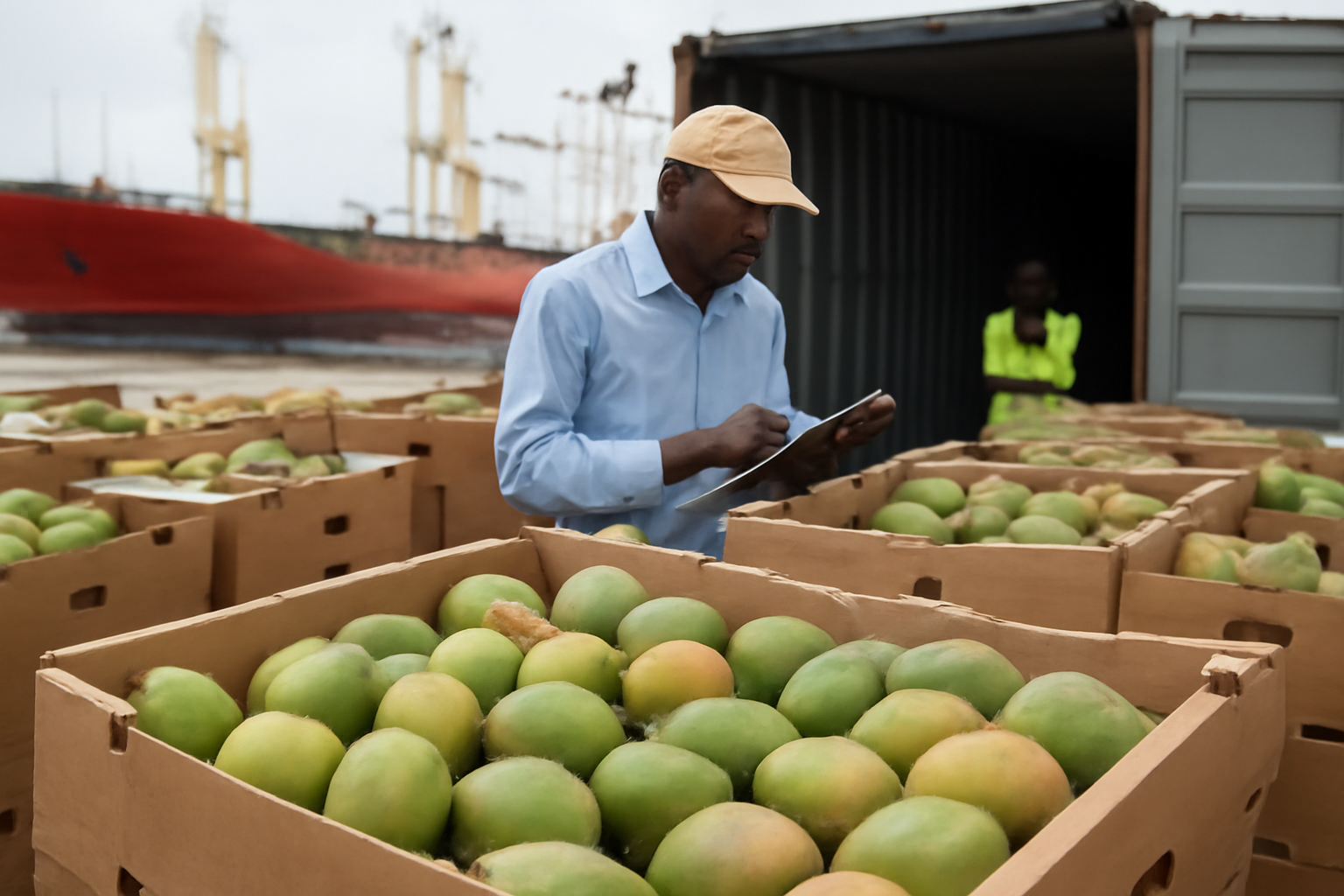
Senegal’s 2026 mango export campaign is showing signs of better operational control, although important risks have not disappeared. Agence Ecofin describes the current campaign as better managed than previous operations, following significant disruptions affecting the industry in the European market.
Mango is Senegal’s leading exported fruit, making the performance of the campaign important for growers, packing businesses, logistics operators and exporters. Improvements in coordination can help these companies move fruit through harvesting, sorting, packing and shipment within the limited commercial window imposed by a perishable product.
The available information does not provide shipment volumes, export values, prices or a comparison with earlier seasons. It therefore remains too early to quantify the improvement. The central development is operational: the industry appears to be handling the campaign more effectively, but it still faces conditions capable of limiting shipments.
Production and logistics remain exposed
Mango exports depend on the alignment of several stages. Fruit must reach commercial maturity, meet buyer requirements and move rapidly from orchards to packing facilities and overseas markets. A disruption at any point can reduce the volume suitable for export or shorten the time available to sell it.
Production risks remain relevant because exporters cannot compensate for unsuitable or unavailable fruit through logistics alone. At the same time, a sound harvest does not guarantee successful exports if collection, packing, cold-chain handling or transport fails to keep pace. Better campaign management reduces avoidable losses, but it cannot eliminate agricultural and logistical uncertainty.
These risks affect participants differently. Producers depend on timely collection and access to export channels. Packers need a steady flow of compliant fruit. Exporters must coordinate capacity and delivery schedules, while importers require predictable arrivals and consistent quality. Operational improvement is therefore meaningful only if it is maintained across the full chain.
Europe remains the critical market test
The European market remains central to the outlook because earlier disruptions occurred there. Senegalese suppliers must manage not only domestic production and handling, but also the requirements and commercial conditions faced at destination. Problems in Europe can weaken an otherwise well-run campaign by delaying sales or restricting access to buyers.
For industry participants, the key question is whether better control will translate into reliable shipments throughout the campaign. Early operational gains can support confidence among buyers, but consistency matters more than a smooth start. Exporters need to preserve product quality and delivery reliability until the commercial window closes.
Without detailed figures, the 2026 campaign cannot yet be judged by revenue, volume or market share. The available evidence instead points to a sector that has improved execution after a difficult period while remaining vulnerable to production, logistics and European-market risks. Its final result will depend on whether that operational discipline holds through the remainder of the campaign.