Saudi feed company studies 300,000-tonne annual production project in Syria
Syria’s Agriculture Ministry and Saudi United Feed Company signed a 25-year memorandum to study an integrated feed project in eastern Syria. The proposal covers up to 30,000 hectares and a feed mill with annual capacity of 300,000 tonnes, primarily for the Syrian market.
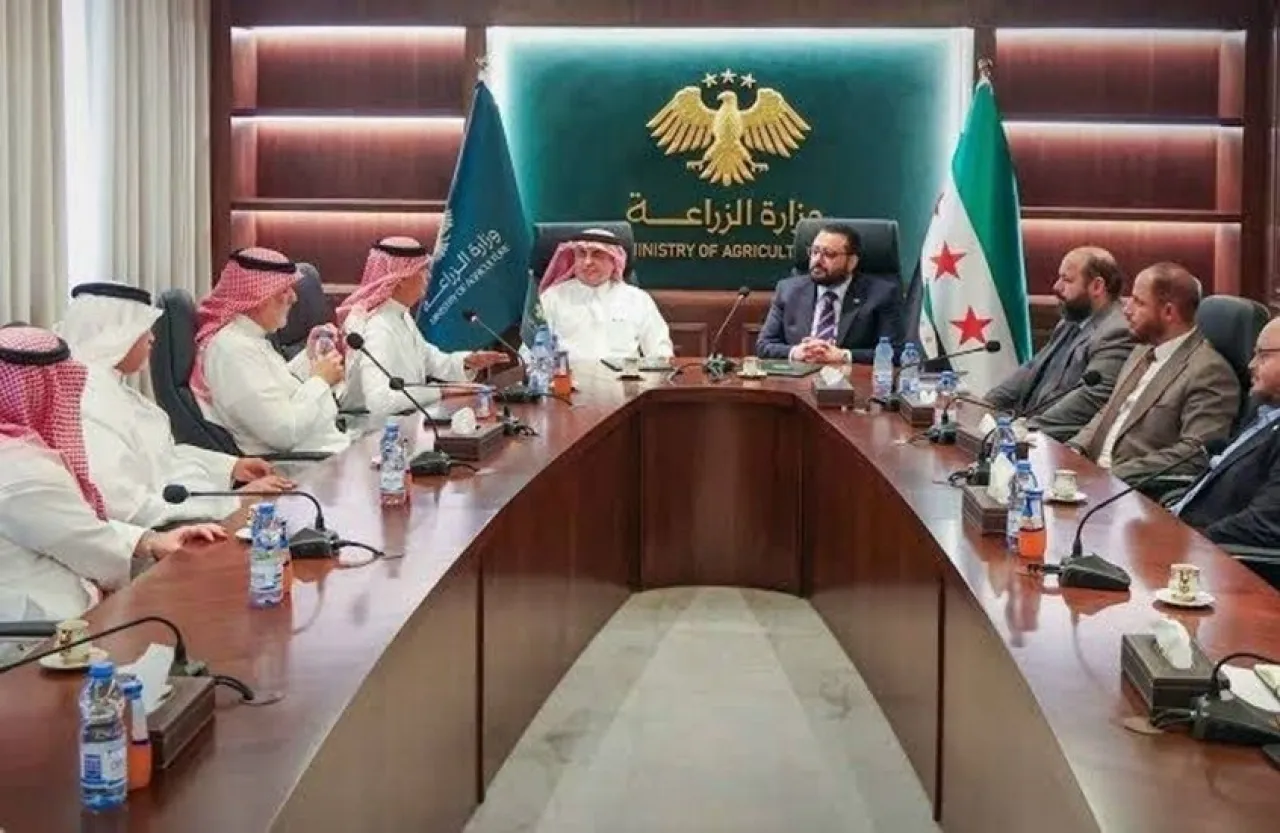
Saudi group evaluates integrated feed investment
Syria’s Ministry of Agriculture has signed a memorandum of understanding with Saudi United Feed Company, part of Al Muhaidib Group, to study the development of farms and animal-feed plants in the country’s eastern region. The proposed investment is intended to increase domestic feed availability, support livestock producers and strengthen Syria’s wider food-production chain.
Khaberni reported that Syrian Agriculture Minister Basel Al-Suwaidan and company chairman Imad Al Muhaidib signed the memorandum. It covers a study into investing in an estimated area of up to 30,000 hectares for feed-crop cultivation, using center-pivot and linear irrigation systems.
The farms would be connected to feed-manufacturing plants as well as processing, storage and logistics facilities. The concept therefore extends beyond primary crop production, linking land rehabilitation and cultivation with processing, transport and marketing.
Planned mill targets 300,000 tonnes a year
According to the Syrian Agriculture Ministry, the memorandum runs for 25 years and envisages a feed mill with annual production capacity of as much as 300,000 tonnes. Output would be directed mainly to meeting demand in the Syrian market and supporting local livestock farmers.
The proposal also allows for the potential future export of surplus production to neighboring markets. No investment value, construction timetable, expected commissioning date or projected export volume was disclosed in the source material. The agreement remains a memorandum covering a feasibility study rather than confirmation that construction has begun.
Feed availability is central to the economics of cattle, dairy and other livestock operations because it influences both production costs and the ability of farmers to maintain herds. A project combining crop cultivation with industrial processing could give the operator greater control over raw-material supply, manufacturing and distribution, although its eventual effect will depend on the study and implementation.
Irrigation technology and local employment
Al-Suwaidan said the project could create jobs and develop farmers’ capabilities through modern technology and Saudi expertise. He also pointed to the ministry’s support for smart agriculture, contract farming and improved marketing of agricultural products.
Mohammed Al-Salman, representing Al Muhaidib Group for investment, said the project aims to secure the Syrian market’s feed requirements while retaining the possibility of exports. He added that modern equipment could raise productivity, rationalize water consumption and reduce production costs. These considerations are particularly relevant to a plan covering tens of thousands of hectares and relying on irrigated feed crops.
Part of broader Saudi interest in Syrian agriculture
The feed memorandum forms part of wider Saudi activity in Syria’s agricultural and food sectors. Khaberni said Syria’s sovereign fund and Al Muhaidib Group signed a memorandum in July to study food-industry investments, including cattle farming and the production of milk, cheese and other dairy products.
Syria’s Agriculture Ministry has also discussed investment opportunities in modern irrigation systems with Saudi company Alkhorayef Industries. Together, the initiatives indicate interest in linking agricultural production, water-management technology and food processing. For the proposed feed project, the next decisive steps will be the completion of the study and any subsequent commitment of capital to farms, processing capacity, storage and logistics.