Substitute Cheese, Cream and Labneh Expand on Saudi Shelves in a Market Worth Around SAR170 Million
Products sold as substitutes for cheese, cream, labneh and milk have grown from dozens of items to hundreds in Saudi retail. The category is estimated at about 170 million Saudi riyals. The stated driver is the wide price gap against conventional dairy products.
From dozens of items to hundreds
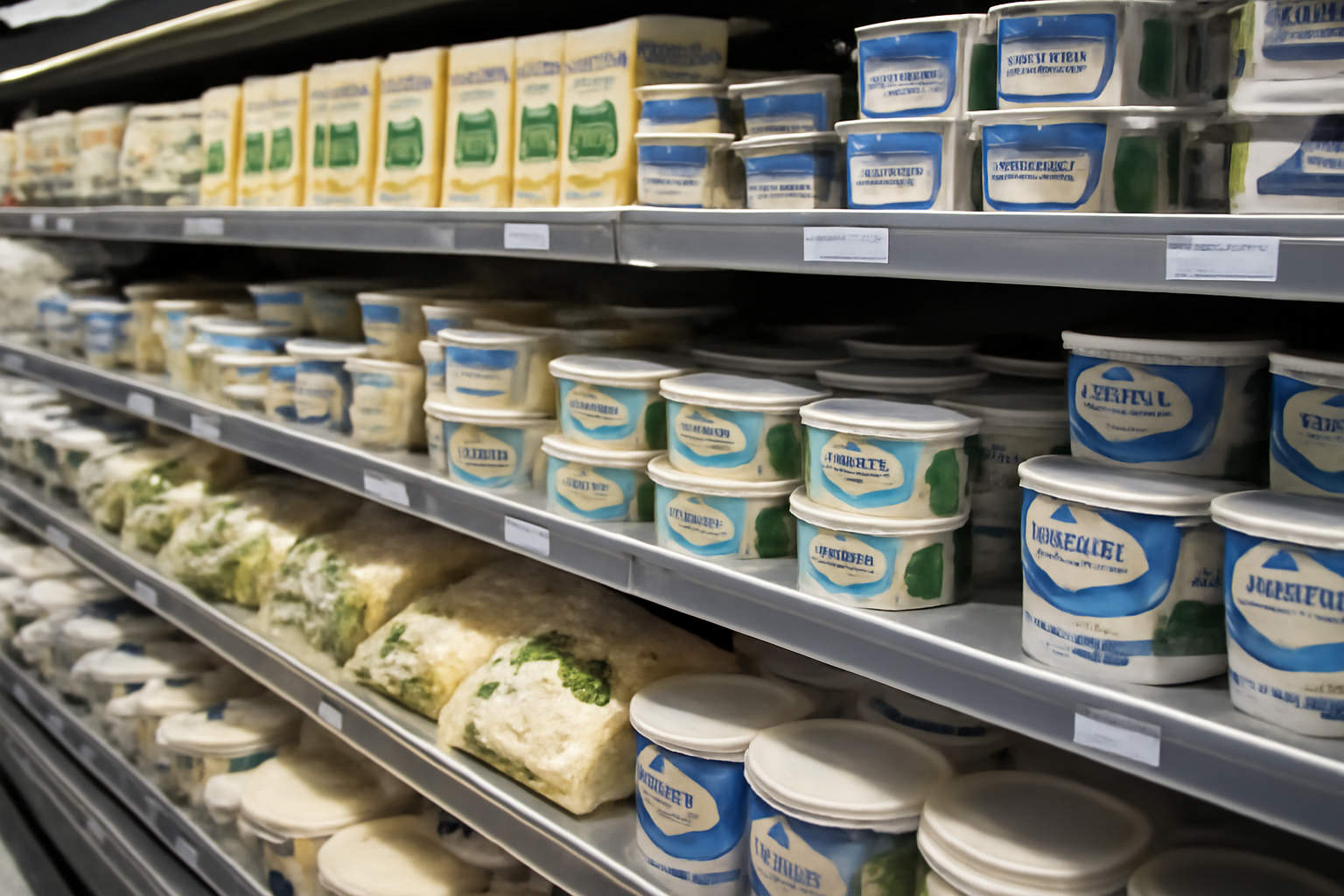
Products labelled as substitutes have moved well beyond a handful of lines in Saudi retail. Where shelves once carried dozens of such items, they now carry hundreds, spanning substitute cheese, substitute cream, substitute labneh and substitute milk. The market for these goods is put at around 170 million Saudi riyals.
The spread matters because it touches the most heavily consumed dairy formats in the Gulf: processed and shredded cheese used in cooking and foodservice, cooking cream, labneh as a breakfast staple, and liquid milk. Each of these formats has an established branded supply chain built on domestic processing and imports, and each now faces a parallel range sitting on the same shelf at a visibly lower price point.
The price gap is the engine
The factor identified behind the expansion is the size of the price difference against the original dairy products. Substitutes are formulated around vegetable fats and functional ingredients rather than milkfat and milk protein, and that formulation is what creates the gap. Their input costs track edible oil, starch and emulsifier markets rather than the global dairy complex of butterfat, cheese and milk powder.
That has two consequences for pricing behaviour. First, substitute lines do not move in step with international dairy quotations, so when milk-based products re-price upward the discount tends to widen rather than narrow. Second, the category suits private label and foodservice, where melt behaviour, yield and cost per kilogram often weigh more heavily than dairy provenance. Once a substitute line is written into a kitchen specification or a retailer own-brand range, it is slow to be displaced.
What it changes for processors and importers
For dairy processors selling into Saudi Arabia, the competitive set is no longer only other dairy brands. Volume lost to substitutes is felt upstream rather than at the till: in butterfat and skimmed milk powder purchases, in cheese import programmes, and in the utilisation of local processing lines that were sized for a growing dairy category. A category that has gone from dozens to hundreds of listings absorbs shelf space that would otherwise be allocated to branded dairy.
For suppliers of vegetable fats, starches and specialty ingredients, the same shift works in the opposite direction, converting part of Saudi dairy demand into demand for oils and dry ingredients. Three variables will determine how far the substitution runs:
- Shelf share: whether retailers keep expanding listings or consolidate the range once the novelty of the assortment passes.
- Channel mix: how much of the volume sits in foodservice, where cost per kilogram dominates, versus household purchases, where taste and labelling carry more weight.
- The price gap itself: it is the single stated reason for the shift, and it narrows if edible oil costs rise faster than dairy.
Category boundaries and trade classification
Substitute products also sit differently in trade statistics. Cheese and curd fall under HS heading 0406, and milk and cream under 0401 and 0402, while preparations built on vegetable fat are commonly classified as food preparations under heading 2106 or as edible fat and oil mixtures under 1517. A shift toward substitutes can therefore reduce recorded dairy imports without a matching decline in the consumption of cheese-like and cream-like products, which complicates demand readings drawn from customs data alone.
The headline figure of roughly 170 million riyals is modest against total dairy spending in the kingdom. The direction is what the trade will watch: the count of substitute listings has moved from dozens to hundreds, and the wording on the pack has become a recognised shelf category rather than an occasional descriptor.