Saudi Arabia Signs 27 Poultry Investment Agreements Worth 2.574 Billion Riyals
Twenty-seven investment agreements worth more than 2.574 billion riyals were signed at the opening of the Middle East Poultry Expo 2026 in Riyadh, with more than 400 companies from 45 countries taking part. Saudi poultry output already exceeds 1.5 million tonnes a year at self-sufficiency above 76%, according to the Ministry of Environment, Water and Agriculture. The deals target production efficiency, supply chains and investment partnerships rather than volume alone.
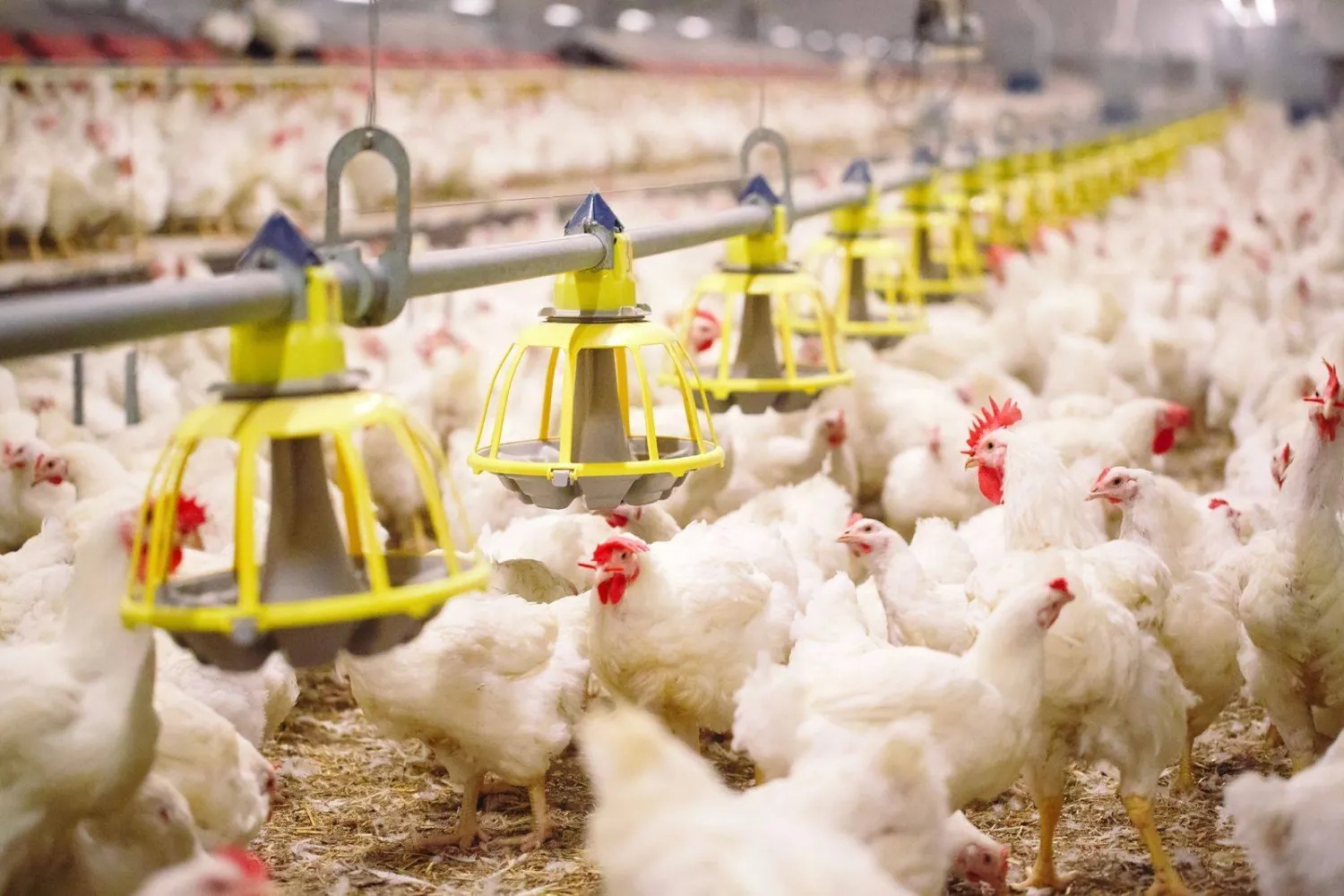
Saudi Arabia's poultry sector secured 27 investment agreements worth more than 2.574 billion riyals, signed during the opening of the Middle East Poultry Expo 2026 in Riyadh. The signing took place in the presence of Minister of Environment, Water and Agriculture Abdulrahman Al-Fadhli, with more than 400 exhibiting companies and organisations from 45 countries taking part, alweeam.com.sa reported.
Not just more volume
The agreements are not aimed solely at lifting output. According to the report, they target higher production efficiency, stronger supply chains and wider investment partnerships, with national food security as the stated objective. That distinction matters commercially, because poultry is not a single farm activity but a connected chain.
That chain begins with feed and runs through breeding, animal health, biosecurity, processing, packaging and refrigeration, then transport and distribution, before reaching the retail shelf or the consumer's plate. The strength of the sector is measured by how efficiently the whole chain works, not by farm capacity alone.
Each link carries its own cost risk. Higher feed costs feed through to the finished product. Weaker animal-health standards raise disease exposure. A weak cold chain or transport network increases waste. Without modern technology, production stays more expensive and less competitive. On that reading, the new money looks like an attempt to build a more coherent system rather than a one-off injection into a growing industry.
A 1.5-million-tonne base and 76% self-sufficiency
The investments land on an existing production base. The Ministry of Environment, Water and Agriculture confirmed that Saudi poultry production exceeds 1.5 million tonnes a year and that the self-sufficiency rate is above 76%, contributing to food security and market stability, according to a ministry statement.
Those figures mean the kingdom is not starting from zero but moving from a relatively advanced position toward a larger goal: greater reliance on domestic production and a stronger ability to meet internal demand in both normal and exceptional conditions. Poultry is a primary protein source and a mass-consumption commodity present in homes, restaurants and catering chains, so any disruption to output, price or availability moves quickly from companies and farms to the consumer. That makes sector investment part of a broader policy of reducing market exposure to import volatility, rising feed costs, global transport disruption and health crises that can hit food chains.
Technology and biosecurity move to the centre
The expo was held under the slogan "Innovation Today, Production Tomorrow". Modern poultry production relies on technology for farm monitoring, improved nutrition, disease reduction, temperature management and higher efficiency on production and packaging lines. It also depends on biosecurity, a decisive factor in a sector that can be hit rapidly by epidemics or infection. The presence of award categories such as "Leadership in Biosecurity for a Safe Poultry Industry" reflects a shift of attention from volume alone toward quality, safety and sustainability.
The event also functions as a platform for transferring knowledge and technology and for linking the Saudi market to global suppliers of solutions and expertise. That link matters most in feed, animal health, equipment and processing. Localising a larger share of this knowledge and these services reduces dependence on foreign supply, or at minimum gives the domestic market more room to negotiate, select and expand.
What it means for the market
Food security in this context does not mean complete self-sufficiency in everything, an objective that is difficult even for the largest economies. It means a higher national capacity to supply staple food efficiently and steadily, and more control by the state and the private sector over production inputs, instead of a market fully hostage to world prices, shipping and external shocks.
For the consumer, agreements measured in billions of riyals are unlikely to show an effect the following day. The report argues the impact appears gradually, in product availability, supply stability, improved quality, wider choice and the market's capacity to absorb crises without sharp price jumps. On that logic, 2.574 billion riyals committed at a specialist trade show is less a single transaction than a signal that food is being handled as a strategic file combining investment, technology, agriculture, health, trade and logistics.