Saudi Al-Sahli Group signs memorandum for integrated poultry projects in Syria
Syria’s Ministry of Agriculture, Saudi Arabia’s Al-Sahli Group and Syria’s Al-Droubi Group have signed a memorandum of understanding to develop integrated poultry projects in Syria. The initiative covers poultry production and related value chains, but the available material provides no investment, capacity or construction timetable.
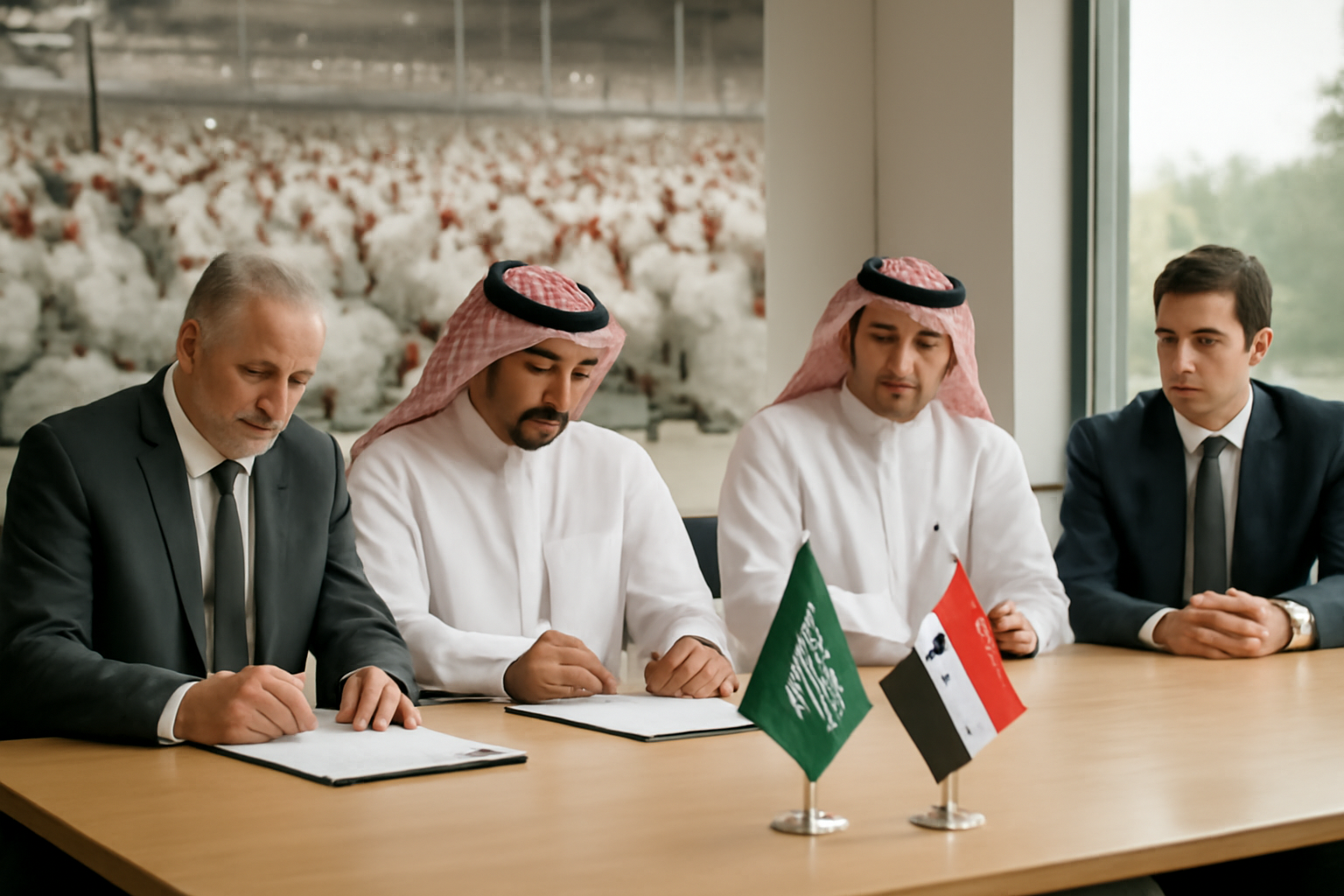
Three parties sign poultry memorandum
Syria’s Ministry of Agriculture, Saudi Arabia’s Al-Sahli Group and Syria’s Al-Droubi Group have signed a memorandum of understanding to establish integrated model projects for the Syrian poultry sector. The agreement was signed on the sidelines of the Damascus International Fair.
The stated scope includes poultry production and the value chains connected with it. The parties presented the initiative as a contribution to the development of the sector and to Syria’s food security. The available source material does not identify individual project locations or specify whether the proposed facilities will focus on broiler meat, eggs, breeding stock or a combination of poultry products.
Integration is central to the proposal
The memorandum’s emphasis on integrated projects indicates an intention to address more than primary farming. In poultry, a value-chain approach can encompass inputs, production, processing and distribution, although the parties have not disclosed which operations will be included. The eventual commercial impact will therefore depend on the assets approved under subsequent agreements.
The involvement of the Agriculture Ministry alongside Saudi and Syrian business groups gives the initiative both a public-sector and private-sector dimension. Al-Sahli Group would bring a Saudi corporate participant into the proposed development, while Al-Droubi Group provides a local Syrian partner. The supplied reports do not define each party’s financial, operational or regulatory responsibilities.
Investment details remain undisclosed
No investment value, production capacity, financing structure or ownership split was included in the available announcement. It also provided no construction schedule, commissioning date or employment target. These omissions make it too early to quantify the projects’ effect on Syrian poultry output, processing capacity or domestic supply.
A memorandum of understanding normally establishes a framework for further negotiations rather than confirming that every proposed facility will proceed. For producers and suppliers, the next significant information will be the selection of sites, the scale of planned farms and processing operations, and the arrangements for feed, breeding inputs, equipment and veterinary support. Those details will determine how extensively the project connects different parts of the poultry chain.
Food-security objective shapes market relevance
The parties linked the memorandum to strengthening food security in Syria. Poultry projects can affect availability through both meat and egg production, but the announcement does not provide a baseline for national production or a target for additional supply. It also does not say whether output would be reserved for the Syrian market or whether exports could form part of a later commercial plan.
For processors, farmers and traders, execution will matter more than the signing itself. Confirmed capital commitments, capacity figures and implementation milestones would allow market participants to assess possible demand for feed and equipment, the volume available to processors and the effect on poultry distribution. Until those terms are published, the memorandum represents an initial commitment to explore an integrated production platform rather than a fully specified investment programme.