Samsung Electronics moves EHS heat pump boiler output to Gwangju, targeting more than 100,000 units a year
Samsung Electronics said on 24 August it has built a 2,132 square metre EHS heat pump boiler line at its Gwangju site and started trial production on 19 August, with mass production due at the end of September. The line can build more than 100,000 units a year, all for the domestic market, replacing volumes previously made overseas. It is the first reshoring by a manufacturer in South Korea's heating electrification programme.
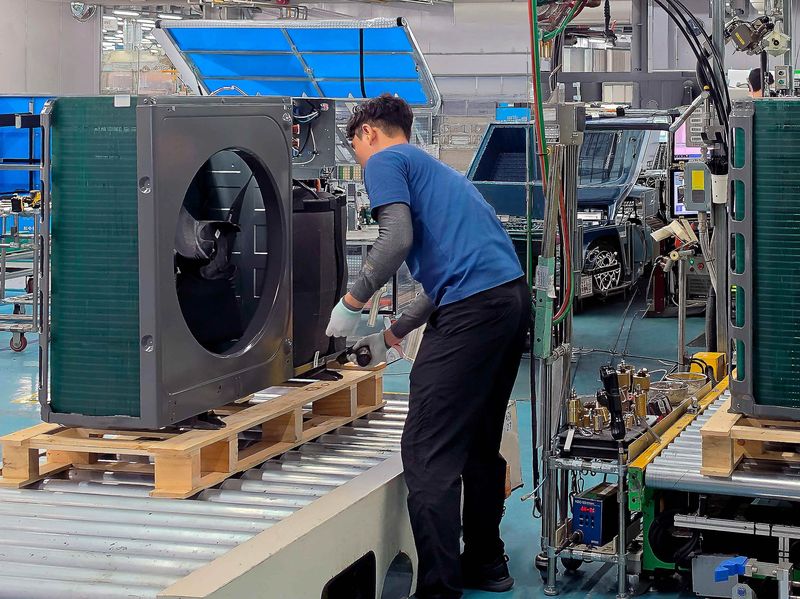
Samsung Electronics said on 24 August that it will produce its EHS heat pump boiler in South Korea, transferring to a new line in Gwangju the volumes it had until now manufactured overseas. The company tied the move to the government programme to expand the electrification of residential heating.
According to fnnews.com, the line covers 2,132 square metres inside the second campus of Samsung's Gwangju site in the Jeonnam-Gwangju integrated special city. Trial production began on 19 August. Samsung is verifying the stability of processes and equipment and evaluating the performance and quality of finished units, with full mass production due to start at the end of September.
More than 100,000 units a year, all sold in Korea
The new line can turn out more than 100,000 EHS heat pump boilers annually, and every unit produced will be sold on the domestic market. Straightnews reported that Samsung is the first heat pump maker taking part in the heating electrification programme to convert overseas production volume into domestic output. Bloter described the step as reshoring and noted that no other manufacturer in the programme has done it.
Samsung said it will raise the domestic share not only of finished goods but of core components and of the manufacturing process as a whole, presenting the decision as support for its supplier base and for the regional economy.
The Gwangju site has long produced Samsung's main home appliances, including refrigerators, washing machines and air conditioners. Bloter and Straightnews both reported that the company intends to apply the manufacturing and quality-control experience built up on those lines to heat pump output, and to tighten the links between development, manufacturing and quality so it can respond faster to shifts in domestic demand.
Performance claims and product positioning
The EHS heat pump boiler uses ambient air heat and electricity to supply space heating and hot water. Samsung puts its seasonal coefficient of performance (SCOP) at 4.9 under the 35°C flow temperature condition used for underfloor heating, equivalent to roughly five times more heating energy than the electricity consumed. High-efficiency refrigerant compression allows the unit to deliver hot water at up to 70°C even at outdoor temperatures of minus 15°C, according to fnnews.com. Compared with fossil-fuel boilers, the company says the product is more energy efficient and emits less carbon; households with rooftop solar can use that generation to run the heat pump and lower energy costs.
From Jeju pilots to apartment blocks
Bloter reported that Samsung launched the EHS heat pump boiler in Korea in April and made its first installation in June, in a detached house in the Aewol area of Jeju. The company supplied the first phase of the Jeju heating electrification programme, covering 1,042 households in the first half of the year, and plans to join the second phase in the second half, covering 1,418 households.
Field validation is running in real homes in Yangpyeong in Gyeonggi Province, Chungju in North Chungcheong Province and Namhae in South Gyeongsang Province, where Samsung is measuring heating and hot water performance and energy efficiency across different regional climates and housing types. In Jeju and at the Samsung C&T housing research institute in Yongin, Gyeonggi Province, the company is testing EHS All-in-One, a package providing cooling, heating and hot water from a single system, with the aim of extending its range beyond detached houses to apartments and other multi-unit residential buildings.
Lim Sung-taek, executive vice president of Samsung Electronics' DA business division, said that building a domestic production system for heat pump products will let the company respond more actively to the heating electrification trend and accelerate the expansion of its heat pump business, and that it will combine the heat pump technology accumulated in global markets with domestic manufacturing and service capability to keep offering solutions optimised for Korean homes.