Samsung Display and LG Display press Seoul for wider tax credits and faster infrastructure
At a National Assembly policy forum on October 1, Samsung Display and LG Display asked the South Korean government to expand tax incentives and speed up industrial infrastructure for AI-era investment. Samsung Display wants the carry-forward period for national strategic technology tax credits extended from 10 to 20 years with no sunset, while LG Display proposed a direct cash refund of part of the credit in the year investment is made.
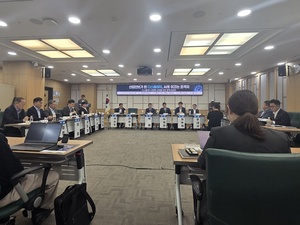
Samsung Display and LG Display have called on the South Korean government to expand tax incentives and underwrite faster industrial infrastructure build-out, arguing that artificial intelligence has brought the display market to an inflection point that corporate spending alone cannot handle. The two companies set out their requests on October 1 at a policy forum in the National Assembly Members’ Office Building in Seoul, held under the title “Display as industrial security: widening the lead through AI” and organised by the Korea Display Industry Association, Daily Hankook reported.
Heo Cheol, executive vice president of Samsung Display, and Lee Han-koo, group leader at LG Display, spoke for the panel makers. “In a rapidly changing global environment, there are limits to what a company’s own efforts can achieve in maintaining a technology lead and winning,” Heo said, adding that policy support at the national level is urgently needed.
Three asks from Samsung Display
Heo set out three priorities: stronger tax support, timely construction of infrastructure, and backing for new technology development at small and medium-sized enterprises and research institutes.
- On tax, Samsung Display asked for the carry-forward period for national strategic technology tax credits to be extended from the current 10 years to 20 years, and for the scheme to operate without a sunset date.
- It also asked that the full range of research and development spending be made eligible for deduction, so companies can sustain long-term technology development and equipment investment.
- On infrastructure, it called for fast-track permitting together with on-time supply of electricity, water and roads, and for active support in expanding renewable energy power purchase agreements to meet the RE100 requirements set by global customers.
- For smaller firms and research institutes, Heo proposed wider support through state-funded research projects.
LG Display pushes for direct cash refunds
LG Display focused on the mechanics of the credit itself, asking for a direct refund system for investment in national strategic technologies. Under the current design, credits are applied as a deduction against corporate income tax. Because the industry concentrates large sums in R&D and production facilities, profits shrink or turn into losses in heavy investment years — precisely the years when the credit cannot be used immediately.
“The current corporate tax deduction method is fine, but I would like to propose a direct refund system that returns part of the benefit in cash in the year the investment is made, so that the schemes offering various tax benefits for national strategic technologies can actually be used,” Lee said.
Regional index and the Paju question
Lee also addressed the regional preference index the government is currently discussing. He argued that the policy design should look beyond simple physical distance and also cover underserved areas such as Paju, where LG Display operates a plant, which sits on the inter-Korean border and carries a sense of remoteness that geography alone does not capture.
Defence, automotive and inorganic displays
Beyond tax and infrastructure, participants raised proposals on institutional support for expanding the inorganic display ecosystem, measures to secure the military display ecosystem and the stability of the domestic supply chain, and a framework for full-cycle collaborative R&D in which carmakers and panel manufacturers jointly verify performance and mass-production readiness. The session also covered cooperation with downstream industries and ways to capture emerging display markets early.
The forum was hosted by National Assembly members Park Jung, Lee Jae-kwan and Jeon Eun-soo. Industry participants included Heo and Lee alongside Seoul Semiconductor chief executive Lee Jung-hoon; Ahn Sang-nam, a department head at the Korea Defense Industry Association; Lim Hyun-koo, a centre head at the Korea Automotive Technology Institute; and Lee Dae-eui, an executive director at Deloitte Consulting. Moon Dae-kyu, a professor at Soonchunhyang University, chaired the session, and Lee Jung-ik, vice president of the Korean Information Display Society, also took part.
In their opening remarks, Park and Lee said the display industry has become an asset that determines advanced-industry competitiveness and national economic security, and promised full legislative and policy support for core technologies, AI-based manufacturing process innovation and expansion of the production base.