SAIL and BCCL agree to jointly develop two coking-coal blocks in West Bengal
SAIL and BCCL have signed an agreement to jointly develop and operate two coking-coal blocks in West Bengal. The blocks have a combined peak rated capacity of 4 million tonnes a year and an estimated 79 million tonnes of extractable reserves in the first phase.
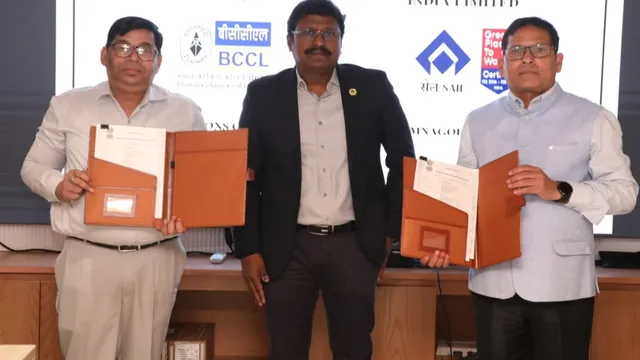
Two companies combine adjacent coal assets
Steel Authority of India Limited (SAIL) and Bharat Coking Coal Limited (BCCL) have signed a memorandum of understanding to jointly develop and operate two coking-coal blocks in West Bengal. According to Jagran, the agreement covers SAIL’s Indikatta Ramnagore block and BCCL’s East of Damagoria block, also known as Kalyaneshwari. The companies expect the project to increase domestic coking-coal production and strengthen raw-material availability for India’s steel industry.
The two blocks have a combined peak rated capacity of 4 million tonnes per year. Extractable coal reserves in the first phase are estimated at about 79 million tonnes, Jagran reported. These figures establish a potentially meaningful domestic supply base, although the source did not provide a development timetable, expected start-up date, investment amount or individual capacity allocation for each block.
Integrated mining and waste management
The proposed operating model links coal extraction with overburden management across the two properties. During the first phase, mining will take place at Kalyaneshwari, while overburden removed during operations will be dumped at the Ramnagore block. In the second phase, the arrangement will be reversed, with the two sites switching their respective mining and overburden-management roles.
This coordinated configuration is intended to improve the use of the available coal resources and the land associated with both blocks. Overburden—the soil and rock that must be removed before a coal seam can be mined—requires substantial space and handling capacity. Managing it across the two sites could reduce duplication in mine planning and allow extraction to proceed in a more integrated manner, though the agreement’s detailed operating and cost-sharing terms were not disclosed.
Domestic feedstock for steelmaking
Coking coal is a central input for blast-furnace steel production because it is processed into coke, which supports the reduction of iron ore. The agreement therefore connects BCCL’s mining role with SAIL’s position as a steel producer and consumer of metallurgical raw materials. If the planned capacity is developed, the resulting coal could add a domestic source of supply for Indian steel operations and improve procurement options for mills exposed to imported feedstock.
Jagran said the project is expected to help reduce import dependence and support more reliable domestic availability of coking coal. The 4-million-tonne annual peak capacity should, however, be assessed as planned mine capacity rather than immediate production. Actual output will depend on the development sequence, regulatory clearances, mine infrastructure, overburden removal and the quality and recoverability of the coal encountered during operations.
Execution will determine the trade impact
The estimated 79 million tonnes of extractable reserves indicate the resource available during the first phase, while annual peak capacity describes the maximum intended production rate. The two measures are not interchangeable. For steelmakers, the project’s commercial significance will also depend on whether the coal meets required coking specifications, how it is processed and blended, and how efficiently it can be transported from West Bengal to consuming plants.
The memorandum supports the Indian government’s self-reliance policy by seeking to bring more domestic coking coal into production. Its effect on import exposure will become clearer only as SAIL and BCCL move from cooperation to mine development and disclose the project schedule. For producers, processors and coal traders, the principal benchmarks will be the pace of commissioning, realised output against the 4-million-tonne target and the share of production that can replace imported metallurgical coal.