Sabah reaches 97.17% MSPO certification for smallholder oil palm area
Buletin TV3 reports that 97.17 per cent of the oil palm area held by independent smallholders in Sabah has been certified under the Malaysian Sustainable Palm Oil standard. That leaves 2.83 per cent of smallholder area outside the scheme. The report does not disclose hectares, grower numbers or a timeline for the remainder.
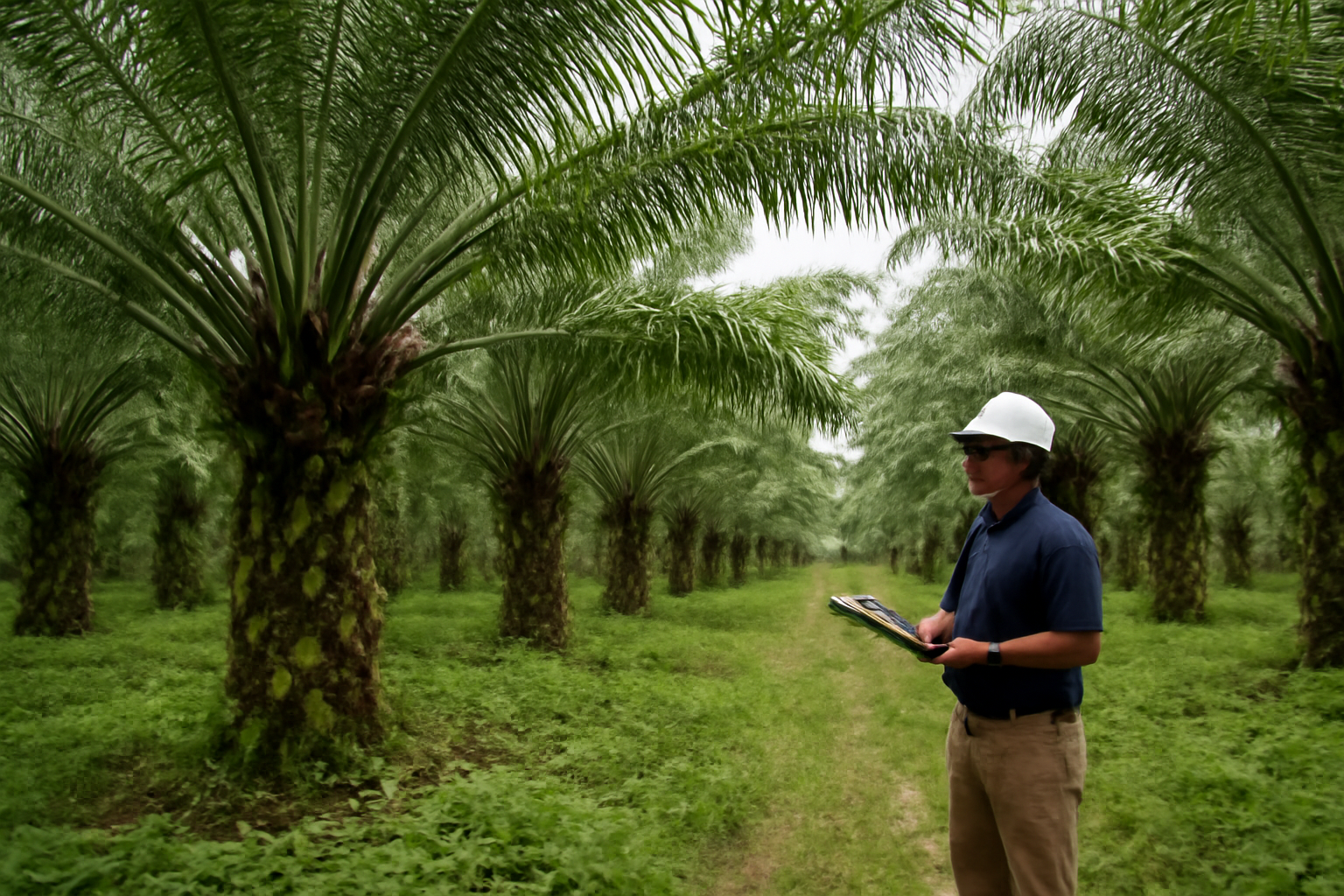
Some 97.17 per cent of the total oil palm area belonging to independent smallholders in Sabah has obtained certification under the Malaysian Sustainable Palm Oil (MSPO) standard, Buletin TV3 reported from Kota Kinabalu in a dispatch by Safwan Sawi.
What the 97.17 per cent measures
The figure describes planted area, not the number of growers. Measured on the same basis, 2.83 per cent of independent smallholder oil palm land in Sabah remains outside the scheme. Area-based coverage is the metric that matters most for supply-chain documentation, because certificates attach to plots and to the fruit those plots produce rather than to individual farm households.
The report does not state the hectares behind the percentage, the number of smallholders holding certificates, or the period over which certification was achieved. Independent smallholders are growers who operate outside company estates and outside organised settlement schemes. They do not process their own crop: they sell fresh fruit bunches to third-party mills, which is where their output enters the commercial chain.
Why independent growers are the hardest group to certify
Certifying a company estate is an administrative exercise on a single contiguous landholding with one management system and one set of records. Independent smallholdings are the opposite case: many small plots, dispersed ownership, uneven documentation and, in many instances, informal land status. Each plot must still satisfy the same substantive requirements, which typically include:
- proof of legal status for the land being farmed;
- documented farm management and record keeping, including inputs and harvest data;
- compliance with environmental conditions such as protection of riparian buffers and a prohibition on open burning;
- labour and occupational safety rules where workers are hired.
Because the fixed cost of an audit is prohibitive on a few hectares, smallholders are normally certified in groups, with a managing body carrying the internal control system and the audit burden on behalf of its members. Reaching near-total coverage of an area as fragmented as Sabah's smallholder sector therefore reflects sustained administrative organisation rather than a single decision by growers.
Why coverage matters commercially
Certified area is a market-access instrument. Refiners and consumer-goods buyers increasingly require documentation of origin and compliance before they will take palm oil into their supply chains, and the smallholder segment has long been the weakest link in that documentation because fruit from many uncertified plots mixes at the mill gate. Once almost all of the supplying area carries a certificate, a mill can account for the origin of nearly every smallholder load it receives.
For growers the benefit is indirect but material. Uncertified fruit tends to be pushed towards buyers with the least demanding requirements, which narrows the number of outlets available and weakens bargaining position at the ramp. Certification does not by itself guarantee a premium, but its absence increasingly closes doors.
What the report leaves open
Buletin TV3 gives no timetable for bringing the residual 2.83 per cent of area into the scheme, no comparable figures for other Malaysian states, and no indication of how much certified fresh fruit bunch volume the certified area actually yields. Certification is also a recurring obligation rather than a one-off event, since certificates require maintenance audits and renewal. The operative commercial question is whether high certified area converts into certified oil leaving the refinery, and that depends on segregation and traceability practice at mill level rather than on the planting map.
Full market analysis