Rwanda expands inspections to contain Rift Valley fever among livestock
Rwanda is increasing household and pasture inspections as authorities work to contain Rift Valley fever among cattle, goats and sheep. The available information does not disclose case numbers, affected locations or a timetable for lifting control measures.
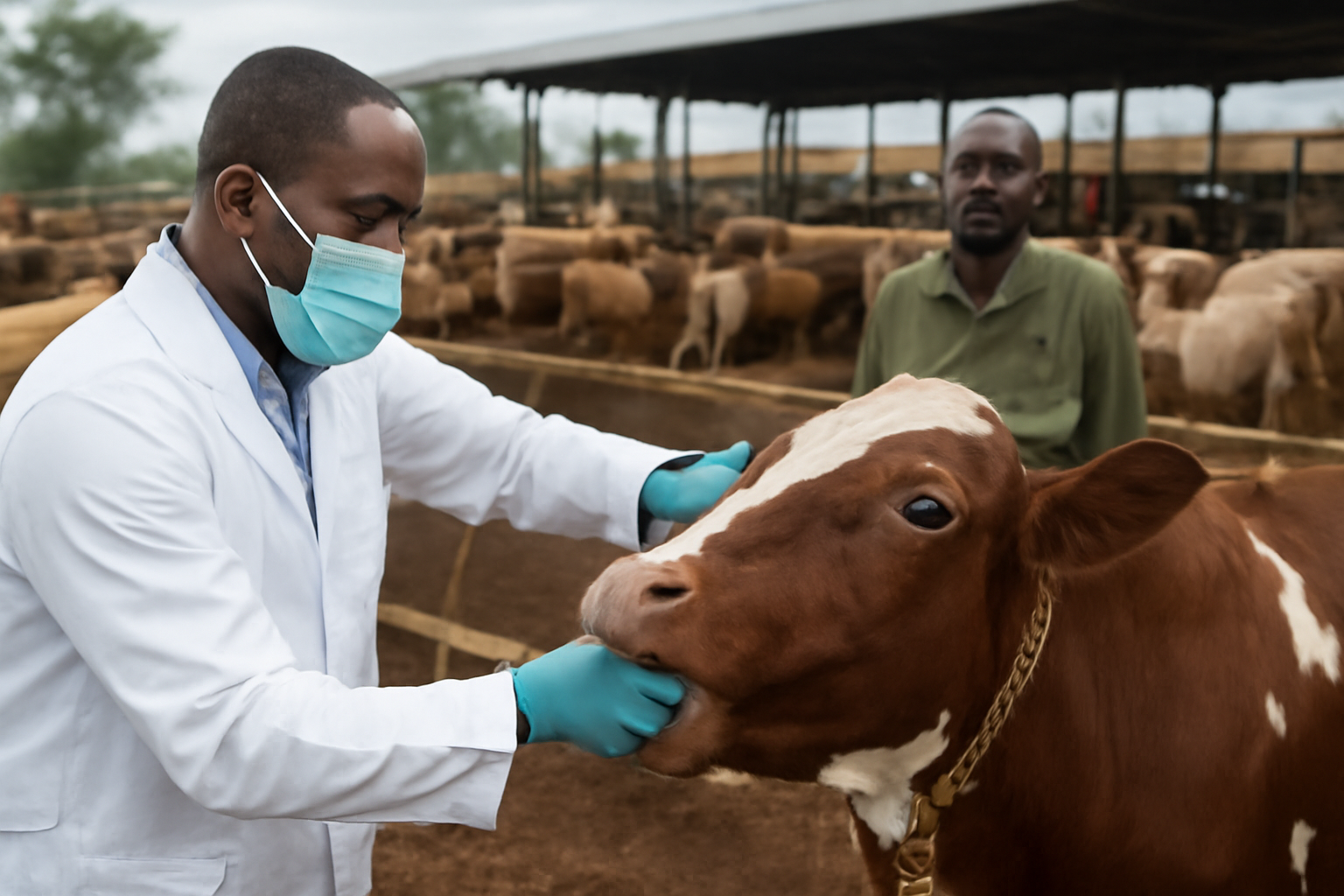
Inspections broaden across livestock holdings
Rwanda is stepping up efforts to contain an outbreak of Rift Valley fever among cattle, goats and sheep. Authorities are carrying out inspections at households and on pastures as they seek to limit further spread of the livestock disease.
The response is gaining momentum, according to the information released about the containment campaign. Household checks give officials access to animals kept by individual livestock owners, while pasture inspections extend surveillance to places where herds and flocks may gather. The available material also refers to the establishment of designated facilities or areas, but does not identify their precise purpose or location.
Scale of the outbreak remains unclear
No figures have been provided for confirmed or suspected cases, livestock deaths, inspected households or affected pastures. The available information also does not specify when the outbreak began, which parts of Rwanda are affected, or whether particular livestock markets and transport routes are subject to restrictions.
Those gaps make it difficult for producers, processors and traders to assess the immediate commercial impact. The effects will depend on the outbreak's geographic reach, the duration of containment measures and whether authorities impose additional controls on animal movements, livestock sales or access to pastures. None of those additional measures is confirmed in the supplied material.
Livestock businesses await operational details
For cattle, goat and sheep owners, expanded inspections may require closer coordination with veterinary and local authorities. Farmers and herders will need clear instructions on reporting, animal handling and access to inspected pasture. Buyers and processors, meanwhile, need reliable information about where animals can be sourced and moved without disrupting disease-control work.
The campaign may also matter to livestock trade beyond the directly inspected holdings. If movement controls are introduced, traders could face delays in assembling animals and supplying markets. Any effect on regional trade would depend on the areas covered and the rules adopted by Rwanda and its trading partners. With no trade restrictions, case totals or geographic breakdown disclosed, the current development is primarily an expansion of surveillance and containment rather than evidence of a quantified market disruption.
Further official reporting will be important for determining the outbreak's severity and commercial consequences. Market participants will be watching for case data, affected districts, inspection results and any rules covering livestock movement, sales or cross-border shipments. Until those details are available, the clearest confirmed development is that Rwanda has broadened field inspections involving households and pastures where cattle, goats and sheep are kept.