Russian watermelon tests raise nitrate concerns before peak season
REN TV reported nitrate readings above the permitted threshold in watermelons sold in several Russian regions before the main harvest season. Results varied sharply by outlet and location, with some samples near the limit and others approaching three times the permitted level.
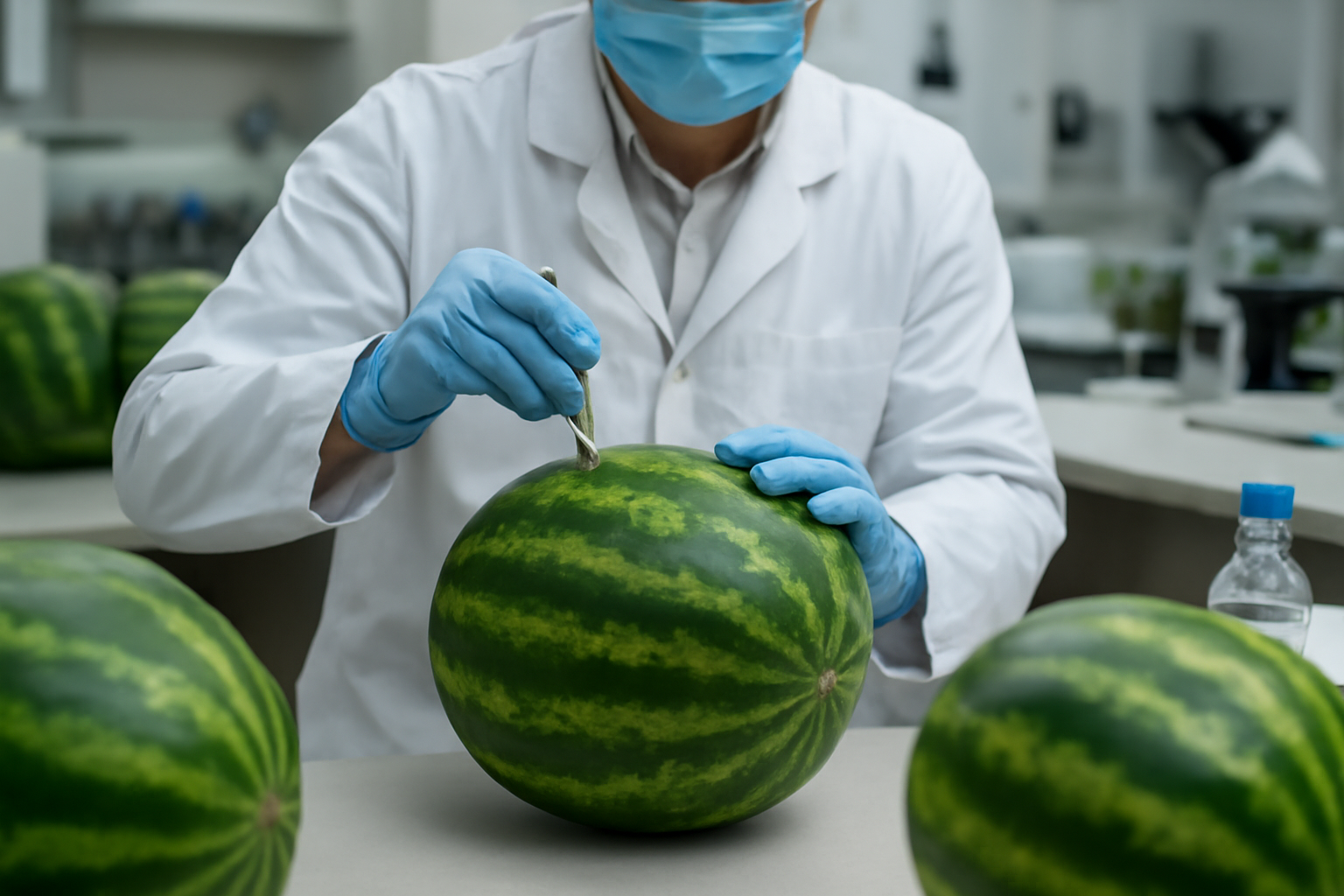
Early watermelon sales come under scrutiny
Watermelons have reached Russian retail shelves before the main melon harvest season, prompting concerns about nitrate residues and reports of illness. REN TV reported that chemical concentrations in some fruit approached three times the permitted level, although the broadcaster did not provide official nationwide case numbers or identify a comprehensive regulatory testing program.
The report included the account of Rostov-on-Don resident Anastasia Kirsanova, who said she experienced mild nausea after eating a small amount of a watermelon bought from a retail chain. In a separate informal experiment in the city, one watermelon was purchased from a store and another from a market. Both were left outdoors for 24 hours. The store-bought fruit reportedly showed no visible decay and remained largely unchanged after a second day in the sun, while the other attracted insects. This observation alone does not establish nitrate content, but it contributed to consumer concerns examined in the report.
Readings differ by city and sales channel
Testing cited by REN TV in Saint Petersburg used a permitted nitrate threshold of 60 milligrams. Sliced watermelon portions sold by retail chains exceeded that level by about one-third, while the best-performing sample was still close to the maximum. The report did not specify the sample size, laboratory method or whether the results had been confirmed by a state authority.
Results elsewhere were not uniform. According to the broadcaster, watermelons from Uzbekistan sold at a market contained no excess nitrates and were 15 times cleaner than the store samples examined. In the Moscow region, however, fruit tested at kiosks and street vendors produced the opposite result, with nitrate readings nearly three times the permitted threshold. The variation suggests that origin, handling and individual supplier practices may matter more than a simple distinction between supermarkets and open markets.
A market seller interviewed by REN TV said traders select the best fruit directly from incoming trucks, while remaining stock may spend one or two weeks at a distribution base before being supplied elsewhere. The statement describes one seller’s view and does not demonstrate a general practice across Russian watermelon distribution.
Fertilizer management and harvest timing
Andrey Tumanov, chairman of the council of the Moscow Union of Gardeners, told REN TV that excessive nitrate accumulation may occur when organic fertilizers such as manure or poultry litter are used. He said the concentration of active substances in such material can vary by tens of times, whereas the active ingredient in urea and nitrate fertilizers is clearly standardized. The issue therefore concerns fertilizer dosage and control rather than a straightforward division between organic and mineral inputs.
Epidemiologist Inna Kovalenko warned that fruit showing almost threefold excess readings should not be eaten. The report listed dry mouth, abdominal tingling and diarrhea as signs of mild nitrate poisoning. It said severe cases may involve blue discoloration of the lips, nails and tongue, oxygen deprivation, intense abdominal pain, persistent vomiting and diarrhea. Consumers experiencing serious symptoms require medical assessment rather than reliance on visual checks of the fruit.
REN TV said cutting a watermelon may reveal warning signs such as yellowish rather than white veins in otherwise pink flesh, but appearance cannot quantify residues. Seasonality was presented as the most practical safeguard: the report said growers sell underripe fruit until the end of July, while melons reach their normal sweetness, juiciness and maturity from mid-August. For producers and retailers, the findings place greater emphasis on documented fertilizer use, supplier controls and verifiable residue testing during the early-season sales window.