Russian sugar producers turn to exports as domestic consumption declines
Russian sugar consumption fell 5.8% to 5.54 million tonnes in 2025 and may decline by another 5-6% in the new season. Producers are expanding foreign sales despite lower global prices, a strong ruble and shrinking beet acreage.
Domestic sugar demand continues to contract
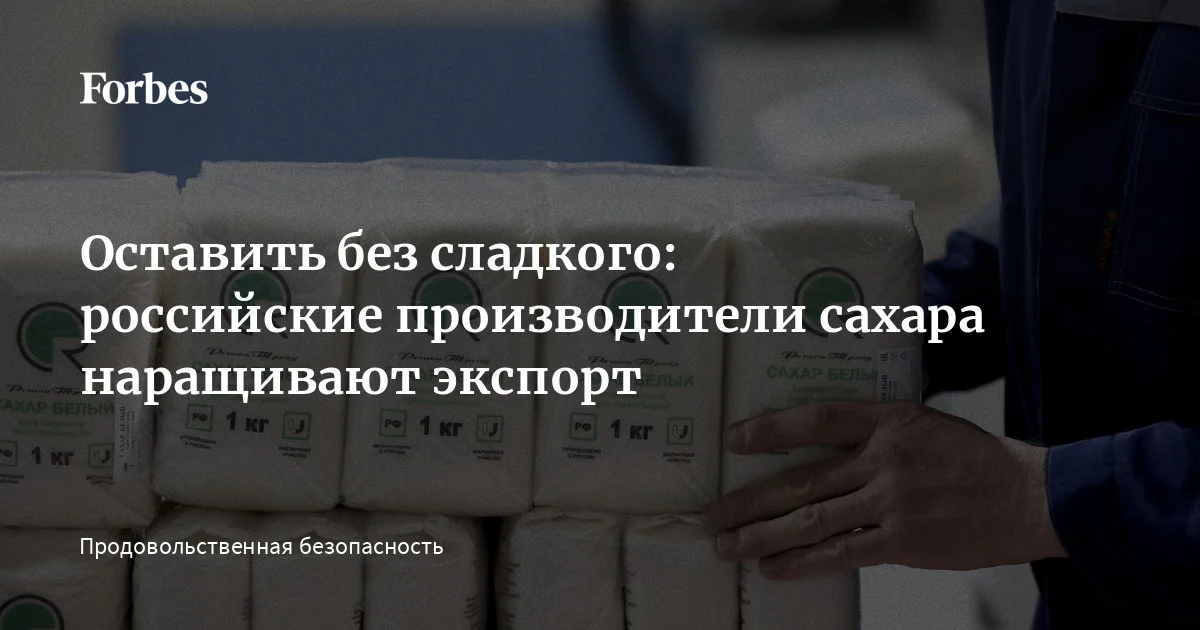
Russian sugar producers are relying more heavily on foreign markets as domestic consumption falls and food manufacturers reformulate products. According to Forbes Russia, the country accumulated a sugar surplus in 2025 while exporters faced difficulties placing volumes abroad. Stocks exceeding domestic consumption weighed on prices and reduced farmers’ interest in sugar beet.
Consumption declined by 5.8% to 5.54 million tonnes in 2025, according to Mark Boychuk of Reksoft Consulting. Agroan expects a further decrease of 5-6% in the new season. Retail is not the main source of demand: industrial processors use sugar in confectionery, bakery and dairy products, beverages, sauces and canned foods. Russian confectionery output fell by 3.8% to 595,400 tonnes in January-April 2026, while mayonnaise production declined by 3.4% to 234,200 tonnes.
Excise tax and reformulation reshape consumption
The decline reflects health-conscious purchasing, lower household use and the growing adoption of sweeteners by food and beverage companies. The excise tax on sugar-sweetened drinks has been particularly influential. Russian Finance Ministry data cited by Alla Andreeva of Soyuznapitki show that drinks containing more than 5 grams of sugar per 100 millilitres accounted for 30% of the market in 2026, down from 75% in 2023.
Other factors include reduced home preparation of desserts, the expansion of prepared-food delivery and the use of weight-loss medicines that suppress appetite and demand for sweets. Global consumption, however, is moving in the opposite direction. IKAR analyst Evgeny Ivanov estimates that worldwide sugar use is increasing by 0.8-2% per season, led by Asia and Africa. Central Asian markets from Mongolia to Afghanistan offer Russian suppliers a growing population base and established regional demand.
Exports rise as beet acreage and output forecasts fall
Russia has been a notable net sugar exporter for 10 consecutive seasons since 2016/2017 and supplies more than 17 countries, according to IKAR. The institute forecasts exports of 1.1 million tonnes including carryover stocks, 12% below the previous year’s 1.25 million tonnes. A broader category comprising beet sugar, molasses, lactose and fructose nevertheless recorded shipments of about 0.97 million tonnes in January-May 2026, approximately 50% more than in the same period of 2025.
Farmers are simultaneously reducing beet planting. IKAR estimates that acreage fell by 5% to 1.15 million hectares in 2026. Rosstat data put the area at 1.089 million hectares as of June 1, down 4.6% year on year. The US Department of Agriculture forecasts Russian sugar production at 6.25 million tonnes in the next agricultural year, the lowest level in four years; IKAR expects 6.3 million tonnes, while Agroan gives a range of 6.25-6.5 million tonnes. Export economics remain difficult: world sugar prices fell 20% year on year in the first five months of 2026, and the strong ruble limits Russian competitiveness. Lower production and depleted carryover stocks should nevertheless reduce the risk of another severe domestic surplus, although margins are expected to remain moderate.