Russian strike on corn-laden vessel near Odesa raises Black Sea grain shipping risk
A Russian attack hit a corn-laden vessel near Odesa and killed 10 people. The incident increases security concerns around Black Sea routes used to move Ukrainian grain to international markets.
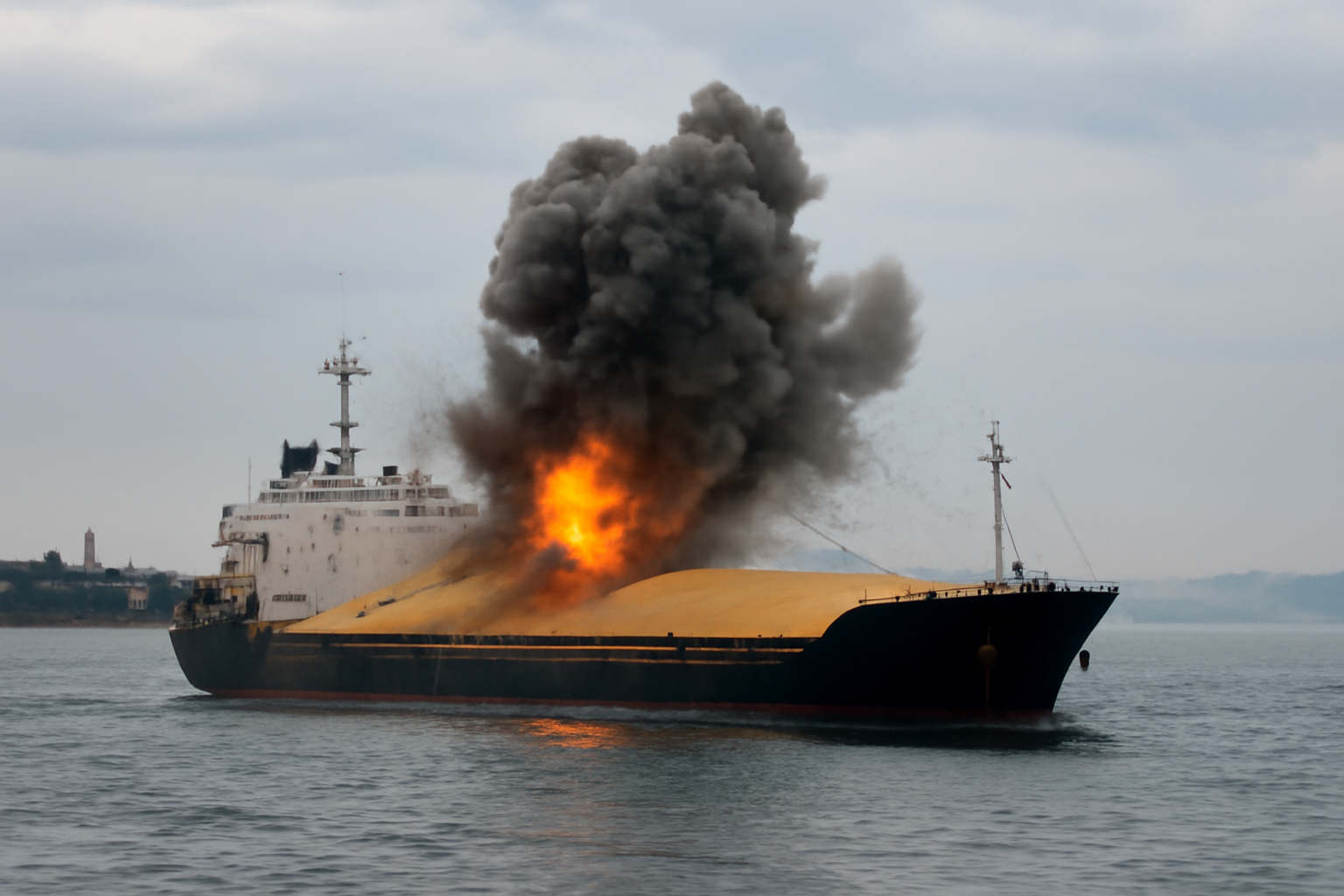
Deadly attack near Odesa
A Russian attack struck a vessel carrying corn near Odesa, killing 10 people and intensifying concerns about the security of commercial grain shipping in the Black Sea. The available report does not identify the vessel, its flag, the size or destination of its cargo, or the precise location and timing of the strike.
The incident directly affects a physical link in the grain supply chain: the ships that carry agricultural commodities from loading areas around Odesa toward overseas buyers. A strike involving a loaded commercial vessel raises risks not only for the cargo and crew but also for shipowners, charterers, port operators, insurers and traders responsible for completing deliveries.
Higher uncertainty for grain logistics
Odesa is a critical point for the movement of Ukrainian agricultural products through the Black Sea. Any deterioration in security around the area can complicate vessel scheduling, port calls and contract execution. Market participants may need to account for the possibility of delays, route changes or interruptions when arranging corn and wheat shipments.
The death toll of 10 makes the attack more than a case of damage to cargo or infrastructure. It highlights the human exposure faced by crews working on grain routes in a conflict zone. For vessel operators, the incident may lead to closer scrutiny of voyage plans and security procedures. Insurers may reassess individual calls and coverage conditions, while charterers may face a smaller pool of ships willing to enter higher-risk waters.
The report provides no information on whether port operations were disrupted or whether other vessels changed course. It also does not establish how much corn was damaged or whether the cargo could be recovered. Without those details, the immediate impact on available grain supply cannot be quantified.
Implications for corn and wheat markets
The attack is relevant beyond the affected shipment because Black Sea availability forms part of the supply calculations used by grain buyers and traders. Corn importers depend on predictable loading and arrival schedules, particularly when purchases are tied to feed production or processing requirements. An interruption at sea can create costs even when the underlying grain remains available at origin.
Wheat was not identified as the vessel’s cargo, but the incident also matters for wheat trade because corn and wheat use overlapping port, shipping, insurance and inspection services in the region. A change in the willingness of carriers or insurers to serve Odesa could therefore affect several grain categories rather than one cargo alone.
Alternative origins and routes can reduce buyers’ dependence on a single corridor, but switching supply involves commercial constraints. Grain specifications, freight distances, delivery windows and existing contracts determine whether substitution is practical. The attack adds another security variable to those purchasing decisions without, on the available evidence, establishing a broader suspension of trade.
Market participants await operational details
Traders will watch for evidence of changes in port activity, vessel availability, insurance terms and freight costs. Producers and exporters need continued access to loading capacity, while importers need confidence that contracted cargoes can leave the region and arrive on schedule.
The central confirmed facts remain limited but serious: a Russian strike hit a corn-laden ship near Odesa and 10 people were killed. Until further operational information emerges, the principal market effect is an increase in perceived risk around Black Sea grain logistics rather than a measurable loss of regional export supply.