Russian salmon roe output drops 66% as weak catch and exports tighten supply
Russian salmon roe production fell 66% from 2025 after the 2026 salmon catch missed forecasts. Retail prices reached 23,000-23,500 rubles per kilogram, while suppliers expect purchasing prices to rise another 20% before the winter holidays.
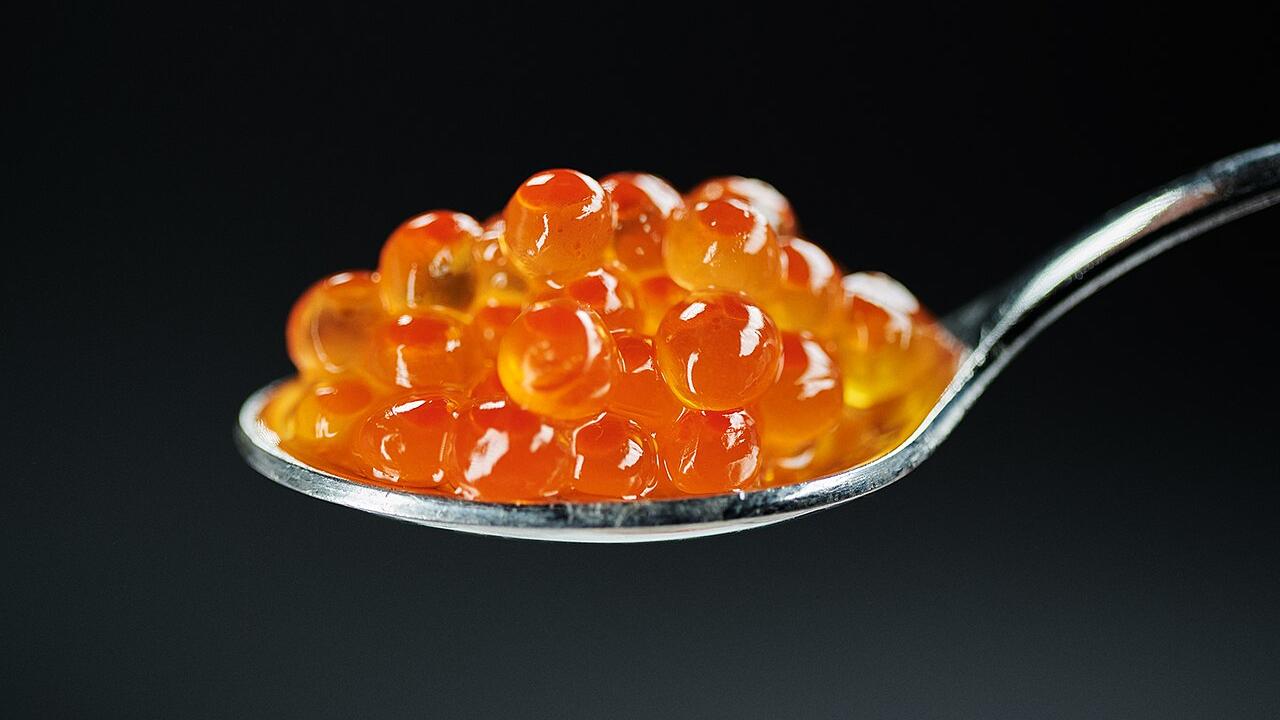
Production falls after weak salmon season
Russian salmon roe production has fallen 66% compared with 2025, one of the weakest results in two decades, according to Pravda.ru. The decline follows a poor 2026 Pacific salmon season in Russia’s Far East. 19rusinfo.ru reports that fishermen landed no more than 110,000 tonnes against a forecast of 227,000 tonnes, with catches in Kamchatka among the lowest in decades. It estimates fishing companies’ losses at 17 billion rubles.
The supply contraction has pushed fresh-catch roe to record retail levels. Pravda.ru puts the price at 23,000 rubles per kilogram, while 19rusinfo.ru reports 23,500 rubles. Market participants cited by Pravda.ru expect purchasing prices to increase by an average of another 20% in the coming months, placing further pressure on distributors, restaurants and households before peak holiday demand.
Restaurants prepare for winter shortages
Restaurant operators have not yet made broad menu changes because existing stocks remain available. Gleb Marach, co-founder of the Joy restaurant group, told Pravda.ru that disruptions could become serious in one and a half to two months, closer to the winter holidays. Premium restaurants have so far maintained their prices and product ranges, while the effect on budget venues is limited because they already used little salmon roe.
Catering companies face the most immediate adjustment because roe is often used to decorate dishes. Some operators are switching to pike roe, tobiko or colored halibut roe, although Maria Mirenkova, director of Chef Catering, said these alternatives work only as decoration. Recipes in which roe determines the flavor, including white roe sauce for fish, cannot be replaced directly. Demand in event catering was already narrow: the chef of Sochny Catering said customers request red roe in roughly one out of every 50 orders, as vegetable dishes and microgreens displace traditional appetizers.
Exports and logistics amplify domestic pressure
The poor harvest is the immediate cause of the roe shortage, but broader seafood-market conditions are also supporting prices. Russia catches about 5 million tonnes of fish annually, according to Russian Fish Union chairman Alexander Panin, yet annual seafood exports total 1.5 million to 2.1 million tonnes, with China the principal destination. 19rusinfo.ru reports that export prices rose by as much as 24% in some months. It says exports increased 19% in 2025 to $6.1 billion after export duties were abolished in November 2024.
Exporters can recover value-added tax and receive compensation covering about 25% of overseas transportation costs. Russia has allocated 10 billion rubles annually for this support in 2026-2028. Domestic logistics remain expensive because about 75% of the catch comes from the Far East. Moving a 27-tonne container from the region to St Petersburg costs 750,000 rubles, adding about 28 rubles per kilogram. These incentives and costs do not create the failed salmon run, but they can intensify competition for limited supply. With consumption already down from 22.8 kilograms per person in 2024 to 22 kilograms in 2025, higher roe and fish prices risk further weakening domestic demand.