Russian fishing industry proposes protective duties on imported farmed fish and mandatory origin labelling
Russian fishing companies have proposed prohibitive import duties on aquaculture from countries where antibiotics are used systematically, together with labelling that identifies the catch area or farm. The industry links the measures to a domestic consumption target of 28 kilograms per person against about 22 kilograms recorded in 2025.
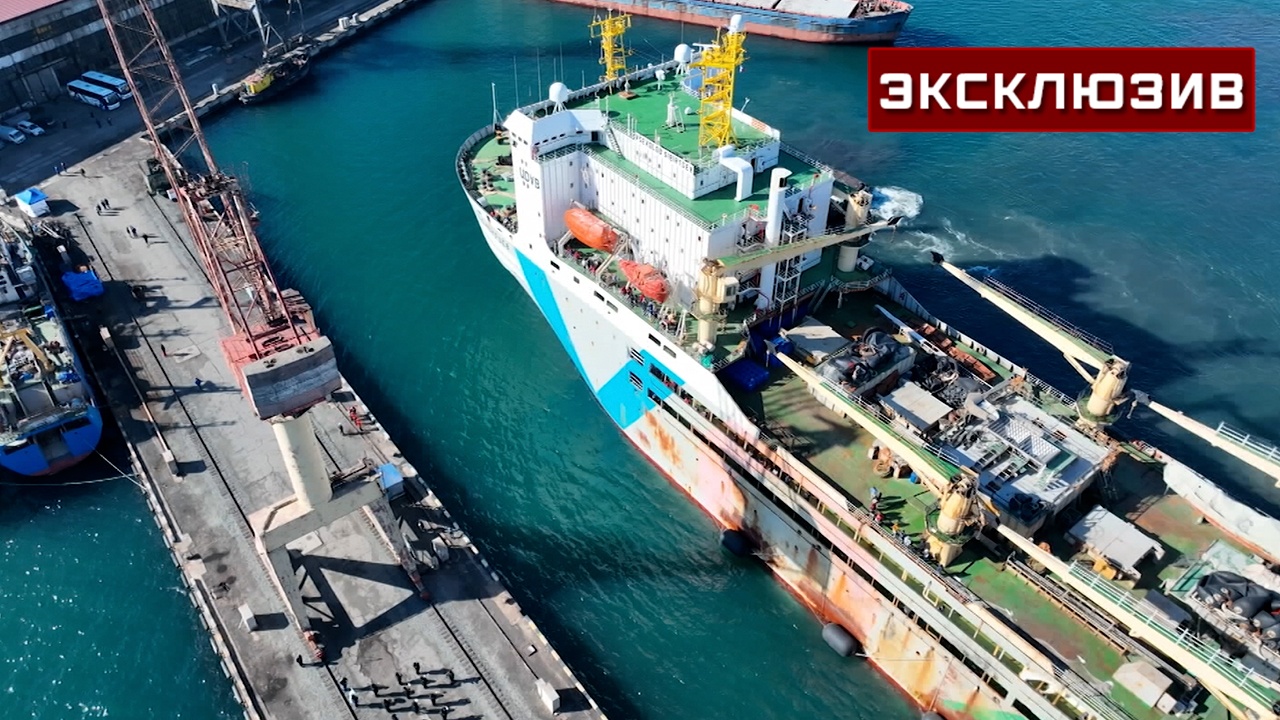
Russian fishing companies have proposed introducing prohibitive import duties on aquaculture — farmed fish brought in from abroad — from countries where antibiotics are used systematically in fish farming, alongside mandatory labelling that shows the harvesting area or the site where the fish was raised. The proposals were set out in a report by the Zvezda television channel.
The initiative is aimed at domestic fish prices and at a target set a year ago by President Vladimir Putin, who instructed the industry to ensure that Russian fish is not only exported but also present in sufficient volume on domestic tables, and at an affordable price.
Duties on farmed imports and origin labelling
Supporters of the restrictions argue that some countries apply antibiotics systematically in fish farming, whereas the Russian fishery in the Far East is built around wild fish from cold seas. Under the labelling proposal, packaging would have to state the harvesting area for wild catch or the location of the farm for aquaculture, giving buyers a basis for comparison that is currently absent at the shelf.
One regulatory change is already in place: the Federal Antimonopoly Service introduced registration of transactions on the exchange in March this year. Industry representatives say Russian companies are ready to take over the share of the domestic market currently covered by imports.
Processing at sea and on shore
At one of the fillet plants of the Dobroflot group, pollock is formed into even blocks and prepared for freezing, moving from catch to finished product in a short cycle. “It is tested for E. coli content, we have a production laboratory, we carry out microbiochemistry, and fish quality is determined across a broad set of indicators,” said Anton Dyachenko, chief processing technologist at the Novy Mir fishing collective farm.
Fillet is packed in blocks or frozen individually, and the same process is run at sea. The floating factory Vsevolod Sibirtsev alone can process up to 600 tonnes of fish a day on board. “We process fish directly at sea, where it is caught. That allows us not to freeze it, and because of that it keeps its original bright taste,” said Alexander Efremov, manager of the Dobroflot group of companies. More than 30 coastal deep-processing plants have been built in Russia under state programmes and subsidies, with the task of carrying out complex processing rather than simply freezing the catch. From January to May the fish comes close to shore during the coastal pollock season, fresh fish is delivered straight to the plant and turned into first-freeze fillet, the most valuable product on the market; a single vessel can bring up to 50 tonnes of fish per trip.
Consumption target and export flows
According to Rosstat, about 22 kilograms of fish per person were consumed in Russia in 2025, well short of the benchmark of 28 kilograms a year. The shortfall is not the result of a lack of fish: in 2025 Russian companies exported more than 2 million tonnes of fish products.
- Per capita consumption in 2025: about 22 kilograms, according to Rosstat
- Benchmark: 28 kilograms per person a year
- Exports in 2025: more than 2 million tonnes of fish products
- Export value cited by Dobroflot: $6.5 billion
Where the price is formed
“In Russia we export $6.5 billion of our environmentally clean, tasty Russian fish, in order to then give back exactly half of that money to buy farmed fish,” Efremov said. He described that exchange as one of the main problems of the Russian fishing industry today and a factor in how prices are set. State regulators, he noted, also look at the European consumer, and it is the expensive imported share that pulls the basket upwards.
“This traditional look towards the Far East, searching for that markup at our end, with the fishermen, at Russian Railways — that is simply the wrong address. The markup here is fine, this is a competitive market, there are many producers making semi-finished product that mostly goes to export, and what goes to the domestic market goes with an extremely low markup,” the manager of the Dobroflot group concluded.