Russian container market grows 7% to 4.17 million TEU as August freight rates firm
Russia’s container market expanded by 7% year on year to 4.17 million TEU in January–July 2026, according to Fesco data cited by TASS. RZD-Partner also reported that container freight rates strengthened in August.
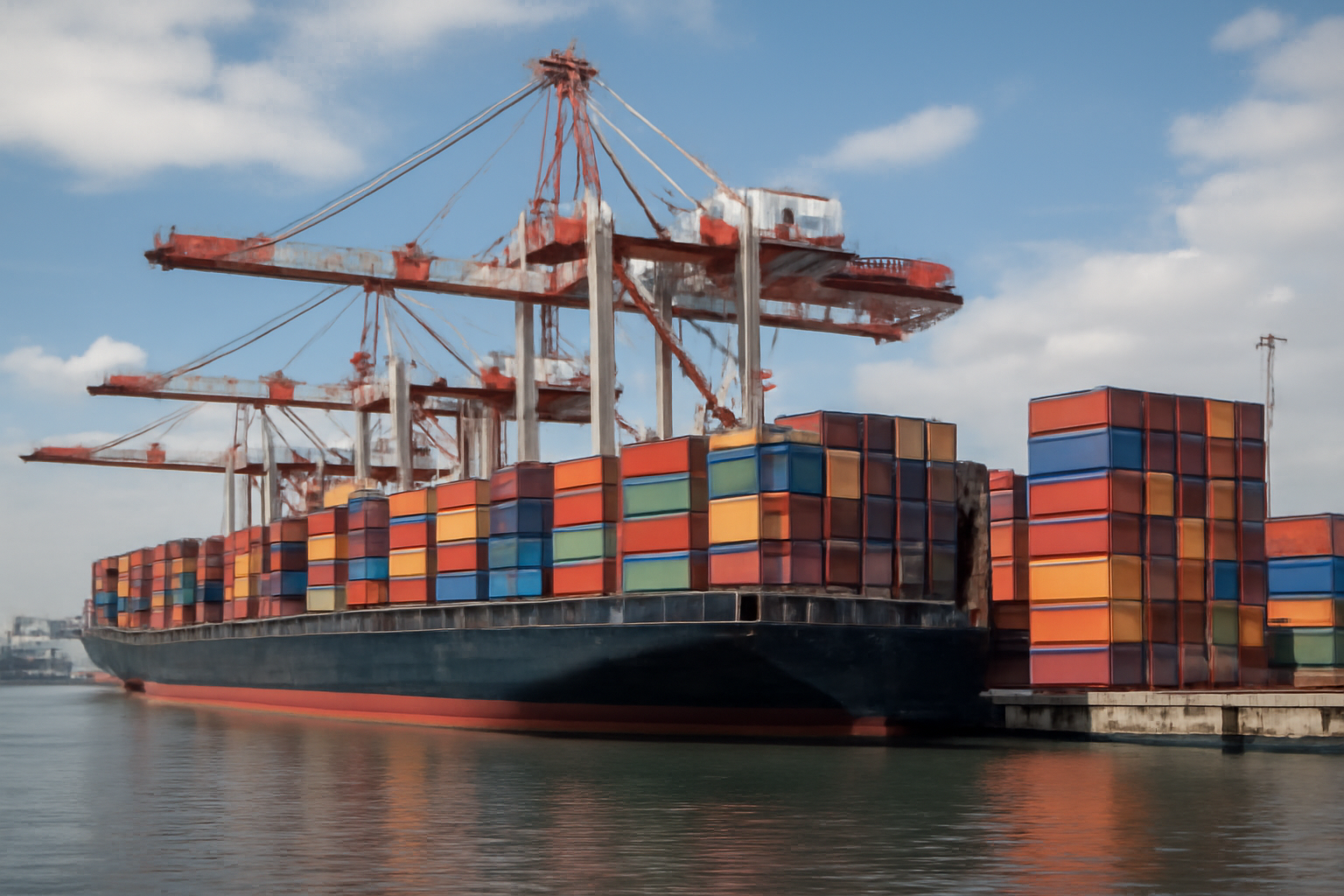
Container volumes reach 4.17 million TEU
Russia’s container market grew by 7% year on year in January–July 2026, reaching 4.17 million twenty-foot equivalent units, or TEU. RZD-Partner reported the figure, citing TASS and data from Russian transport group Fesco.
The increase indicates that containerized cargo activity remained above the previous year’s level during the first seven months of 2026. The published information covers the national market and does not provide a breakdown by rail, road, sea or inland terminals. It also does not separate domestic movements from imports, exports and transit cargo.
Those distinctions matter for operators and cargo owners. Growth driven by domestic traffic creates different equipment and terminal requirements from growth concentrated in international routes. Without a segment breakdown, the 4.17 million TEU total is best read as a broad measure of market activity rather than evidence of expansion on every individual corridor.
Freight rates strengthen in August
RZD-Partner also said container freight rates firmed in August. The source material did not specify the routes, rate levels, currencies or percentage changes involved, so the movement cannot be attributed to a particular trade lane or transport mode.
Higher rates alongside rising volumes may point to firmer cargo demand, tighter available capacity or a combination of the two. It may also reflect route-specific operating costs and equipment availability. The available figures do not establish which factor was dominant, and they do not show whether the increase applied across Russia or only to selected services.
For shippers, a sustained rise in rates would increase the cost of moving containerized goods and could affect routing, shipment timing and contract negotiations. For carriers, terminals and equipment providers, stronger pricing can support revenue, but its commercial value depends on utilization, repositioning costs and the balance of containers across the network.
Capacity conditions remain the key question
The combination of 7% market growth and firmer August rates makes capacity conditions the central issue for the next reporting periods. If volume growth continues while equipment, terminal slots or transport capacity remain constrained, rates could retain support. If capacity expands faster than demand, pricing pressure may ease even with the market above its previous-year volume.
The limited disclosure leaves several questions open for producers, importers, exporters and logistics companies. The data do not identify the cargo categories behind the increase, the regions contributing most to growth or the share handled by particular gateways. More detailed figures on international and domestic flows will be needed to determine whether the expansion is broad-based and whether the August rate movement represents a lasting change.