Russian Coking Coal Exports to China Rise 16% in First Half of 2026
Russia increased coking coal exports to China by 16% in the first half of 2026 as demand recovered, according to Deputy Prime Minister Alexander Novak. The growth reinforces Russia’s position in China’s coal supply chain, supported by new mining and port infrastructure.
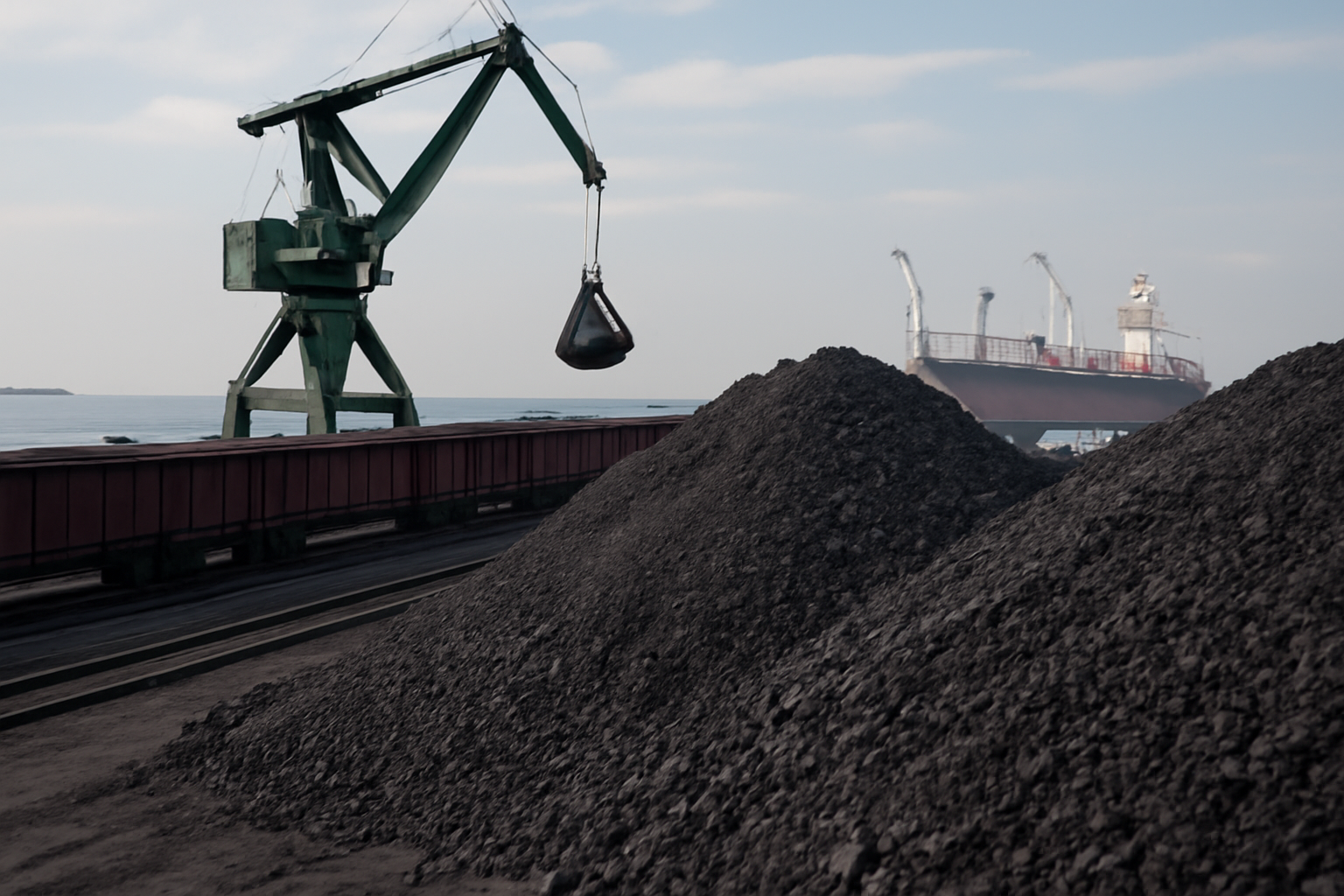
Coking coal shipments recover
Russia increased its exports of coking coal to China by 16% in the first half of 2026, according to Russian Deputy Prime Minister Alexander Novak. Speaking at the Russian-Chinese Energy Business Forum held during the Eastern Economic Forum in Vladivostok, Novak attributed the increase to a recovery in demand.
The reported growth points to stronger Chinese purchases of a raw material central to blast-furnace steelmaking. Rusmet.ru, which reported Novak’s remarks, did not provide the shipment volume for coking coal alone, its value, a comparison by route or a breakdown by Russian producer. The percentage therefore indicates the direction of trade but does not establish the absolute scale of the increase.
The rise also concerns only coking coal exports during the first six months of the year. Russia’s wider coal trade with China includes other grades, particularly thermal coal used in power generation, making the distinction important for steelmakers, traders and transport operators assessing the market.
Russia retains a substantial share of Chinese supply
Russia remains one of the leading suppliers of coal to China, Novak said. At the same forum, Rosneft chief executive Igor Sechin said Russian shipments account for approximately 20% of China’s total coal imports, according to Rusmet.ru. That figure covers coal broadly rather than coking coal specifically.
Russia supplied China with about 90 million tonnes of coal in 2025, the publication reported. The combination of that established trade base and the first-half increase in coking coal shipments underlines the importance of the Chinese market for Russian producers and of Russian material for Chinese industrial buyers.
For China’s steel sector, a larger flow from Russia adds supply from a neighboring producer at a time when procurement decisions depend on coal quality, delivered cost and the reliability of transport links. For Russian miners, growth in Chinese demand can support sales into an Asian market capable of absorbing large volumes. The source did not disclose prices, contract terms or the share moved by rail and sea, limiting any assessment of margins or competitiveness against other suppliers.
Mining and port projects support the trade corridor
Russia and China are also advancing joint projects in the coal sector. Rusmet.ru identified the development of the Zashulanskoye coal deposit in Russia’s Trans-Baikal region as one example. The region’s location makes transport infrastructure and cross-border logistics central to the project’s commercial prospects.
Additional export capacity is being developed on Russia’s Pacific coast. The Port Elga marine coal terminal in Khabarovsk region was opened during the Eastern Economic Forum, according to the publication. The facility cost 71 billion rubles. Rusmet.ru did not state its designed annual handling capacity or provide a commissioning schedule for volume growth.
The terminal adds infrastructure intended to connect Russian coal production with seaborne customers in Asia. Its impact on actual exports will depend on mine output, inland transport availability and the pace at which terminal operations scale up. Together with development of the Zashulanskoye deposit, the investment shows that bilateral coal cooperation is extending beyond short-term cargo purchases into production and logistics assets.
Energy ties extend beyond coal
Novak said Russia was prepared to expand cooperation with China in electric power, including cross-border grid infrastructure and energy-storage systems. President Vladimir Putin had previously described Russia as one of the leading suppliers of both coal and liquefied natural gas to China, Rusmet.ru reported.
For the metallurgical coal market, the immediate signal is the 16% first-half rise in shipments. The next indicators will be whether the pace continues through the remainder of 2026, how much new capacity is brought into operation at mines and ports, and whether stronger volumes translate into a durable increase in Russia’s share of China’s coking coal supply.