Russian hard-coal exports to South Korea reach three-year high
Russian hard-coal shipments to South Korea have risen to their highest level in three years, according to the supplied report headline. The available material does not disclose shipment volumes, values or the period covered by the comparison.
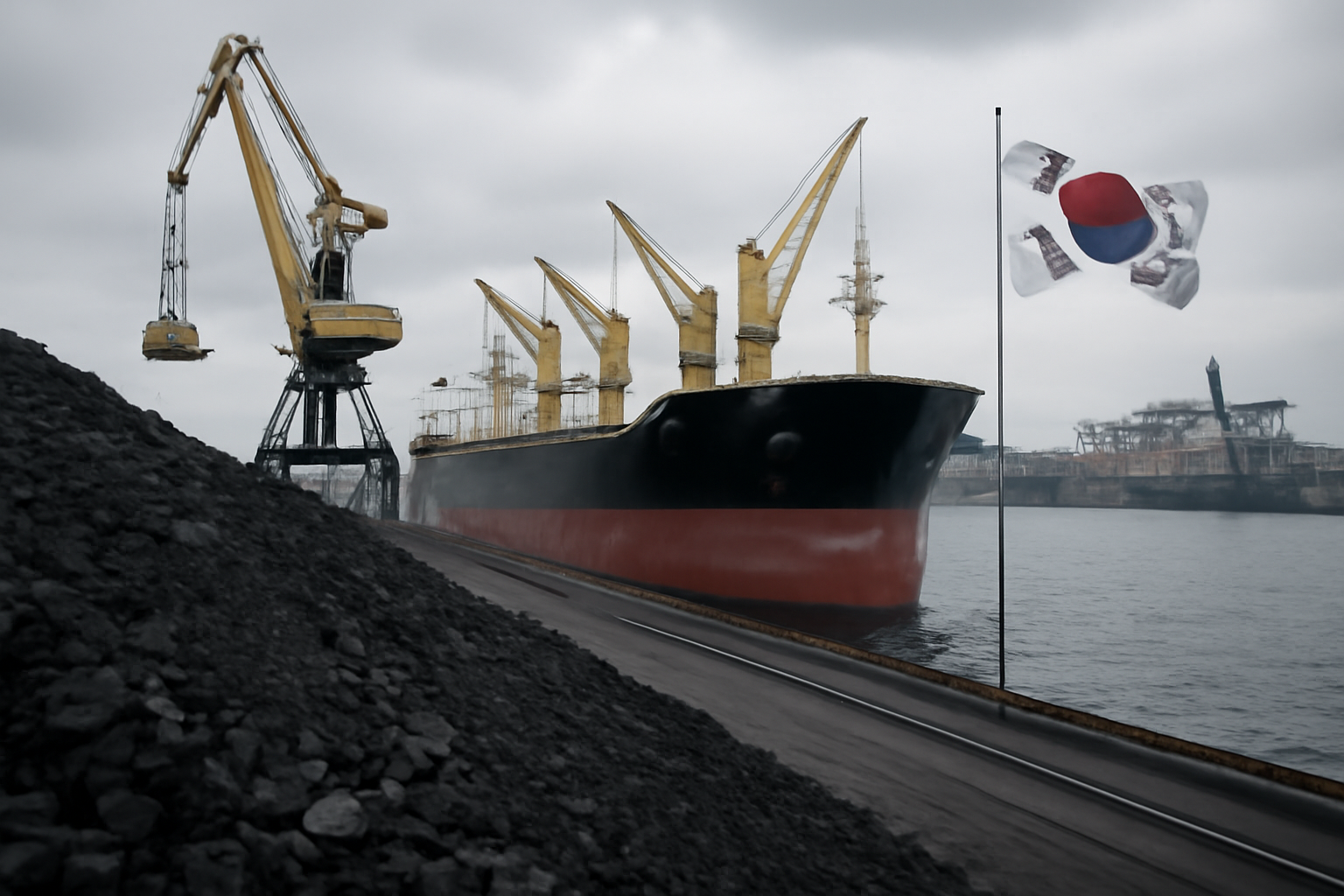
Shipments reach three-year peak
Russian hard-coal exports to South Korea have reached their highest level in three years, according to a report headline published by Gazeta.ru. The material supplied for this article does not specify the tonnage shipped, the value of the trade or the exact period used to establish the three-year comparison. It also provides no year-on-year growth rate, preventing a precise assessment of how quickly the flow has increased.
The reported high nevertheless identifies South Korea as an increasingly important destination for Russian coal in Northeast Asia. For Russian producers and exporters, stronger sales into this market could support mine utilization and provide an outlet relatively close to Russia’s Pacific ports. The commercial impact cannot be quantified without data on volumes, coal grades, freight costs and contract prices.
Implications for Northeast Asian buyers
South Korea is the destination named in the report, but the supplied source material does not identify the utilities, steelmakers or trading companies receiving the cargoes. Hard coal covers products used in both power generation and industrial processes, and the absence of a grade breakdown means the reported increase cannot be assigned confidently to either thermal or metallurgical demand.
A three-year high may reflect larger purchases by South Korean buyers, a shift among suppliers or both. The information provided does not show whether Russian cargoes displaced coal from another origin, supplemented existing supply or arrived under new contracts. It also contains no comparative figures for other exporters. Any conclusion about a broader change in South Korea’s sourcing pattern therefore remains provisional.
For traders, the development may increase attention to loading capacity at Russia’s eastern terminals, vessel availability and freight economics on routes to South Korea. For buyers, a larger Russian flow could widen procurement options. However, the source offers no evidence on delivery terms, discounts, payment arrangements or logistical constraints, all of which determine whether a higher shipment level can be sustained.
Regional trade context
The accompanying text supplied with the headline concerns a separate trade indicator. Gazeta.ru reported that Chinese Ambassador to Russia Zhang Hanhui said on August 17 that Russia-China merchandise trade reached $159 billion in the first half of 2026, up 26% from the same period of 2025. The text does not connect that figure directly to Russian coal exports to South Korea, and it should not be treated as evidence for the reported three-year high.
The two items do, however, place Russia’s Asian commercial relationships in view. China and South Korea are separate markets with different buyers, regulations and demand profiles. The available information supports only two findings: Russian hard-coal shipments to South Korea reached a three-year high, and Russia-China merchandise trade increased in the first half of 2026. Further shipment data are required to measure the coal flow’s scale, product composition and effect on competition among Northeast Asian suppliers.