Russian chocolate-bar sales fall 9% as consumers switch to cheaper sweets
Russian chocolate-bar sales by volume fell 9% year on year in January–June 2026, compared with a 2% contraction across confectionery. Higher accumulated prices and weaker purchasing power are pushing consumers toward cookies, bars and other cheaper formats.
Chocolate leads the confectionery decline
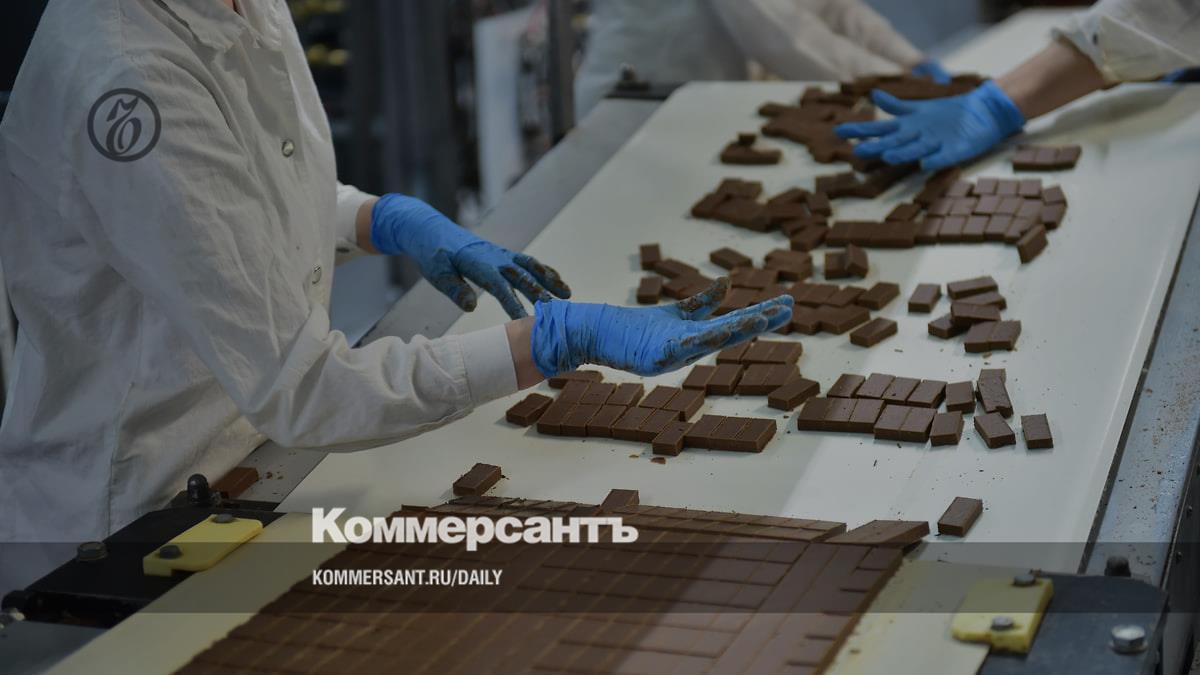
Retail sales of chocolate bars in Russia declined 9% by volume year on year in January–June 2026, according to NTech data reported by Kommersant. This was the sharpest contraction among confectionery categories and substantially exceeded the 2% decline recorded for the market as a whole.
Cakes and pies ranked second, with demand down 4%. Soft flour-based confectionery posted a similar decline, while candy sales decreased 3%. Platforma OFD, a fiscal-data operator, measured a smaller 2% year-on-year fall in chocolate sales over the longer January–August period. The different results cover different periods and datasets, but both indicate continued pressure on the category.
The contraction extends a downturn that has lasted about two and a half years. Nielsen data cited by Kommersant showed chocolate sales by volume falling 7.1% in 2024. At the end of 2025, NTech estimated a 15% decline. Dmitry Leonov, deputy chairman of the Rusprodsoyuz association, said consumers were becoming more rational about spending and switching to cheaper alternatives. Mondelez’s Russian business also linked weakness in some confectionery categories early in 2026 partly to lower household purchasing power, although it said demand in large retail chains began recovering in June.
Accumulated price increases reshape demand
The immediate pace of chocolate inflation has moderated, but consumers are still absorbing several years of increases. Rosstat put the average retail price of chocolate at 1,500 rubles per kilogram in July, up 3.3% year on year. Over three years, however, chocolate became 49.4% more expensive. Platforma OFD calculated that a chocolate bar cost an average of 108 rubles in January–August, 9% more than a year earlier.
Chocolate candies with natural additives also rose 3.3% to 1,100 rubles per kilogram. Cakes reached an average of 967.7 rubles per kilogram in July, an annual increase of 10.3%. Dmitry Semenov, president of the Russian Union of Bakers, previously told Kommersant that bakery companies faced sharply higher logistics expenses because of the gasoline crisis and had to raise wages to retain employees.
Global cocoa costs remain a risk despite signs of stabilization in raw-material markets. Leonov said cocoa beans traded at $6,200 per tonne on August 27, up 19.8% in one month. He attributed the increase to concerns about smaller harvests in Côte d’Ivoire and Ghana. Renewed cocoa inflation could limit manufacturers’ ability to reduce retail prices and slow the recovery in chocolate volumes.
Consumers move toward bars and cookies
Demand is shifting rather than disappearing uniformly. NTech recorded 4% growth in unit sales of sweets positioned near checkout counters, the strongest result among confectionery categories. Mondelez reported substantial growth in chocolate bars and chewing gum. Stanislav Bogdanov, chairman of the Association of Retail Companies, said retailers were also seeing double-digit growth in oriental sweets, chocolate bars and chocolate-covered fruit, alongside solid results for fitness desserts.
Cookie and pastry sales increased 1–2% in the first half. Cookies remained among the most affordable confectionery products even after their average price rose 6.6% to 322.4 rubles per kilogram in July. Platforma OFD said consumption was moving toward budget products, including those widely stocked by discount chains, while Pyaterochka analysts reported growing interest in wafers and cookies.
Manufacturers reduce output and revise ranges
Manufacturing volumes are adjusting to weaker retail demand. Rosstat reported that Russian production of packaged chocolate fell 5.4% year on year to 140,100 tonnes in January–July 2026. Cake production declined 3.4% to 81,900 tonnes. The production decreases were smaller than the first-half contraction in chocolate-bar retail sales, but they confirm that the slowdown is moving through the supply chain.
Confectionery producers are reviewing their product ranges as shoppers prioritize lower prices, smaller formats and products perceived as healthier. Mondelez expects demand across most categories to recover as raw-material markets stabilize and consumers adapt to new prices. For manufacturers and retailers, however, the near-term opportunity is concentrated in affordable cookies, impulse bars, wafers and adjacent formats rather than conventional chocolate tablets and cakes.