Russian Baltic coal export price hits three-year high at $89 a tonne
Russian thermal coal on an FOB Baltic basis reached $89 a tonne on 25 September, the highest since April 2023, after a 13% gain in September and 31% since the start of 2026. Turkish demand, Chinese buying and higher freight rates are driving the move, alongside the rerouting of cargo from southern Russian ports. Kuzbass netbacks through Baltic terminals improved to 3,795 roubles a tonne.
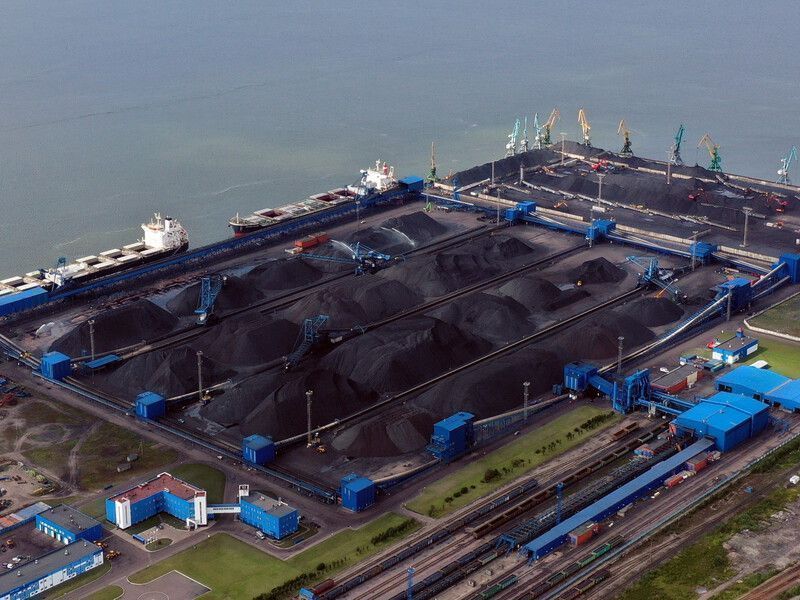
The export price of Russian thermal coal in Baltic ports rose to $89 a tonne on 25 September, the highest level in more than three years, according to data from the Price Index Center (CCI) reviewed by Vedomosti. The assessment covers coal with a calorific value of 6,000 kcal/kg on an FOB Baltic basis; the quotation was last above this mark in April 2023.
The gain was concentrated in a few weeks. The price added 13% during September and 31% since the start of 2026, Vedomosti reported. Other Russian export basins moved differently: coal of the same calorific value was assessed at about $85 a tonne at Taman in September, while prices in the Far East rose 5% to $116 a tonne.
Turkish demand and global benchmarks
CCI names strong Turkish demand as one of the main reasons for the increase, with Chinese purchases and the risk of reduced Indonesian supply providing further support. The Turkish market has repriced faster than any other benchmark cited: according to NEFT Research, prices there rose 43.5% since the start of the year to $137 a tonne CIF at the end of September.
The move sits inside a broader rally in seaborne thermal coal. ICE data put FOB Newcastle, a principal reference for Asian buyers, up 36% year-to-date at $146.5 a tonne at the end of September. Coal delivered into Amsterdam, Rotterdam and Antwerp gained 47% over the same period to $142.2 a tonne. On that comparison, Russian Baltic material still trades at a wide discount to both European and Asian benchmarks.
Cargo reroutes fill Baltic terminals
Logistics is the second driver. Shipping constraints in the Azov and Black Seas have pushed part of the export flow from southern Russian terminals towards ports in the Baltic basin. Morcentr data show coal and coke transshipment at Baltic marine terminals up 41% year on year in August to 4.6 million tonnes, a 10% increase on July.
Freight costs and netbacks
Higher volumes have come with higher shipping costs. CCI puts bulker freight rates for coal in the Baltic 15% above year-earlier levels in September. Panamax freight from Ust-Luga was quoted at $60.5 a tonne to Chinese ports at the end of September, $53.5 a tonne to western India and $33.5 a tonne to Iskenderun in Turkey, making the short haul to Turkey by far the cheapest route out of the basin.
Despite the freight increase, the higher export price improved shipment economics. NEFT Research calculated the netback on Kuzbass coal exported through Baltic ports at 3,795 roubles a tonne at the end of September, against 2,906 roubles in August. CCI estimated that the Kuzbass netback via the Baltic rose by roughly 20% over the month. Analysts quoted by Vedomosti note that the margin improvement is so far mainly a western-direction phenomenon, attributing it in part to a supply deficit that persists despite increased shipments.
How far the rally can run
Further price direction will depend on global demand, wider energy market conditions and the ability of Russian exporters to redistribute cargo between ports. Alexander Kotov, partner at NEFT Research, said the price of Russian coal in Baltic ports could rise to $100 a tonne if conditions remain favourable. Egor Vershinin, an analyst at Finam, considers that level attainable only if global supply contracts for a sustained period.
Volume growth through the northwest is constrained by railway capacity. On that basis, analysts expect higher prices to redistribute export flows between Russian ports rather than lift total export volumes sharply. The starting point is a low one for the region: CCI data show coal exports through northwestern ports fell 18% in 2025 to 40 million tonnes, even as total Russian coal exports rose 7% to 211.2 million tonnes, according to the Energy Ministry.