Russia to Introduce National Standard for Starch Noodles From September 1
Russia will apply GOST 35056 to funchoza and other fen-si starch noodles from September 1, 2026. The standard defines permitted ingredients, product characteristics, packaging, labeling, storage, transport and quality-control methods.
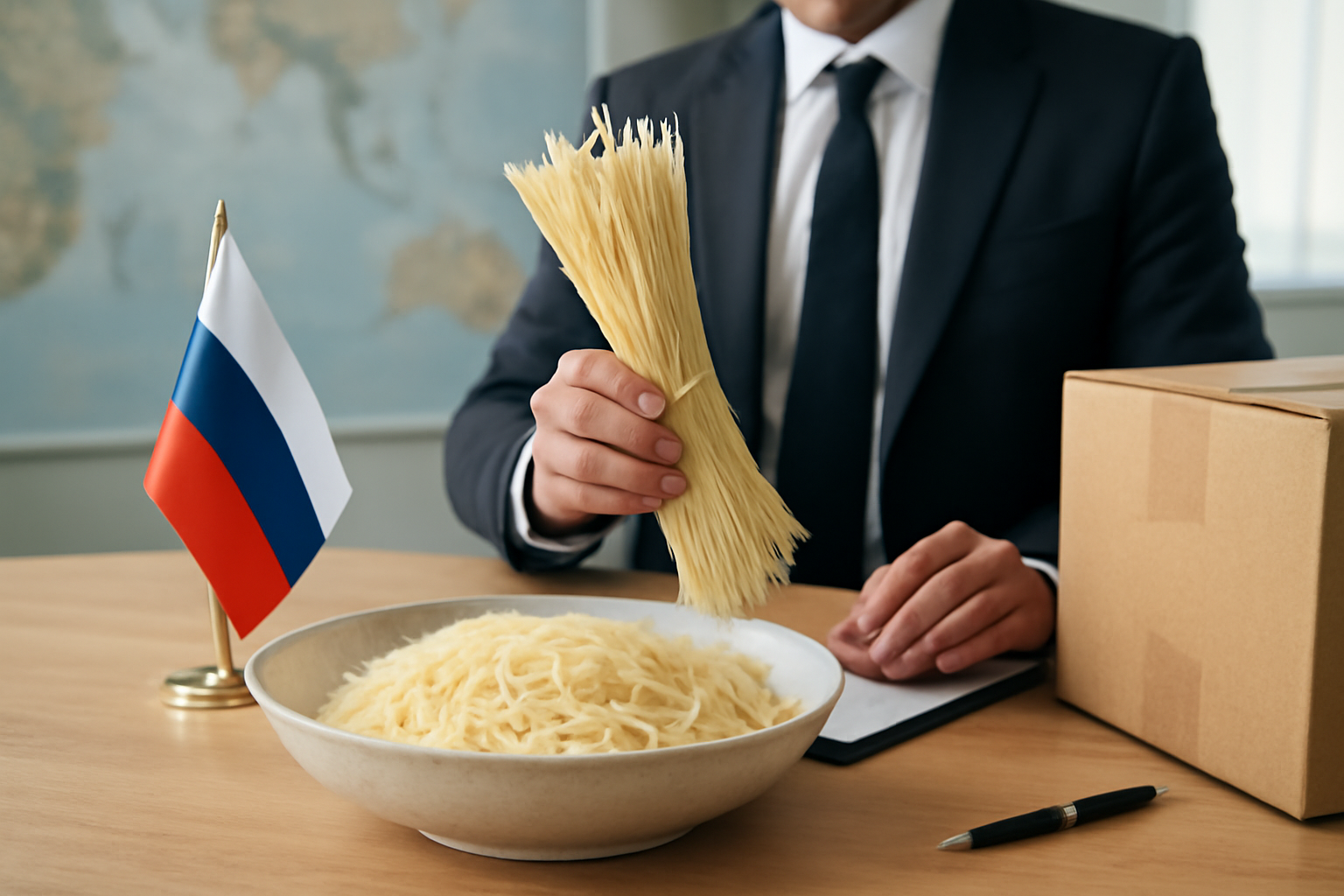
Standard takes effect in September
Russia will introduce a national standard for fen-si starch noodles, commonly sold as funchoza or glass noodles, from September 1, 2026. TASS reported that the document covers noodles made from corn or potato starch and drinking water, as well as their packaging, labeling and transport. Rosstandart has identified the document as GOST 35056.
The standard applies to starch noodles intended for sale through retail channels and for use by food-service businesses. Its scope therefore reaches beyond factories to companies that pack, distribute, import or supply the product to restaurants and other catering operators. The introduction of a common specification gives these businesses a single reference for product descriptions and quality checks.
Ingredients and physical requirements
Under the approved specifications reported by Expert Garant, standardized funchoza must be produced from corn or potato starch with drinking water. The finished product consists of thin, thread-like pieces that are dried after forming. Its color may range from white to cream, while its taste and smell must be characteristic of the product and free from foreign flavors, odors or inclusions.
The standard also establishes measurable limits. Moisture may account for no more than 12% of the product, and each noodle thread may have a diameter of up to 1.2 millimeters. The share of broken or deformed pieces in a package is limited to 3%, while noodle length may not exceed 70 centimeters. After cooking, the noodles should retain their original shape and should not stick together.
These criteria create practical control points for manufacturers and buyers. Producers will need to manage drying, forming and handling closely enough to meet the moisture, diameter, length and breakage limits. Importers and distributors can use the same parameters when setting procurement specifications, inspecting shipments and dealing with claims over damaged or nonconforming goods.
Packaging and supply-chain implications
Beyond composition and physical characteristics, GOST 35056 sets rules for packaging and labeling, conditions for transport and storage, and methods of quality control. Packaging operations and label files may consequently require review before September 1. Logistics providers and warehouse operators will also need to compare their handling and storage procedures with the conditions stated in the standard.
The measure does not disclose market size, production volumes, prices or trade flows, so its commercial effect cannot yet be quantified from the available information. Its immediate significance is operational: Russian producers and suppliers of imported funchoza have a defined technical benchmark against which products can be specified and assessed. Companies using other starch formulations will need to determine whether those goods fall within the standardized category and whether their existing product names and specifications remain appropriate.
For buyers, consistent terminology and test methods could make comparisons between domestic and imported products more straightforward. For suppliers, however, the transition creates a documentation and quality-control task before the effective date. The main areas for review are raw-material formulations, production tolerances, package integrity, label wording, storage practices and transport conditions.