Russia’s Seven Planned Hydropower Plants Face a Narrowing Construction Window
Russia plans to commission seven hydroelectric plants by 2042, but construction has not begun despite an average project timeline of 10 years. A government debate over financing is becoming central to the country’s ability to expand hydropower capacity and create demand for generating equipment.
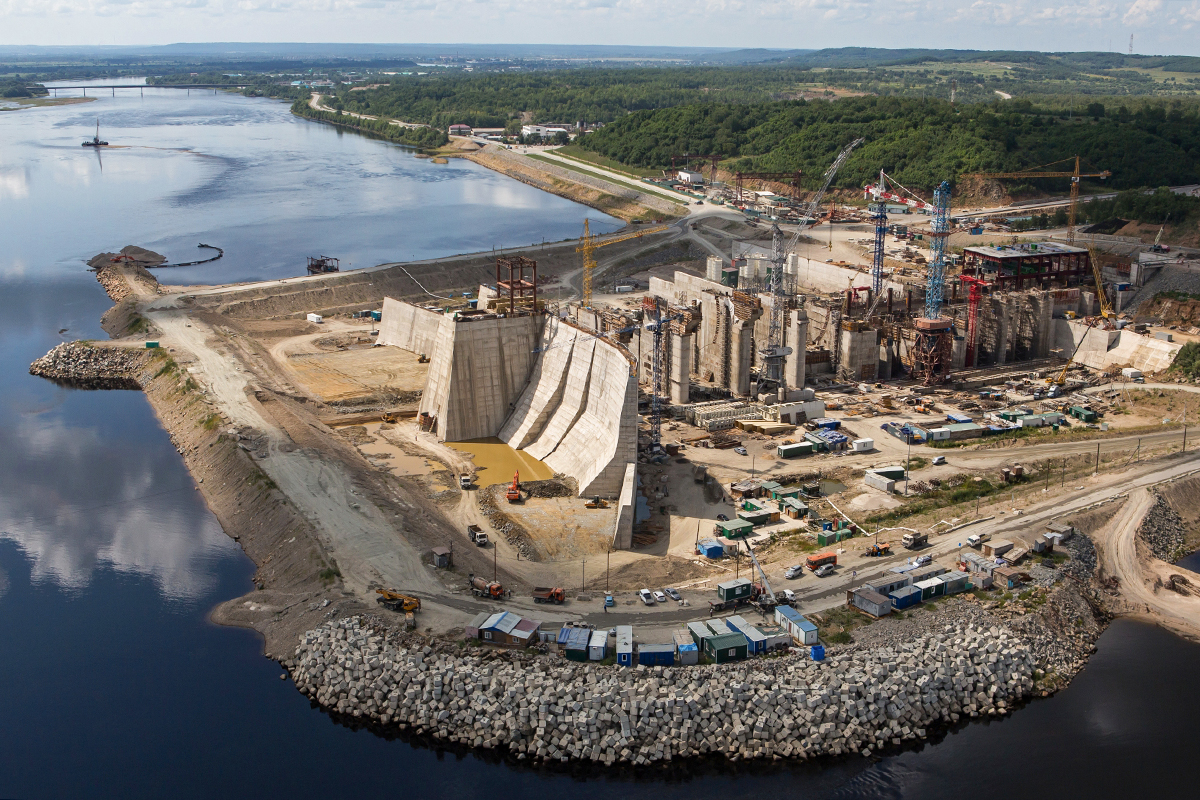
Seven projects remain at the planning stage
Russia intends to add seven hydroelectric power plants by 2042, but construction has yet to begin, according to Expert. The lack of activity is becoming more consequential because the average construction period for this type of power facility is 10 years. The schedule therefore leaves a narrowing margin for project design, financing, procurement, civil works and commissioning.
The planned expansion would add to an established but aging hydropower system. Russia has more than 100 hydropower facilities, including 15 large stations with installed capacity above 1 GW. The country’s hydroelectric plants have combined capacity of 53 GW, representing about 20% of the total installed capacity of all Russian power stations.
Most of Russia’s large hydroelectric projects originated in the Soviet period. Construction of almost all major plants began during those years, although some facilities were completed in the 2000s and 2010s. The current program would therefore represent a return to building large new assets rather than finishing projects inherited from an earlier investment cycle.
Financing becomes the central question
Expert reports that the government is discussing possible financing mechanisms. The outcome will determine whether the proposed plants can move from plans to construction early enough to meet the 2042 target. Hydroelectric projects require lengthy development and building periods, making delays at the financing stage difficult to recover later.
One relevant mechanism is the capacity payment within Russia’s wholesale electricity market. This is the payment for a generating plant’s readiness to begin producing electricity when required. For industrial consumers, the final cost of a kilowatt-hour also includes the actual electricity price, determined daily on the day-ahead market, and network transmission charges.
Across Russia’s two wholesale price zones—the first covering central Russia and the Urals, and the second covering Siberia and the Far East—the average cost of electricity is 5.5–9 rubles per kilowatt-hour. Any financing model for new hydropower must therefore address how investment costs are recovered through the power market and how additional payments affect industrial customers.
Delays extend beyond electricity supply
The absence of construction affects more than future generation capacity. Until financing decisions are made and projects receive firm schedules, suppliers of turbines, generators and other power equipment have limited visibility on future orders. Construction contractors and industrial consumers likewise cannot plan around a confirmed commissioning timetable.
Hydropower already provides a substantial share of Russia’s installed generation base, but the existing scale does not remove the timing risk facing the seven planned projects. With a typical 10-year construction cycle, plants intended for operation by 2042 would need to enter active development well before the final decade of the program.
The government’s financing debate is consequently the immediate test for the buildout. Without an agreed method for paying for new capacity, the 2042 plan remains a policy objective rather than a construction program. The longer projects remain unstarted, the less flexibility developers will have to absorb design changes, procurement delays or longer-than-average building periods.