Russia opens Moscow battery cluster with capacity for 33 million cells a year
A new Moscow-region cluster combines two full-cycle automated plants with annual capacity of 33 million battery cells. The facilities are expected to cover almost 70% of Russian demand for electric-transport batteries, while deeper localization remains the industry’s next challenge.
Two plants target electric-transport demand
Russia has opened a battery-manufacturing cluster in the Moscow region as the government seeks to expand domestic energy-storage capacity and reduce dependence on imported technology. According to Vzglyad, the approximately 200,000-square-metre complex includes two automated, full-cycle plants operated by Renera and Inesis.
The two factories have combined capacity of 33 million battery cells a year. That output could cover almost 70% of Russian demand for batteries used in electric transport, the publication reported. More than 2,100 jobs have been created at the facilities. Moscow Mayor Sergei Sobyanin said the cluster’s first gigafactory was built in 14 months and could begin operating before the end of the year.
The project follows Russia’s first lithium-ion storage gigafactory in the Neman district of the Kaliningrad region, which entered pilot industrial operation in December 2025. That plant has annual capacity of 4 GWh, equivalent to about 50,000 traction batteries when measured against automotive requirements.
Transport provides the first large customer base
Electric vehicles and plug-in hybrids are currently the principal source of battery demand. Russian sales of new electric and hybrid vehicles reached 98,700 units in January-September, almost double the year-earlier level. Lower vehicle prices, a broader model range and reduced exposure to disruptions in the petrol market are supporting adoption, although private demand remains sensitive to household income, fuel prices and model availability.
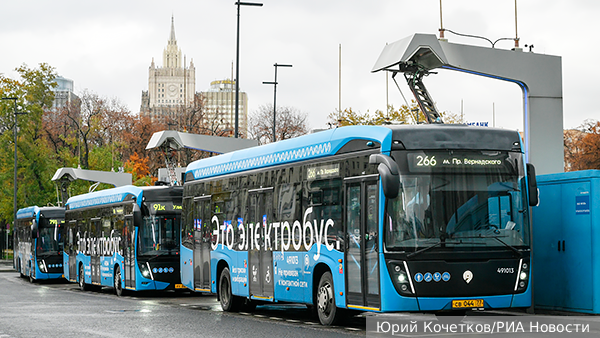
Public transport could provide manufacturers with more predictable long-term orders. Moscow has developed its electric-bus fleet since 2018, and more than 2,900 vehicles were operating on city routes by mid-2026. Expansion in other cities requires investment not only in buses but also in charging stations, depots, power networks and staff training. Federal co-financing, preferential leasing and credit could therefore determine how quickly this market grows.
Battery demand is also expanding beyond road transport. In 2026, Moscow operated 31 electric vessels on three year-round river routes covering 29 kilometres and supported by 24 charging berths. The vessels completed more than 70,000 trips in 2025. Russia has also produced about 46,000 civilian drones during implementation of its national unmanned-aircraft programme, creating recurring demand for replacement battery packs.
Stationary storage widens the addressable market
Other prospective customers include warehouse platforms, forklifts, cleaning machines and delivery robots. Yandex robots completed more than 250,000 deliveries in 2025. The newest machines can travel up to 70 kilometres per charge and use removable batteries that can be replaced within seconds, making operating time and battery durability commercially important.
Stationary storage offers a potentially broader market. Batteries can support remote settlements, farms, greenhouses, communications sites, construction projects and industrial facilities connected to weak grids. Larger systems can provide backup power for hospitals, data centres and businesses, reduce consumption peaks and store intermittent solar or wind generation. In remote areas, storage can also reduce diesel use and dependence on fuel deliveries.
Full-cycle production is not full localization
The cluster strengthens cell and battery production, but import substitution will depend on the wider supply chain. Electric cars, drones, vessels and stationary systems require different cells, modules and control technologies. Domestic producers will also need suppliers of active materials, electrolytes, separators, power electronics, cooling systems, software, production equipment and protective enclosures.
Vzglyad notes that a full production cycle does not necessarily mean complete localization. China remains the main external competitor: in 2025 it accounted for more than 80% of global battery-cell production, about 85% of cathode materials and more than 90% of anode materials. Russian manufacturers will consequently have to compete on service life, warranties, safety and after-sales support as well as price. President Vladimir Putin said Russia plans to meet most of its domestic battery demand independently by 2030 and promised state support for energy-storage producers.