Russia's FAS monitors fish prices as wholesale pink salmon jumps 97%
Russia's Federal Antimonopoly Service said it conducts regular monitoring of domestic fish prices after reports of a sharp rise in wholesale red fish quotations. Natsrybresurs data cited by Kommersant show pink salmon up 97 percent over the year, chum salmon up 73.9 percent and sockeye up 36.1 percent. The regulator pointed to mandatory registration of off-exchange fish deals introduced in the spring.
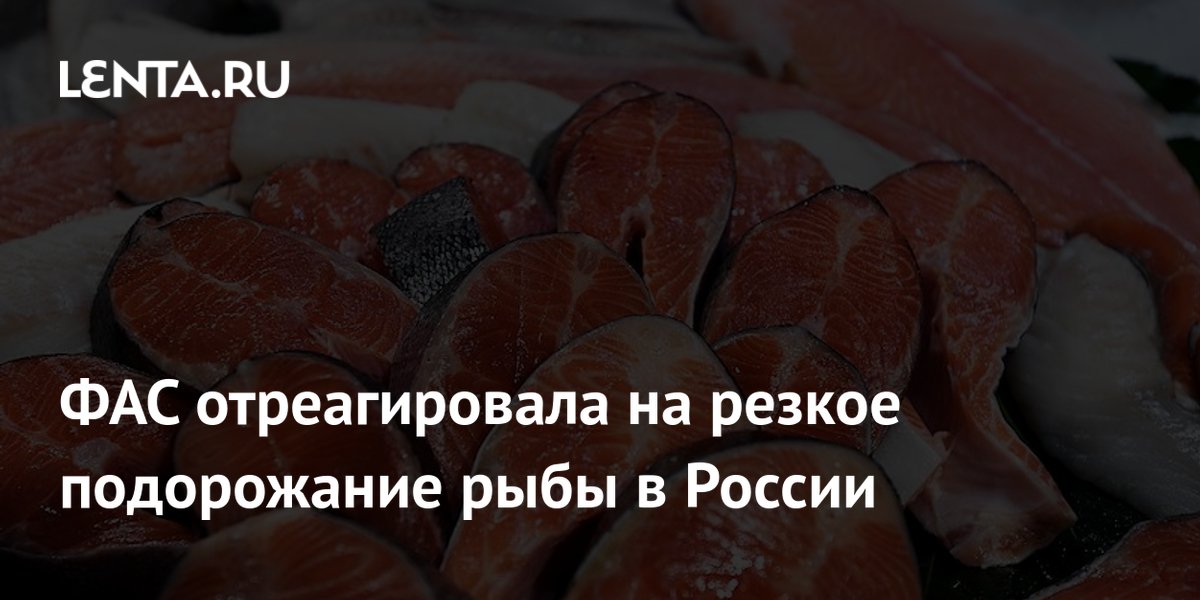
Russia's Federal Antimonopoly Service (FAS) said it is carrying out regular monitoring of fish prices on the domestic market, responding to reports of a sharp increase in wholesale prices for red fish. The statement by the agency's press service was reported by TASS and cited by lenta.ru.
If signs of violations of antimonopoly legislation are identified among market participants, those involved will face the penalties provided for by law, the regulator said. “The service will promptly take response measures,” the press service stated. FAS specified that the conduct in question includes possible abuse of a dominant position by market participants — the standard legal basis for action against the pricing behaviour of large suppliers in a concentrated market.
Pink salmon leads the increase
The sharp rise in prices for popular fish species in Russia was reported earlier by Kommersant. According to data from FGUP Natsrybresurs, the wholesale price of Far Eastern sockeye salmon rose 36.1 percent over the past year, while chum salmon gained 73.9 percent. The steepest increase was recorded in pink salmon — described as the most affordable of the red fish species — which rose 97 percent over the reporting period.
That ranking matters for the domestic market. Pink salmon anchors the entry-level segment of Russian salmon consumption, so a near-doubling of its wholesale price removes the cheapest option from the purchasing lists of processors and retailers rather than simply repricing a premium product. The gap between pink salmon and the higher-value sockeye has narrowed sharply, since sockeye appreciated at roughly a third of pink salmon's pace.
Mandatory registration of off-exchange deals
FAS recalled that the government introduced mandatory registration of off-exchange transactions in fish products from the spring of this year. According to lenta.ru, the requirement applies to transactions with a volume of more than 10 million tonnes and covers the following species:
- pollock
- cod
- haddock
- herring
- mackerel
- pink salmon
- chum salmon
- sockeye salmon
The measure is intended to help ensure the “transparency” of price formation on the domestic market, the agency said. In practice it gives the regulator transaction-level data on bilateral deals that previously sat outside exchange reporting.
Failed salmon season and costlier credit
Experts identified a failed salmon fishing season as the main cause of the increase for the popular product. As a result, supply on the domestic market — already not high — began to fall. The situation was also affected by the rising cost of credit and growing expenses at industry enterprises, meaning the price increase reflects both a shortfall in volumes and the higher financing and operating costs carried by harvesters and processors.
Vladimir Solodov, governor of the Kamchatka Territory, added the consequences of the warming of the world's oceans and changes in fish migration routes to the list of factors behind the situation. That points to a catch problem not confined to a single season.
What the market is watching
For industry participants, the immediate question is whether FAS moves from monitoring to enforcement. The agency has not announced a case or named a company; it has said it monitors prices and will respond if violations are found. With off-exchange registration now in place for the main pollock, whitefish and Pacific salmon species, the regulator holds a data trail covering deals struck during the period in which sockeye, chum and pink salmon prices rose. For traders and processors, however, the pricing of the next season's catch will depend less on regulatory signals than on whether volumes recover.