Russia’s farmed sturgeon caviar output rises 5% to 45 tonnes
Russia produced 45 tonnes of farmed sturgeon caviar in the first seven months of 2026, up 5% year on year. The increase points to continued growth in aquaculture supply, but the available data do not show how much was consumed domestically or offered for export.
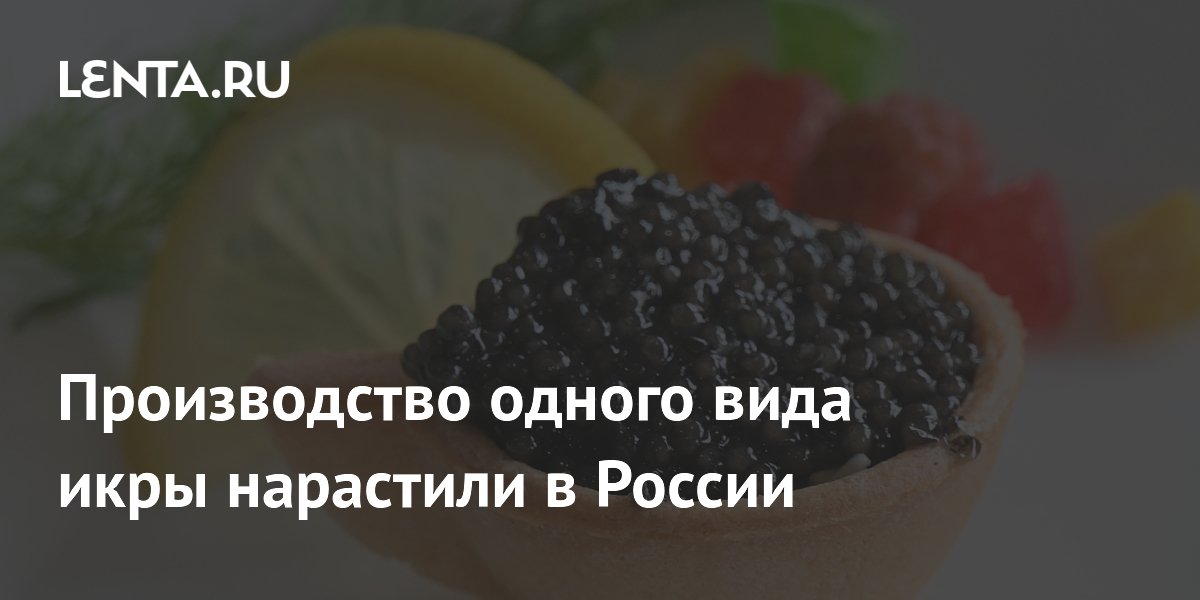
Production reaches 45 tonnes
Russia produced 45 tonnes of sturgeon caviar during the first seven months of 2026, according to conclusions by the Russian Fish Union cited by Interfax and reported by Lenta.ru. The volume was 5% higher than in the corresponding period of 2025, extending the recent growth of the country’s aquaculture-based caviar industry.
The comparison implies that producers added a little more than 2 tonnes to output year on year. The source material does not provide monthly production figures, company-level data, prices or capacity estimates, so it is not possible to determine whether the increase was broad-based or concentrated among particular farms. It nevertheless indicates that commercial supply continued to expand during the reporting period.
Aquaculture underpins legal supply
All of the reported caviar came from specialist sturgeon farms. Russia has prohibited commercial sturgeon fishing in the Volga-Caspian basin since 2005 as part of efforts to restore fish populations severely depleted by poaching. That restriction means growth in legal caviar production depends on aquaculture rather than increased harvesting of wild stocks.
Sturgeon farming requires long production cycles because fish must mature before yielding roe. Consequently, current output reflects breeding, survival and investment decisions made over several years. A 5% increase is therefore relevant to processors and distributors even though the absolute gain is modest: it suggests that farms were able to place more product into the legal market without a change in the wild-catch regime.
Annual growth provides context
Russia produced 89 tonnes of sturgeon caviar in 2025, an increase of 9% from 2024, Lenta.ru reported. The 45 tonnes recorded in the first seven months of 2026 equal slightly more than half of that full-year volume. Seasonal production patterns and the absence of monthly data prevent a reliable projection for the whole of 2026, while the slower year-on-year percentage recorded through July does not by itself establish that annual growth will weaken.
The figures describe production but provide no breakdown between domestic sales, inventories and exports. They also contain no information about demand or prices. The higher volume may create additional availability for Russian retailers, hospitality buyers, processors or foreign customers, but the data do not show which channel absorbed the increase. For traders and investors, export potential will depend not only on farm output but also on certification, market access, logistics and the amount retained by domestic buyers. The report separately noted that Russia ranked third globally in sturgeon-fish production in 2024, behind China at 162,600 tonnes and Armenia at 6,900 tonnes, but it did not provide Russia’s comparable tonnage or establish a direct link between fish harvest rankings and caviar output.