Russia's eastbound coal rail exports reach 10.9 million tonnes in July as netbacks more than triple
Russian Railways moved 10.9 million tonnes of coal to eastern export gateways in July, the third consecutive monthly increase, according to Kommersant. Netbacks on 6,000 kcal/kg thermal coal shipped via Vostochny rose from 1,087 rubles per tonne in mid-June 2025 to 3,359 rubles a year later. South Korean purchases jumped almost 90% and July shipments to India rose 44% as buyers replaced constrained LNG supply.
Record monthly loadings on the eastern route
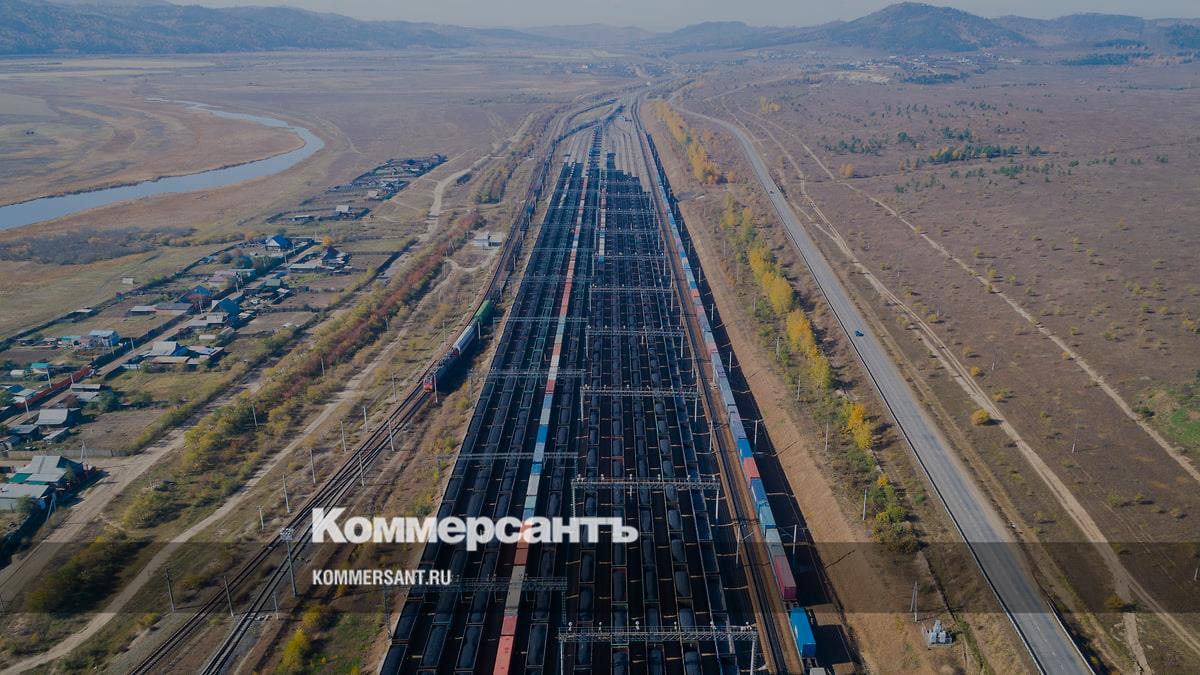
Russian coal exports by rail toward eastern ports set successive monthly records through the spring and summer of 2026, according to Kommersant, citing data from Russian Railways (RZD). Eastbound export loadings reached 10.1 million tonnes in May, 10.7 million tonnes in June and 10.9 million tonnes in July.
Dmitry Murev, general director of Federal Freight Company (FGK), an RZD subsidiary, told Kommersant that total coal loadings had grown consistently against the previous year since March 2026. The strongest gains came in April, up 17%, May, up 13%, and June, up 19%. Volumes shipped east in May and June were historic records for those months, he said.
Shipments through other export gateways also rose. RZD reported 1.6 million tonnes of coal loaded toward southern seaports in July, 31.2% more than a year earlier, while volumes through north-western harbours increased 19.7% to 3.9 million tonnes. Coal's share of total network loading at RZD recovered to 29.5% in July from 27.4% a year earlier.
Netbacks more than triple
Alexander Kotov, consulting partner at NEFT Research, said coal quotations this year are running an average of $10-20 per tonne above last year's levels. NEFT Research valued the netback on thermal coal of 6,000 kcal/kg exported through the port of Vostochny at 1,087 rubles per tonne in mid-June 2025; by mid-June 2026 the figure had more than tripled to 3,359 rubles per tonne. Coal exporters in the Kemerovo region are now working profitably on the eastern route, Kotov said.
Pavel Ivankin, president of the National Research Centre for Transport and Infrastructure, tied volume growth to market conditions and pointed to rising traffic originating inside the Eastern Polygon, chiefly the Elga deposit in Yakutia. The Kemerovo region's coal ministry reported that regional producers shipped 15.3% more coal for export in July than in the same month last year.
Governor Ilya Seredyuk said that under an agreement with RZD signed in February, the railway will move an additional 5 million tonnes above a guaranteed 55 million tonnes where capacity allows, with quarterly increases of 1 million tonnes. If shipments pass 57 million tonnes, the region intends to negotiate raising its eastbound limit to 60 million tonnes.
Asian buyers rotate
Two disruptions lifted Asian demand. Murev said escalation of the Middle East conflict effectively closed a key route for oil and LNG tankers through the Strait of Hormuz, forcing Asian countries to replace expensive and unavailable LNG with solid fuel. South Korea wound down its green energy programme and postponed cuts to coal-fired generation; Korean companies bought spot cargoes between April and June 2026, and an attractive discount made Russia the main beneficiary, with supplies to Korean consumers up by almost 90%.
A major accident at the Liushenyu coal mine in China in May 2026 halted local mining capacity, prompting a sharp increase in Chinese purchases of Russian coking coal. Murev said exports to China jumped 36% in June 2026, or 19% year on year. By July Chinese demand had cooled and prices for Russian thermal coal in China fell noticeably, but market participants told Kommersant the volumes found other buyers:
- India: July shipments up 44%
- Vietnam: July shipments up 3.3 times
- China: still a large buyer despite reduced purchases
Routes remain unsettled
Igor Smirnov, director of freight transport and logistics at the Centre for Infrastructure Economics, said China accounted for about 36% of Russian solid fuel exports in January-May, India for more than 17% and South Korea for about 14%. He described the pattern as a continuously optimised supply system rather than a fixed new geography, with producers redistributing cargo according to prices, discounts, freight costs and infrastructure availability. Market participants named Turkey among the main destinations and Vietnam, Taiwan, Indonesia and parts of South-East Asia as the fastest-growing.
Dmitry Baranov, leading expert at Finam Management, said it is more accurate to speak of stable routes than of full logistics corridors, naming the eastern rail-and-sea corridor, the southern sea route and the north-western route, and noting their uneven reliability given geopolitics, external restrictions, freight and insurance costs and competition from other cargoes. Khasyan Zyabirov, general director of Ugol-Trans, told Kommersant that volumes to the Murmansk port of Lavna have grown, that shipments through Taman have been closed this month and are being redirected to Luzhskaya and Lavna, and that he expects second-half growth of up to 2% against the first half.