Russia’s container market grows 6% to 3.47 million TEU in first half of 2026
Russia’s container market reached 3.47 million TEU in January–June 2026, up 6% year on year, according to FESCO data reported by Vedomosti. June volume rose 8.9% to 610,000 TEU, while disruption around the Strait of Hormuz increased the importance of Far Eastern ports and land border crossings.
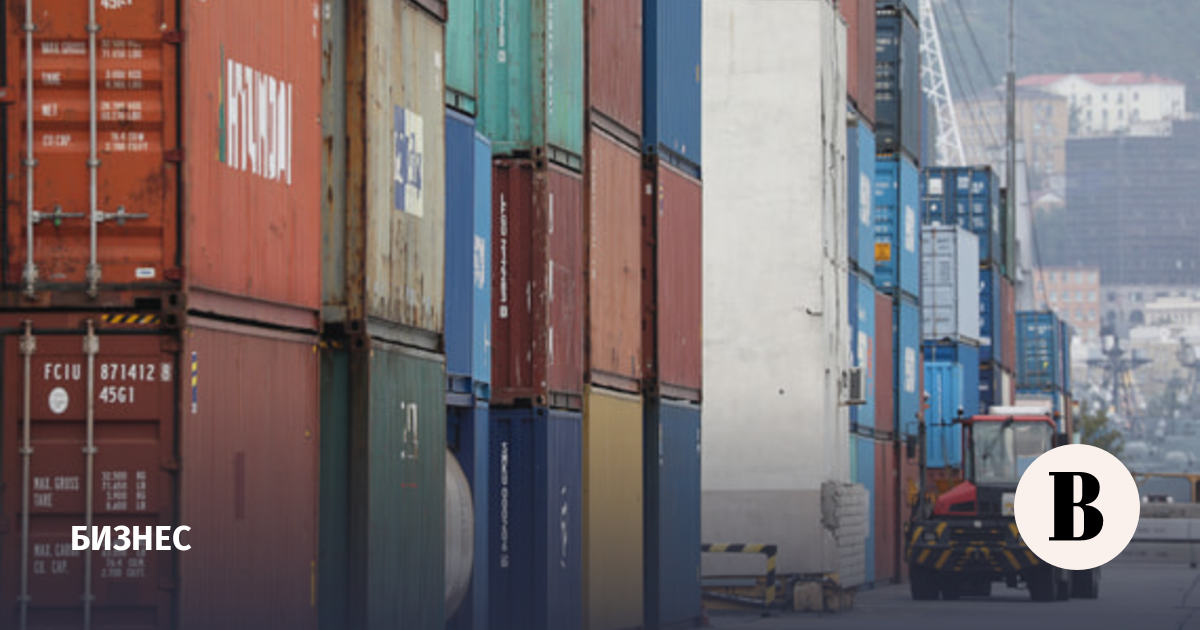
Container volume reaches 3.47 million TEU
Russia’s container market expanded by 6% year on year in the first six months of 2026, reaching 3.47 million twenty-foot equivalent units, or TEU, transport group FESCO said in its Telegram channel, according to Vedomosti. The increase provides an important measure of activity across the country’s ports, railways, inland terminals and land border crossings.
Growth accelerated in June. Monthly container volume reached 610,000 TEU, 8.9% more than in the same month of 2025. The stronger June result suggests that market momentum improved toward the end of the half-year period, although FESCO’s published figures do not provide a breakdown between imports, exports, domestic shipments and transit for the first half of 2026.
Land crossings and Far Eastern ports lead the network
FESCO’s earlier assessment of 2025 showed that land border crossings handled the largest portion of Russian container traffic, at 2.04 million TEU. Far Eastern ports ranked second with 1.3 million TEU. Subsequent rail container shipments accounted for 1.2 million TEU, while Baltic ports handled 907,000 TEU and ports in the Azov-Black Sea basin processed 809,000 TEU.
These figures show how traffic is spread across several competing corridors. Land routes and Far Eastern gateways are central to cargo moving between Russia and Asian markets, while the Baltic and Azov-Black Sea basins remain significant for maritime services. For shipping lines, rail operators and terminal owners, the geographical mix determines demand for rolling stock, vessel capacity, storage and inland connections.
Vedomosti also cited separate figures stating that containerized cargo movements in Russia totaled 2.67 million TEU in January–June 2025. Within that measure, imports fell 5% to 1.12 million TEU, rail transit declined 4% to 240,000 TEU and domestic traffic dropped 13% to 491,000 TEU. Containerized exports were the only growing segment, rising 8% to 818,000 TEU. The reported 2.67 million TEU total is not directly consistent with a 6% increase to 3.47 million TEU, indicating that the figures may cover different market definitions or traffic categories; the source did not explain the difference.
Hormuz disruption raises route risks
The operating environment has also been affected by the escalation of conflict in the East and the blockage of the Strait of Hormuz. According to Vedomosti, transportation between Russia and Persian Gulf countries was almost completely halted. The disruption affects carriers and cargo owners using Gulf routes and increases the commercial value of alternatives that avoid the affected region.
In March, Delo Group board chairman Sergey Shishkarev told Russia 24 that container traffic could shift toward Far Eastern ports and land border crossings because of the closure of the Strait of Hormuz and regional instability. Such a shift would reinforce the corridors that already handled the largest volumes in 2025. It could also concentrate pressure on port terminals, railway links and border infrastructure if rerouted cargo grows faster than available capacity. For logistics companies and shippers, the 6% market expansion is positive, but route reliability and the ability to absorb redirected flows will be as important as headline volume growth.