Russian coking coal exports to Türkiye fell to zero in July as US volumes surged
Russia shipped no coking coal to Türkiye in July 2026, after 54,500 tonnes in June, according to TUIK data cited by SteelOrbis. January–July exports fell 29.9% year on year to 224,500 tonnes, cutting Russia's share of the Turkish market to about 7%. US suppliers lifted shipments 70% to 1.88 million tonnes over the same period.
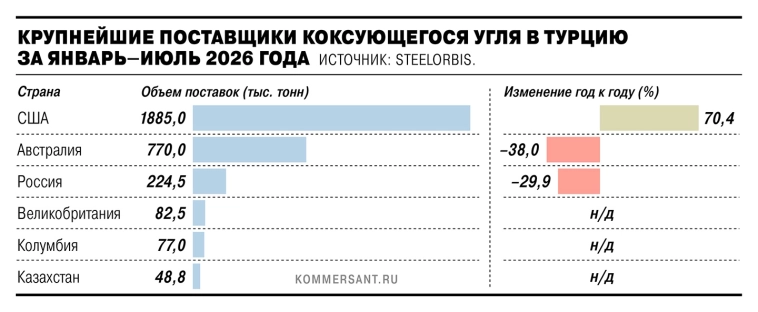
Russia shipped no coking coal to Türkiye in July 2026, according to Turkish Statistical Institute (TUIK) data cited by SteelOrbis and reported by Kommersant. Deliveries had stood at 54,500 tonnes in June and at 30,900 tonnes in July 2025, which makes the July reading a full stop rather than a seasonal dip.
Over January–July 2026 Russian coking coal exports to Türkiye fell 29.9% year on year to 224,500 tonnes. Russia's share of Turkish coking coal imports is around 7%, placing it third among suppliers behind the United States and Australia.
A shipping problem, not a terminal problem
Access to Russian coking coal was limited by a breakdown in maritime logistics rather than by any suspension of terminal operations, Kommersant reported. Vessel traffic became difficult, insurance premiums rose and part of the shipowner community stopped accepting new orders.
Turkish restrictions on vessels bound for Novorossiysk added another layer, lengthening clearance and loading times substantially. Market participants pointed to the risk that Russian cargoes already booked for late August and September would miss their delivery windows, and did not rule out force majeure declarations on earlier contracts.
Analysts quoted by smart-lab.ru link the decline first of all to shipping problems in the Black Sea and to the worsening economics of westbound routes.
US volumes take the vacated space
- United States: exports to Türkiye up 70% in January–July to 1.88 million tonnes, with July volumes tripling year on year to 469,000 tonnes.
- Australia: down 38% over the seven months to 770,000 tonnes.
- Russia: down 29.9% to 224,500 tonnes, with nothing shipped in July.
- New origins: according to SteelOrbis, Türkiye bought coking coal from the United Kingdom (82,500 tonnes) and Kazakhstan (48,800 tonnes) in July for the first time this year.
BigMint noted that Turkish importers increased purchase enquiries for Colombian, South African and US coal as Russian availability shrank.
Rail flows and the pull of the east
Russian Railways data show that coal deliveries toward southern ports fell 33% in July from June, to 1.6 million tonnes, while remaining 31.2% above the year-earlier level. The company has not disclosed August volumes for the southern direction.
Price arbitrage works in the same direction. In early September coking coal was quoted at $176 per tonne in the Far East against $157.1 per tonne at Azov–Black Sea basin ports, a gap of almost $19 that makes eastern shipments the more profitable option for exporters weighing where to send tonnage.
Winning the share back would cost more
In recent years Russian suppliers built their position on the Turkish market through additional discounts and more favourable prices. If Turkish consumers consolidate the replacement volumes, returning will require Russian exporters to absorb extra costs on top of the freight and insurance burden that pushed them out.
Analysts cited by smart-lab.ru consider a durable return to Russia's previous market share unlikely even if logistics improve, since alternative supply chains have already been formed and the eastern direction remains more attractive for exporters.