Russian Cattle Sector Consolidates as Dairy Enterprise Numbers Fall 26.4%
The number of enterprises in Russia's dairy segment has fallen by 26.4% while profitability declines, according to the industry publication meatinfo.ru. The outlet links the contraction to a narrowing investment window and rising merger and acquisition activity across the cattle sector.
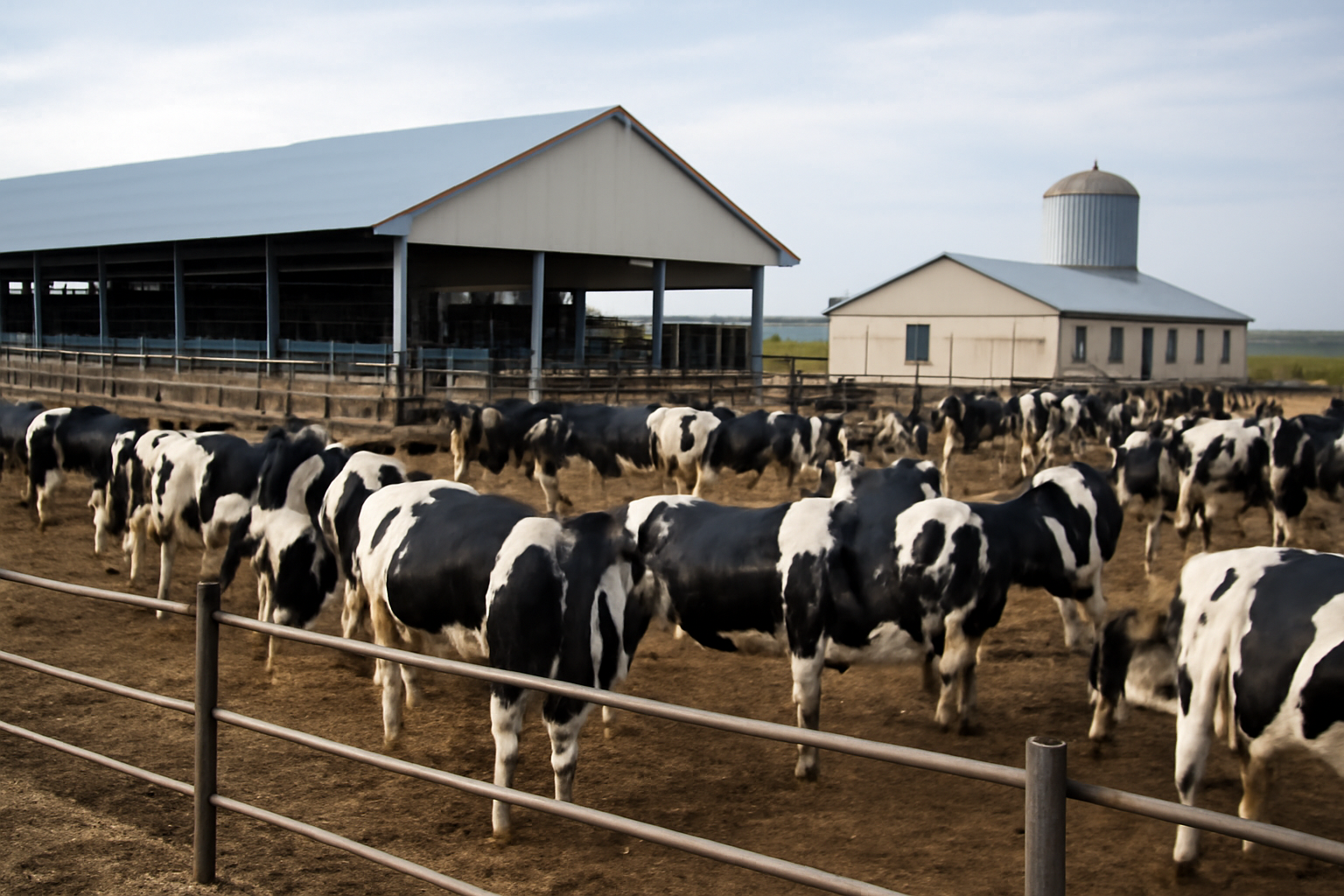
Russia's cattle industry is consolidating as the return on new investment narrows, with the dairy segment showing the sharpest fall in the number of operating enterprises, according to the industry publication meatinfo.ru.
The outlet reports that the number of enterprises in the dairy segment has dropped by 26.4% against the comparison period cited in its analysis, and that profitability in the segment has fallen at the same time. It presents the combination of fewer producers, thinner margins and rising merger and acquisition activity as a structural shift rather than a short cyclical dip.
A quarter of dairy enterprises gone
A decline of more than a quarter in the number of dairy enterprises is a heavy change for a business built on assets that cannot be redeployed quickly. Barns, milking parlours and cooling equipment have few alternative uses, and a herd has to be fed, milked and serviced every day regardless of what the raw-milk price is doing. Exit is therefore rarely gradual: a farm that stops milking normally sells the herd or sends it for slaughter rather than idling the capacity and waiting for prices to recover.
Fewer enterprises does not automatically mean less milk. Consolidation usually moves volume into fewer and larger units, and small yards leaving the sector remove far less output than their share of the enterprise count suggests. meatinfo.ru identifies profitability as the pressure driving the exits, but does not publish output figures alongside the 26.4% decline, so the split between concentration and genuine contraction cannot be measured from the report.
The investment window
Dairy is among the most capital-intensive parts of livestock farming. A new milking complex takes years to reach design capacity, and its payback depends on the spread between the raw-milk price and the combined cost of feed, energy, labour and debt service. When that spread narrows, the response follows a predictable order: projects still on paper are shelved first, replacement investment in existing sites is postponed next, and only then do herds shrink and enterprises close. The sequence described by meatinfo.ru, from weaker profitability to a falling enterprise count and then to more deals, matches that order.
M&A as the adjustment mechanism
When returns on new construction fall below the cost of capital, buying existing capacity becomes the cheaper way to grow. An operating complex comes with a herd already in lactation, permits, trained staff, feed land and a supply contract with a processor, none of which a greenfield project has on day one. For buyers with balance-sheet strength, a period of weak margins is the cheapest entry point into the sector. For sellers under debt pressure, a trade sale is often the only way to realise value from assets that would otherwise be written down. That exchange is what rising M&A activity alongside a shrinking enterprise count usually represents.
What it means for the market
- Processors deal with a smaller pool of raw-milk suppliers, which shifts procurement leverage towards the large holdings doing the buying.
- Equipment, genetics and feed suppliers should expect demand to move from greenfield construction towards upgrading and restocking acquired sites.
- Lenders end up with credit exposure concentrated in fewer borrowers, each carrying a larger share of national output.
- Trade effects depend on whether consolidation preserves raw-milk volumes; the report gives no output, price or import data on which to base that judgement.
The gaps in the published material matter for sizing the shift. meatinfo.ru does not give absolute enterprise numbers, the length of the period over which the 26.4% decline was recorded, margin levels, or the value and number of transactions behind the reported increase in M&A. Until those figures are available, the direction of change in Russian cattle farming is clear while its scale is not.