Russia's cattle herd shrinks in early 2026, raising beef price risks
Cattle at Russian agricultural enterprises fell 0.8% year on year to 7.3 million head in the first quarter of 2026, with cows down 1.7%, according to Rosstat data cited by Kommersant. Milk output is holding up on higher yields, but beef supply is tightening and retail prices are up 16.2% year on year.
Cattle numbers fall in early 2026
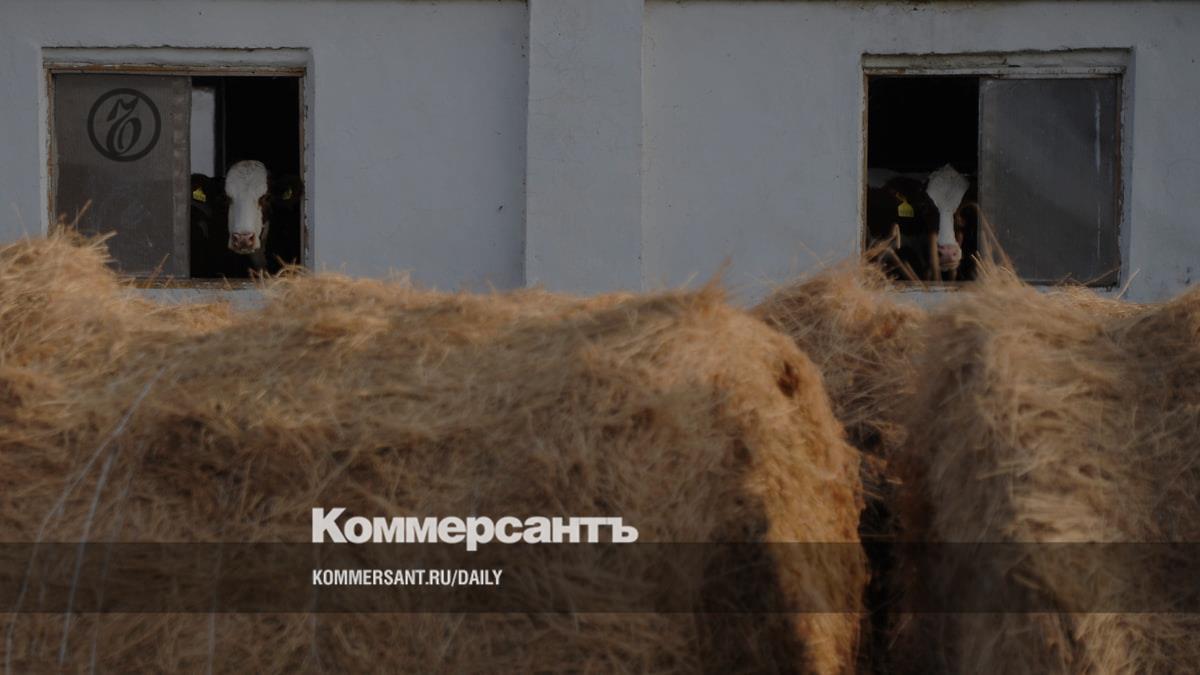
The cattle herd at Russian agricultural enterprises fell 0.8% year on year to 7.3 million head in January–March 2026, while the cow population dropped 1.7% to 2.9 million head, according to Rosstat data cited by Kommersant. Analysts link the decline to the ongoing consolidation of the sector and the exit of inefficient and small farms, compounded by anti-epizootic measures in several regions.
Artem Belov, director general of dairy producers' union Soyuzmoloko, said the first-quarter drop in the cow herd matches the average annual pace of the past five years. He attributed it to the structural transformation of the industry: amid urbanization and rural depopulation, small and medium farms are shrinking and being replaced by larger, more efficient complexes. Albina Koryagina, business development partner at consultancy Neo, said the sharpest contraction affected peasant farms, individual entrepreneurs and household plots. Andrey Kucherov, head of the agriculture competence center at Reksoft Consulting, called the decline a long-term trend driven mainly by worsening production economics, adding that costs are currently about 3% higher than a year earlier. By his estimate, at the end of December 2025 farms of all categories held 15.8 million head of cattle and 7.3 million cows, down 4.1% and 3.8% year on year.
Siberia leads the decline
Among regions with a large base, Siberia posted the most pronounced drop. Kucherov linked this to the weaker economics of some local farms, noting that market participants in the Novosibirsk region cited falling milk procurement prices, higher fuel costs and an acute labor shortage, alongside veterinary factors.
- Novosibirsk region: cattle down 11% year on year to 212,900 head; cows down 13.1% to 88,000 head.
- Altai Krai: cattle down 1.7% to 255,800 head; cows down 6.5% to 95,400 head.
Russia's Agriculture Ministry told Kommersant the regional declines early in the year stem from objective epizootic causes, and that the production cycle will recover once restrictions are lifted and the veterinary situation stabilizes. The ministry described the situation as local, not reflective of the national picture, and said the adjustment in cattle numbers may also reflect improving livestock efficiency.
Milk holds, beef prices climb
The smaller cow herd has not cut milk output. Belov said rising productivity of the existing herd is the offsetting factor: annual milk yield per cow grew 4.8% in 2025 to 8,900 kg, and rose 2.7% on average nationwide in the first quarter of 2026. The industry is shifting from extensive herd growth to intensive gains through genetics, feed and automation, Koryagina said, which lifts yields even as the herd shrinks. Kucherov did not rule out local supply disruptions or regional price spikes where the herd contraction is deepest.
Meat tells a different story. According to Reksoft Consulting, cattle slaughter output at agricultural enterprises already fell 3.8% in 2025 to 1.1 million tonnes, and Kucherov said further declines in beef output create price risks for consumers. Rosstat data show that as of 6 April the average retail price of beef in Russia reached 729.6 rubles per kg, up 16.2% year on year. Over the same period pork rose only 6.1%, to 394.1 rubles per kg.