Cattle herd declines recorded across 70 Russian regions
Cattle numbers declined in 70 Russian regions, according to an Izvestia analysis of Rosstat data for June. Russia’s Agriculture Ministry attributed the contraction to production optimization, but the available source material does not specify the nationwide decline.
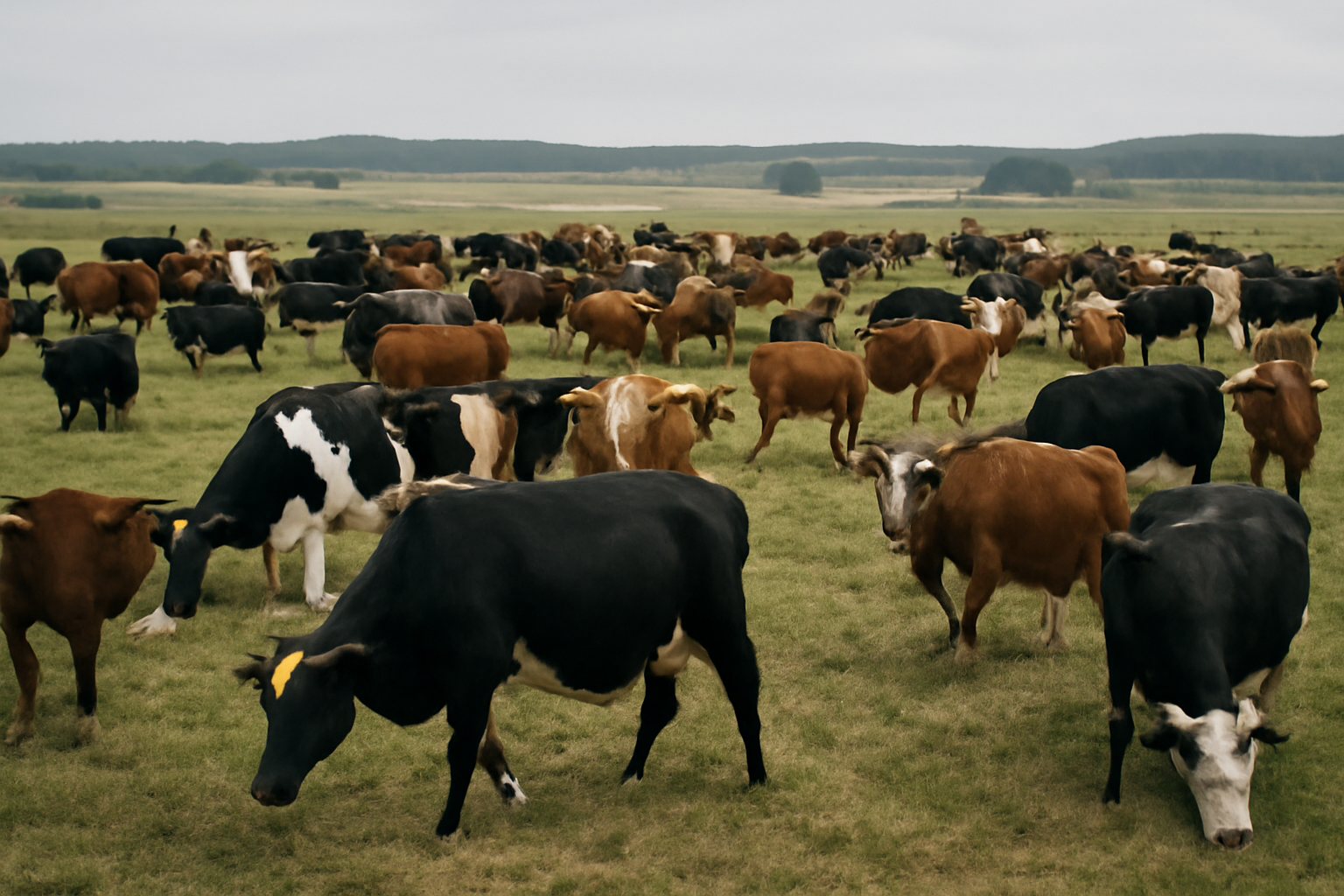
Cattle numbers fall across much of Russia
Cattle inventories declined in 70 Russian regions, Izvestia reported after analyzing June data from Rosstat. The figures cover all categories of agricultural holdings, meaning the calculation encompasses the different types of farms included in the official statistics rather than a single segment of the livestock industry.
Russia’s Agriculture Ministry attributed the decline to “production optimization.” The explanation presents the reduction as a change in how farms organize production, rather than identifying one nationwide cause affecting every region. The available source material does not provide the number of cattle removed from the herd, a percentage change for Russia as a whole or a breakdown between dairy and beef animals.
Regional breadth raises supply questions
The presence of declines in 70 regions makes the development relevant to livestock producers, milk and meat processors, and buyers of farm inputs. However, the number of affected regions cannot by itself establish the scale of the national contraction. A small decrease across many territories could have a different market effect from a sharp reduction concentrated in Russia’s principal cattle-producing areas.
The commercial consequences will also depend on which animals account for the decline. A reduction in dairy cows can affect future raw-milk availability, while changes in beef herds influence cattle supplies for slaughter on a different production timetable. Because the cited Rosstat calculation combines all farm categories and the available report does not separate the herd by purpose, neither effect can yet be quantified from the disclosed information.
Processors need more detailed data
For processors, the key issue is whether lower inventories translate into tighter deliveries of milk or slaughter cattle. That relationship is not automatic: farms may reduce less productive animals while maintaining output, which would be consistent with the ministry’s reference to optimization. Conversely, a sustained fall in productive stock could eventually reduce the volume available to processors.
Regional and category-level figures will therefore be important for assessing the impact. Industrial agricultural organizations, smaller farms and household producers can respond differently to feed costs, financing conditions and processor demand, but the source text does not identify which category led the decline. It also provides no production, price or trade-flow figures that would show whether domestic supply has already changed.
June data offer an early signal, not a full forecast
The June snapshot establishes that declining cattle numbers were geographically widespread. It does not show whether the movement is seasonal, part of a longer trend or the result of one-time herd management decisions. Comparisons with earlier periods and subsequent monthly data would be required to distinguish between those possibilities.
For producers and investors, the ministry’s explanation shifts attention toward productivity: whether farms can obtain the same volume of milk or meat from a smaller herd. For processors and traders, the practical test will be the physical availability of raw milk and cattle in the affected regions. Until detailed herd and output figures are published, the reported decline should be treated as a broad warning signal rather than a quantified supply shock.