Russia Takes More Than 95% of Georgia's Apple Exports in First Half of 2026
Georgia exported 14,700 tonnes of apples worth $11.2 million in the first half of 2026, with over 95% shipped to Russia, according to Geostat. Volumes rose 37% and revenue 67% year on year, underscoring near-total dependence on the Russian market.
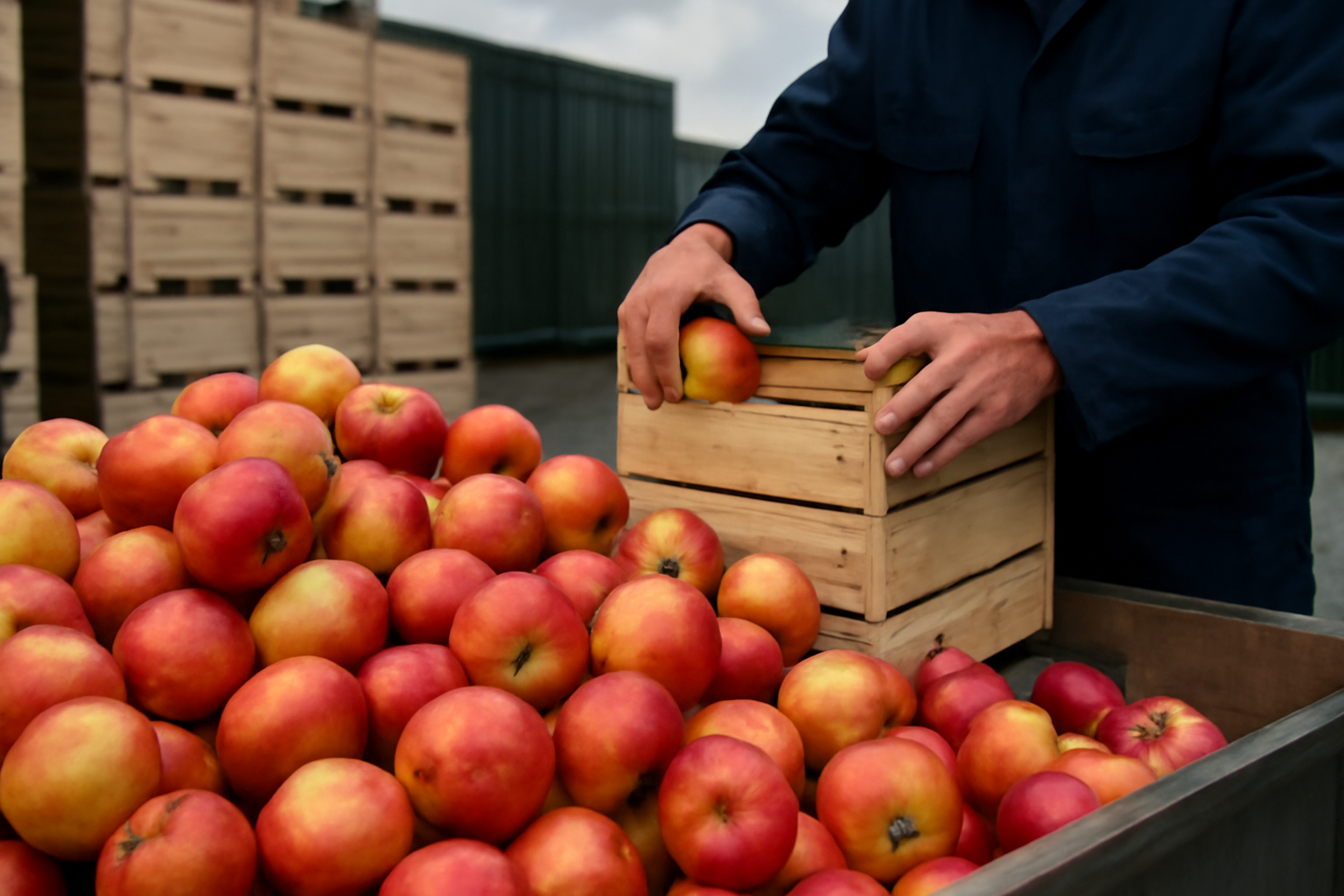
Georgian apple exports concentrated on Russia
Georgia exported 14,700 tonnes of apples worth $11.2 million in the first half of 2026, and more than 95% of that volume went to Russia, according to data from the national statistics service Geostat and the Georgian Ministry of Environment and Agriculture. The ministry described Russia as "the main export market."
Physical shipments rose 37% while revenue climbed 67% compared with the same period of 2025, an increase of roughly $4.5 million, Kommersant reported citing Geostat. The sharpest jump came in May, when the value of apple deliveries to Russia rose more than fivefold month on month. The gains extend a strong run for Georgian fruit growers, whose apple sales abroad have advanced in both volume and value.
Small volumes elsewhere
Beyond Russia, Georgian exporters sent only minor consignments to Turkey, Armenia and Iraq, the ministry said. Their combined share remained marginal against the Russian total. The dependence is not new: in the same period of 2025, Russia already accounted for about 95% of Georgian apple exports.
On a twelve-month basis, from August 2025 to June 2026, Georgian apple exports exceeded 24,000 tonnes worth $18.2 million — the highest level in five years, according to Kommersant. The crop is harvested in eastern Georgia, in the Gori and Kareli districts, and moves to Russia by road through the Verkhny Lars checkpoint on the North Ossetian section of the border.
Russia's supply gap drives demand
The surge tracks a shortfall on the Russian market. Russia's self-sufficiency in apples stands at 83%, First Deputy Agriculture Minister Elena Fastova said earlier this summer, adding that the country still has room to strive for in food security and aims to reach full 100% self-sufficiency by 2030. Until domestic orchards close that gap, imported fruit fills the shortfall, and Georgian growers are among the beneficiaries.
Concentration cuts both ways
Georgia's wider farm trade with Russia shows the same reliance. Peach and nectarine shipments hit a record 2,900 tonnes in the first half of 2025, and Russia bought 6,364 tonnes of Georgian blueberries that year, equal to 95.5% of national output, Kommersant reported. But the flows can reverse: mandarin exports to Russia fell 2.6 times in 2025 versus 2024, and Georgian wine deliveries dropped 43.7% in the first half of 2025 after Russia introduced excise duties. For importers on the Russian side, apples remain a convenient near-border supply; for Georgian exporters, the concentration leaves earnings exposed to any shift in Russian demand or tariffs.