Romania’s parallel car exports rise 58% as registrations overstate domestic demand
Exports of new cars previously registered in Romania rose 58% in the first eight months of the year, approaching 9,000 vehicles. Dealers exploit price differences with Western Europe, making some registrations look like domestic sales even though the cars quickly leave the country.
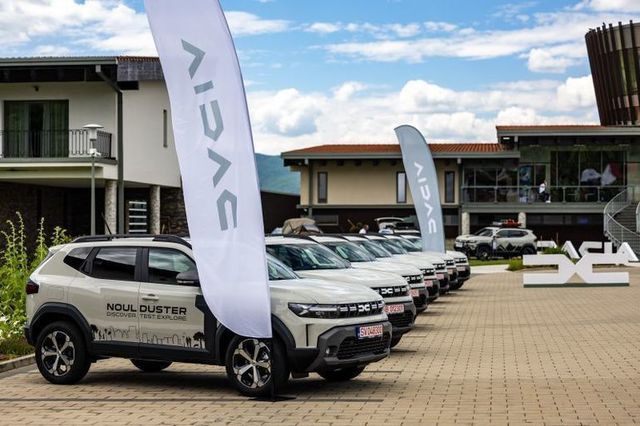
Re-exports approach 9,000 vehicles
Romania’s parallel trade in new passenger cars has reached record levels, creating a widening gap between reported registrations and vehicles that remain in the domestic market. According to Gândul, exports of new cars already registered in Romania increased 58% during the first eight months of the year and approached 9,000 vehicles.
The process begins when a dealer buys a vehicle from a Romanian distributor, registers it locally and then deregisters and resells it in another European country as a new car. These transactions are not inherently illegal, but they operate outside manufacturers’ official national distribution channels. Because the vehicles first enter Romania’s registration data, they are initially counted as local sales even when their ultimate buyers are abroad.
Dacia supplies almost half of the flow
Dacia accounted for more than 4,000 re-exported vehicles, close to half the total. The Duster led with almost 2,000 units, while 1,139 Sandero vehicles left Romania through the system, 46% more than in 2024. The Bigster contributed another 1,000 units. Dacia has repeatedly said that dealers conduct these sales independently and that the manufacturer is not involved once vehicles have been legally invoiced, paid for and registered in Romania.
Kia recorded the fastest increase, with re-export volumes rising 80%. The Sportage accounted for 465 vehicles and the XCeed for 295 during the eight-month period. Dealer Albert Căpățînă said eight out of every 10 new Kia XCeed vehicles sold in Romania this year were no longer in the country, while three quarters remained registered locally for no more than six months.
An analysis of data from Romania’s DGPCI vehicle registration authority indicated that 44% of new Kia registrations were subsequently exported. The corresponding share was 26% for Dacia, 20% for Renault and 11% for MG. Volkswagen, Audi, Peugeot, Nissan, Toyota and Opel also appeared in the data. Bucharest recorded the largest number of such vehicles, followed by Argeș, Brăila, Mureș and Vâlcea. Brăila had more newly registered cars exported than retained in its registration figures.
Western European prices drive dealer activity
Căpățînă attributed the trade to price differences between Romania and Western Europe. For certain models, Romanian list prices are lower, allowing traders to buy locally and resell abroad at a markup. Private companies in markets including Germany and France can source new vehicles across the European Union and sell them directly to customers after EU rules loosened contractual restrictions that had tied dealers more closely to individual brands or automotive groups.
The main domestic consequence is a distorted measure of Romanian demand. Căpățînă said the official market total was 84,788 new passenger cars over eight months, but estimated that only 76,473 remained after vehicles already sent abroad were removed. On that basis, he described the underlying market as down 14%.
DGPCI data put these exports at 10% of Romania’s new passenger-car market, a record share. In the previous year, the authority recorded more than 110,000 passenger-car deregistrations, of which over 35,000 involved exports. About 9,000 were new cars deregistered before being sold in other countries. For manufacturers, dealers and market analysts, the figures show that registrations alone can overstate both Romanian retail demand and the number of new vehicles actually available to local buyers.