Romania's foreign direct investment falls 82% in the first half of 2026 to €669 million
Foreign direct investment in Romania dropped to €669 million in the first half of 2026 from €3.72 billion a year earlier, according to National Bank of Romania data cited by ARICE president Daniel Constantin. Lower reinvested earnings and reduced intragroup lending account for most of the €3.05 billion gap, alongside one-off transactions such as the transfer of Carrefour's Romanian business to a resident owner.
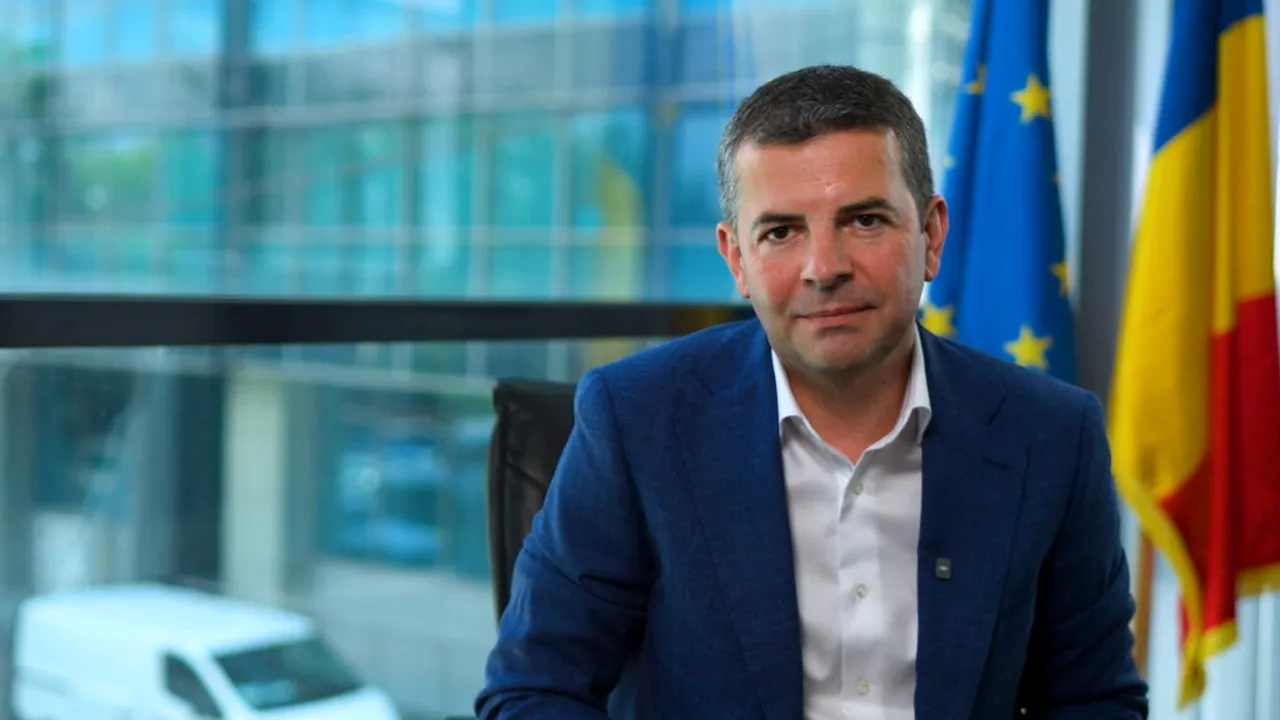
Foreign direct investment in Romania fell to €669 million in the first half of 2026 from €3.72 billion in the same period of 2025, a decline of roughly 82%, according to National Bank of Romania data cited by Daniel Constantin, president of ARICE, in an interview with Mediafax.
Constantin said the signal should not be played down, but that a six-month statistical movement should not be confused with a verdict on the attractiveness of the Romanian economy. Foreign direct investment, he noted, is a composite financial indicator combining equity participations, reinvested earnings and intragroup loans, and each of those behaved differently in the first half.
What makes up the €3.05 billion gap
The year-on-year difference of about €3.05 billion breaks down, according to the figures Constantin presented, as follows:
- around €1.2 billion from lower reinvested earnings;
- around €1.1 billion from reduced intragroup financing;
- €750 million from the movement in equity participations.
The main determinant was the negative balance of reinvested earnings, at about €1.12 billion in the second quarter alone. Dividends distributed by foreign-owned companies, including out of profits accumulated in previous years, exceeded current profits. Constantin said the effect has a seasonal component, since dividends are generally paid out in the first half of the year, but that its size also points to weaker operating profitability in an environment of slowing economic activity, rising risks and persistent uncertainty.
One-off transactions and the energy component
Part of the decline comes from single transactions rather than from any withdrawal of productive capacity. Constantin cited the transfer of a large retail chain from a non-resident owner to a resident investor — Carrefour, according to Mediafax. In statistical terms, such an operation reduces the net inflow of foreign investment without necessarily meaning that the underlying economic activity or the associated jobs disappear.
Mediafax reported that deficits in key sectors deepened over the same period, with energy products significantly affected by geopolitical developments. Constantin attributed part of the FDI decline to the difficult European context, with dividend distribution, lower reinvested earnings, intragroup credit and specific transactions explaining the scale of the statistical swing.
Where investor interest is moving
ARICE and InvestRomania continue to register interest both in new projects and in expansions of existing investments, Constantin said: “Investors are more cautious, they look at more scenarios and decide more slowly, but the interest is there.” The type of project under discussion is shifting toward higher value added, technology and advanced production. The sectors named were manufacturing and advanced production, automotive and components, energy and energy storage, IT&C and digital technologies, defence and dual-use industries, logistics, pharmaceuticals, food, services, and research and development.
Europe remains the main source of interest, with dialogue also under way with investors from North America and Asia. Constantin linked this to the reconfiguration of global supply chains and the relocation of production capacity closer to the European market. Selection criteria, he said, now extend beyond cost to labour, infrastructure and connectivity, energy, taxation, access to finance and support schemes, and the presence of local suppliers. On those criteria Romania offers one of the larger markets in the region, direct access to the EU single market, a position between Central Europe, the Western Balkans and the Black Sea area, a diversified industrial base, technical and digital skills, energy resources and access to European funding.
From interest to committed projects
Through InvestRomania, ARICE identifies and approaches strategic investors, supplies the information needed to ground a decision, facilitates contact with central and local authorities, supports site selection and accompanies investors through the decision process, with aftercare for companies already present. Constantin stressed the time lag involved: months or even years can pass between a first contact, the comparison of several markets, the choice of a site and a final decision, which is why recorded financial flows and current investment interest have to be assessed separately. He also noted that expansion decisions by companies already operating in Romania are themselves fresh votes of confidence and should count in how investment-attraction policy is measured.