Romanian farmgate milk price falls to about 2.11 lei per litre as cows go to slaughter
Romanian dairy producer organisations say the farmgate milk price has fallen to around 2.11 lei per litre while costs rise, pushing cattle to abattoirs. Pro Agro estimates 40-45% of dairy farms could disappear next year and breeders warn Romania may import 80-90% of the milk it consumes within 18-24 months.
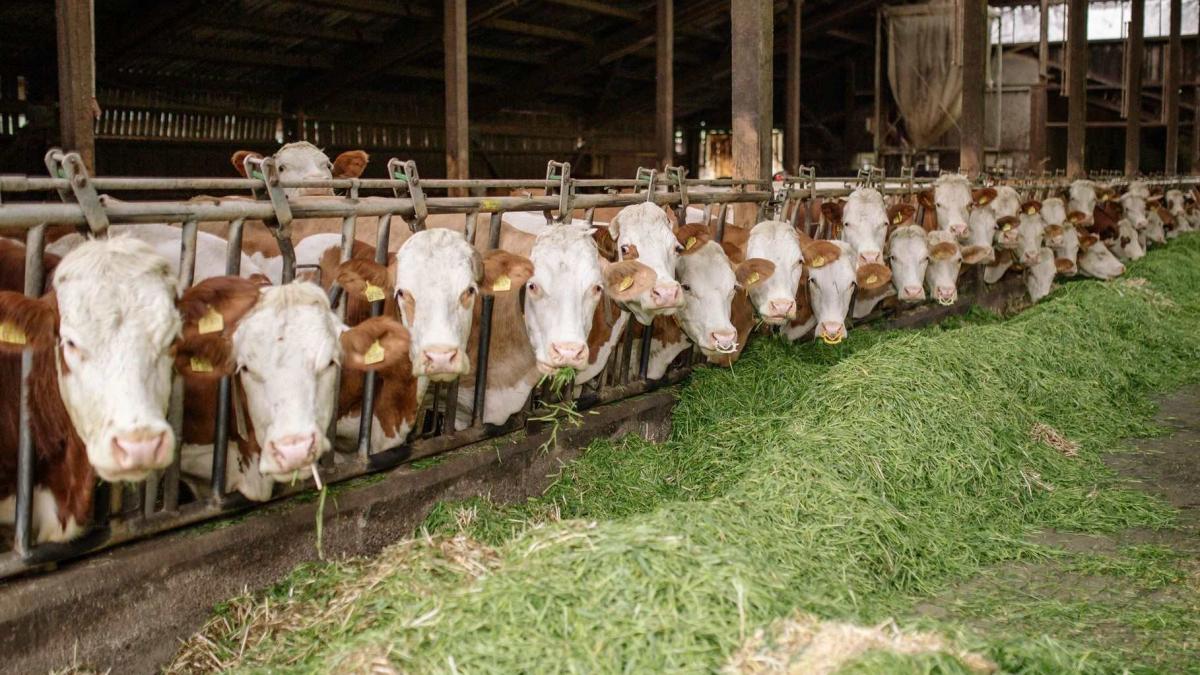
Romania's dairy sector has entered what producer organisations describe as a critical phase, with the farmgate milk price down to about 2.11 lei per litre while production costs rise, the Romanian publication jurnalul.ro reported. Farmers say the gap is sending cattle to slaughterhouses and could remove a large share of the country's dairy farms within a year.
Farmgate price falls, shelf price rises
According to jurnalul.ro, the price paid to farmers has collapsed while dairy prices in shops have continued to climb. The reference level at the farm gate is now around 2.11 lei per litre, but producers often have to sell below it to avoid being left with unsold milk. Farmers allege that in some contracts processors unilaterally cut the purchase price by up to 50 bani per litre. A related report by the same publication describes milk that costs 2 lei per litre to produce being sold for one leu.
Leaders of several cattle breeder organisations say the combination of falling producer prices, higher production costs and no predictability on future prices is what makes the situation critical. The Ministry of Agriculture has so far not put forward measures to stop the decline, while imported milk keeps gaining ground on the domestic market.
Herd liquidation and farm closures
Estimates circulated by breeder associations point to a rapid contraction:
- Cattle numbers could fall by 15-20% as animals are sent to abattoirs.
- Pro Agro estimates that 40-45% of farms could disappear next year.
- Slaughter numbers are expected to rise sharply in the final quarter of this year.
- Within 18-24 months Romania could be forced to import between 80% and 90% of the milk needed for domestic consumption, according to breeders' representatives.
Farmers stress that a dairy unit, once dismantled, is very hard to rebuild. Closures would also damage the genetic base of the national herd and write off years of spending on improving it.
Small farms, thin processing
A study of the milk market by Romania's Competition Council sets out the structural weakness behind the price squeeze. Romania produces 4.4 million tonnes of raw milk a year, tenth in the European Union, but only about a third of that volume enters the industrial processing circuit, leaving the country seventeenth on collection. Romania holds roughly 5% of the EU dairy cow herd and about 58% of all EU dairy farms, a ratio that reflects a very large number of small holdings with low productivity. Around 75% of Romanian farms keep fewer than five dairy cows, which limits mechanisation, automation and access to modern technology. Germany, France and the Netherlands sit at the opposite end, with larger, more technology-intensive and more efficient units.
Processing is concentrated in minimally transformed, low value-added products carrying thinner margins. Drinking milk accounts for 387,000 tonnes and acidified products - yoghurt, sana, kefir and soured milk - for 231,000 tonnes, together more than 70% of total processed volume.
Producer demands
Farmers are asking for a reference threshold linked to production costs, so that output is sold at a price covering what it takes to produce it. They also want the removal of contract clauses that allow unilateral price changes or abrupt termination, and payment deadlines respected by the companies collecting the milk. Breeders are calling for stricter enforcement of rules on milk origin and dairy labelling, noting that the use of raw material from third countries in products sold under retailer private labels is already established on the market. If dialogue with the authorities does not resolve the issues they have raised, producers do not rule out protests.