Romania’s electric-vehicle market rebounds as charging network passes 10,000 points
Romania registered 7,067 new battery-electric cars in the first eight months of 2026, up 51% year on year. Public charging infrastructure exceeded 10,000 points, but low utilization and Romania’s continuing gap with Europe remain central challenges.
Registrations recover after two years of decline
Romania’s market for fully electric cars returned to growth in 2026 after two years of contraction. A total of 7,067 new battery-electric passenger cars were registered during the first eight months, 51% more than in the same period of 2025, according to the EV Charging Index 2026 study produced by Roland Berger and reported by Forbes Romania.
The recovery lifted electric cars’ share of new passenger-car registrations from 4.9% in the first eight months of 2025 to 8.2% in the corresponding period of 2026. The reversal follows a difficult period in which reduced subsidies and delays to the Rabla Plus support program weighed on demand. The latest figures indicate renewed buyer interest, although the market remains sensitive to the timing and scale of public incentives.
Chinese brands and used cars widen the market
A broader choice of vehicles has also supported demand. The number of Chinese electric-car brands available in Romania has increased more than fivefold in recent years. These manufacturers now account for approximately 22% of new electric-car sales, giving consumers more options and increasing competition among suppliers.
The used market is expanding alongside sales of new vehicles. More than 4,100 used electric cars were registered in the first eight months of 2026, a year-on-year increase of 55%. Approximately one in every two fully electric cars registered for the first time in Romania is now a used vehicle. This channel can broaden access to electric mobility, particularly for buyers unable or unwilling to pay new-car prices, but it also changes the competitive environment for manufacturers and dealers.
Charging capacity grows faster than the vehicle fleet
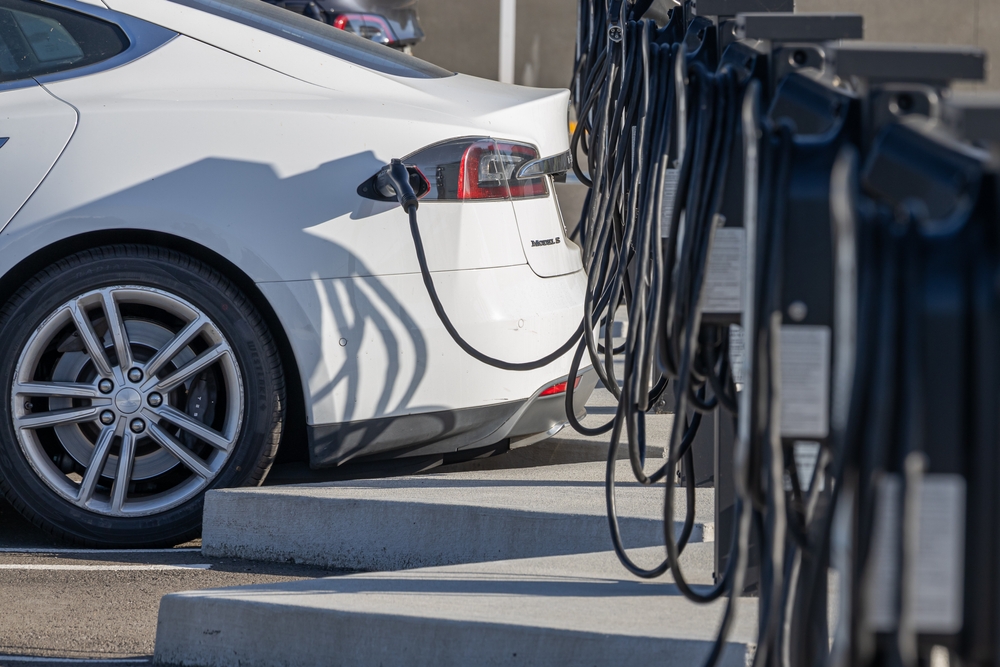
Charging infrastructure has expanded even faster than vehicle demand. Romania passed 10,000 public charging points in August 2026, more than six times the number available five years earlier. Growth has been particularly strong in ultrafast chargers rated above 150 kW: their number rose from 45 in 2022 to more than 2,060 by August 2026.
According to Roland Berger, charging infrastructure expanded 1.4 times faster than the electric-vehicle fleet over the past three years. Average utilization of public stations is consequently only 4-5%. The low rate shows that Romania already has capacity to accommodate a larger electric fleet, but it also creates a commercial challenge for charging operators seeking sufficient traffic and revenue to support their investments.
Romania still trails European adoption
Despite the 2026 rebound, electrification remains below European levels. Electric vehicles represented about 6% of Romania’s new-car registrations in 2025, compared with 17% across Europe. Their share of the national vehicle fleet was only 0.7%, against a European figure of 3.4%. These gaps leave substantial room for growth, but they also show that infrastructure expansion alone has not yet produced adoption on the same scale as in the wider European market.
Szabolcs Nemes, Managing Partner of Roland Berger Romania, said the country is moving from a market focused on building infrastructure toward one where utilization and the economic sustainability of investment will take priority. For automakers and dealers, the immediate opportunity lies in converting wider model availability into sustained registrations. For charging operators, the next test is whether a growing fleet can raise usage from its current 4-5% level without renewed volatility in subsidy policy slowing demand.